
Issues
The client was a healthcare provider operating hospitals, clinics, training centers, and academic partnerships across Saudi Arabia. With rapid sector changes and increasing expectations for clinical quality, digital competency, and patient-centered care, the organization sought to establish a comprehensive education and training program. The objective was to enhance workforce competencies, strengthen clinical skills, develop leadership capabilities, and ensure alignment with national healthcare transformation efforts.
Solution
We created a full healthcare education and training framework covering clinical competencies, administrative skills, digital capabilities, leadership development, and continuous learning. The solution included competency mapping, skills-gap assessments, structured training curricula, e-learning platforms, simulation-based workshops, and certification pathways. Training modules were aligned with national guidelines, international best practices, and organizational needs. A centralized training-management system tracked participation, completion, and performance outcomes. The program also included mentorship structures, leadership coaching, and digital-skills certifications to prepare the workforce for future healthcare models.
Approach
Our education and training methodology included:
- Competency mapping across clinical, administrative, and digital roles.
- Skills-gap assessment identifying priority training needs across departments.
- Curriculum design aligned with international healthcare education standards.
- Simulation and practical training for hands-on skill development.
- E-learning platform implementation enabling flexible, scalable training delivery.
- Performance-monitoring system to track competency improvements and outcomes.
Recommendations
We recommended a long-term strategy for continuous workforce development:
- Establish a centralized training academy to unify education standards across facilities.
- Implement mandatory competency programs tailored to clinical specialties and administrative roles.
- Adopt blended learning models combining digital modules, classroom sessions, and simulation training.
- Develop leadership-coaching programs to strengthen managerial capabilities.
- Integrate digital-health certification tracks to support HIS/PIS readiness.
- Monitor workforce progress using performance dashboards and annual evaluations.
Engagement ROI
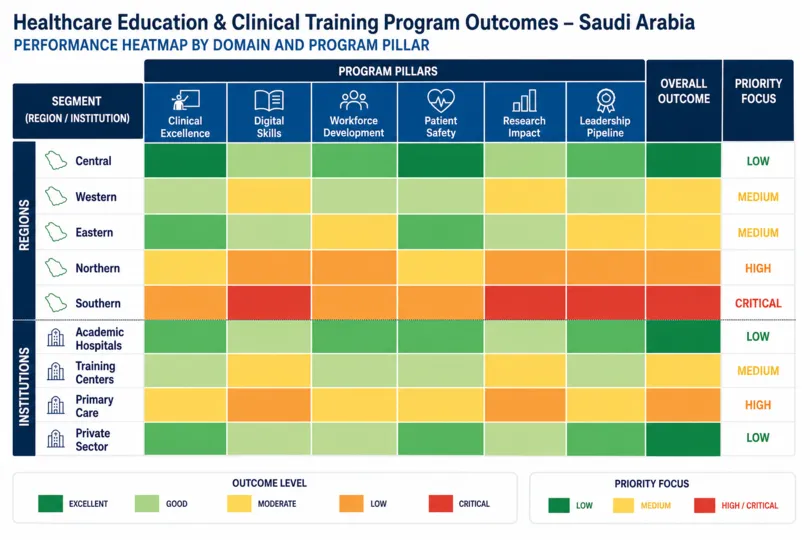
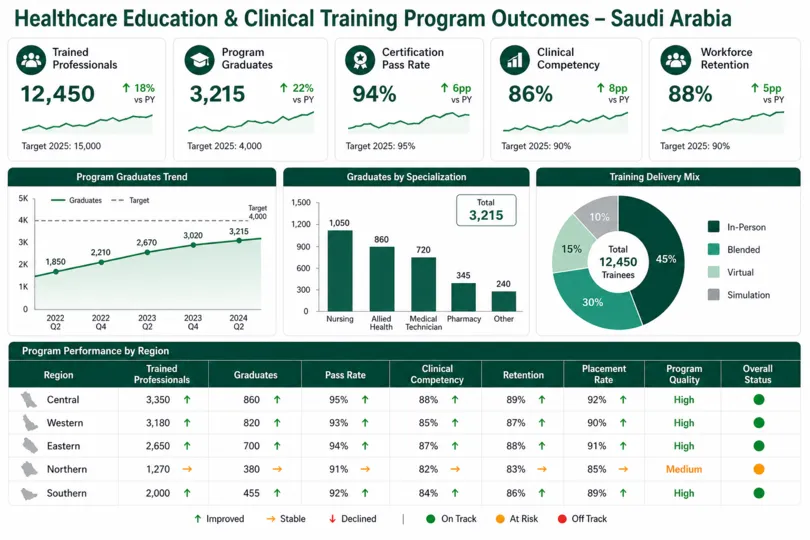
The education and training program generated significant workforce and operational improvements. Clinical competency scores increased by 31%, and digital-skills proficiency improved by over 44% within the first year. Staff productivity rose by 18%, while turnover among trained employees decreased by 12% due to improved career pathways. Training standardization reduced onboarding time by 27%, and leadership coaching led to 19% improvement in team performance indicators. Overall, the engagement strengthened workforce readiness and supported long-term service excellence.