Saudi Arabia’s pharmaceutical market is growing, and that growth is sharpening the case for stronger local production. Credence Research values the Saudi Arabia pharmaceutical market at USD 12,038.16 million in 2024, up from USD 7,902.15 million in 2018, and anticipates USD 21,160.70 million by 2032 at a 6.80% CAGR. Grand View Research reports USD 11,830.9 million in 2024 revenue with an expectation of USD 15,577.9 million by 2030, at a 4.7% CAGR from 2025 to 2030. In this setting, Saudi pharmaceutical localization is as much about supply resilience as it is about meeting rising demand across hospitals, pharmacies, and public procurement channels.
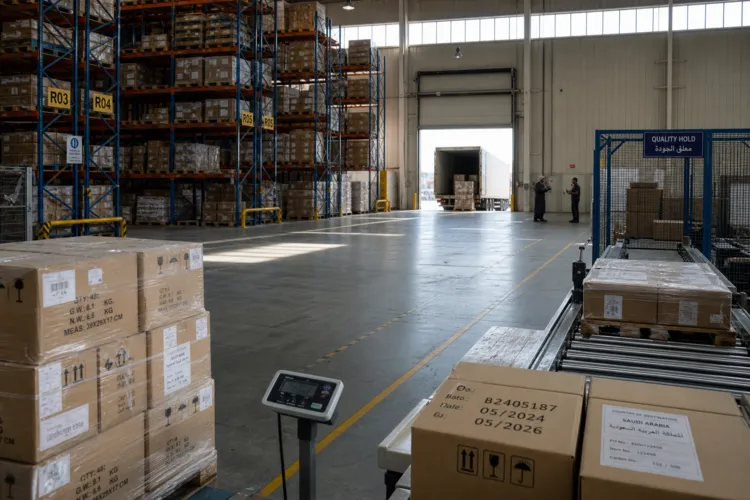
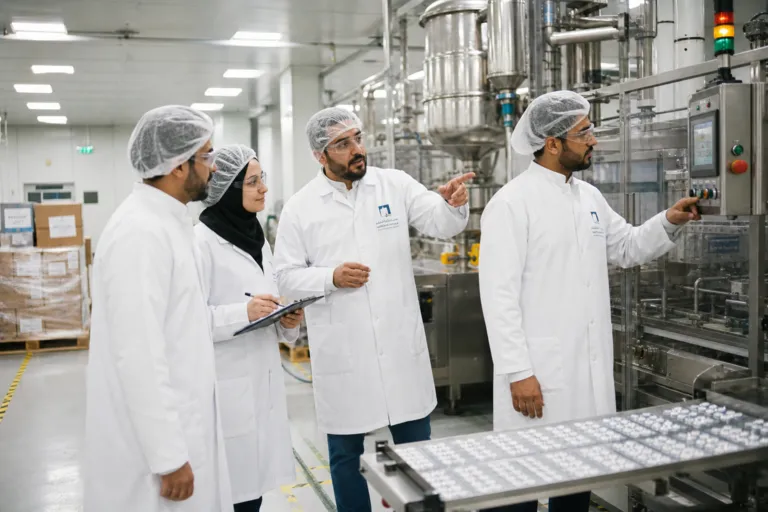
Multiple sources describe a market still heavily shaped by imports and foreign brands. Future Market Insights states that 80% of Saudi Arabia’s pharmaceuticals are imported, and that merely 30% of medicines are domestically manufactured, with only a small fraction of branded medication output made locally. Persistence Market Research similarly estimates domestic manufacturing meets only about 20–25% of total pharmaceutical demand by value. Grand View Research adds that the market is primarily dominated by foreign drug makers, and notes that only GlaxoSmithKline and Sanofi currently manufacture locally, while Saudi Arabia also depends heavily on imports to meet its active pharmaceutical ingredient (API) requirements. These constraints create clear pressure to expand local capacity beyond packaging and basic generics.
What Demand Looks Like Inside the Kingdom
The demand mix also explains why localization is complex. Credence Research reports prescription drugs held a 63% share in 2024, while OTC drugs, vaccines, and dietary supplements captured 18%, 12%, and 7% respectively. Branded drugs led with a 54% share in 2024, with generics at 36% and biosimilars at 10%. By therapy area, Credence places oncology at 29% share in 2024, followed by cardiology at 21% and diabetes at 17%. Regionally, demand is concentrated, with the Central Region at 38% share in 2024, followed by the Western Region at 27%, the Eastern Region at 22%, and the Southern Region at 13%—a pattern that can influence where manufacturers place plants, warehouses, and quality labs.
Policy and investment signals reinforce the direction of travel. PharmaKnowl, citing the National Industrial Development and Logistics Program (NDLP), says the pharmaceutical market in the Kingdom is expected to reach 44 billion Riyals by 2030, after 28 billion Riyals in 2020, and that the program aims to localize 40% of the value of the Saudi pharmaceutical industry, with a focus on advanced products. Coherent Market Insights cites the Ministry of Finance Saudi Arabia, stating USD 57 billion (SAR 214 billion) were allocated to health and social development in 2024. Persistence Market Research also notes that in 2023, Saudi Arabia allocated $50.4 billion (≈SAR 189.6 billion) to healthcare and social development, underscoring the strategic role of healthcare within Vision 2030 priorities.
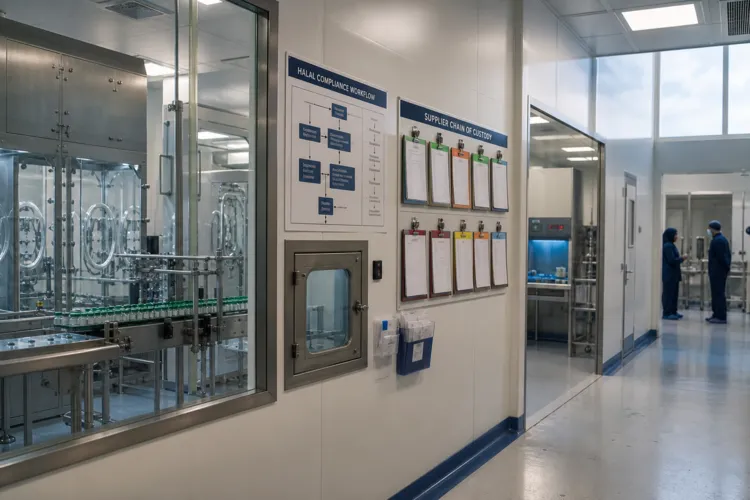
On the execution side, the ecosystem is widening beyond traditional finished-dose manufacturing. Future Market Insights reports that Bandar bin Ibrahim AlKhorayef, Saudi Arabia’s Minister of Industry and Mineral Resources, opened three new pharmaceutical and food enterprises in Sudair City. The same source states that in June 2025, the Public Investment Fund (PIF) established Lifera, a commercial-scale contract development and manufacturing organization (CDMO), intended to boost the local biopharmaceutical industry, increase national resilience, and strengthen Saudi Arabia’s position as a global pharmaceutical manufacturing hub. Grand View Research also notes many multinational companies prefer partnering with Saudi drug makers for contract manufacturing to reduce costs. Together, these moves frame localization as a practical build-out of capacity, capabilities, and partnerships across the value chain.
Why is Saudi Arabia prioritizing more domestic drug manufacturing now?
How much of Saudi pharma demand is currently met by local manufacturing?
What does the market mix mean for local producers?
What are notable recent steps supporting Saudi pharmaceutical localization?
How large is Saudi Arabia’s pharmaceutical market expected to be by 2030?