

Saudi Arabia’s healthcare sector is positioned as a budget priority and a privatization target at the same time. In 2024, the Saudi government allocated SAR 214 billion (about USD 57.1 billion) to healthcare, representing approximately 17% of its total budget. Alongside public spending, the government’s stated goal is to raise private sector contribution from 25% to 35% by 2030, and it also cites a planned USD 13.8 billion investment in medical facilities by 2030. For dealmakers, that combination can translate into a clearer pipeline: assets that professional investors can scale, consolidate, and operationally upgrade while meeting regulatory and service expectations.
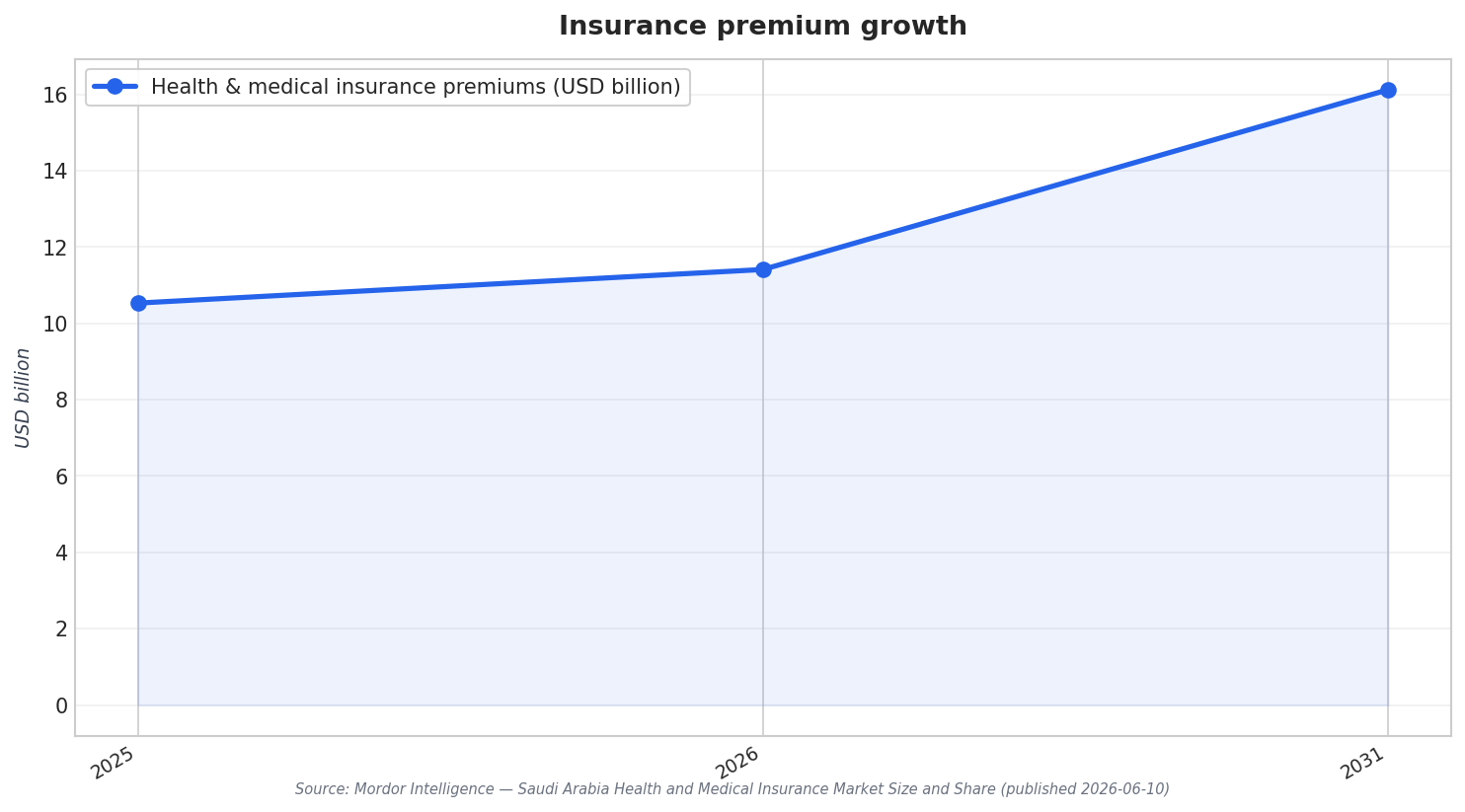
Private capital also reads demand signals through the payor layer. Mordor Intelligence values the Saudi Arabia health and medical insurance market (premium value) at USD 10.53 billion in 2025, and estimates growth from USD 11.41 billion in 2026 to USD 16.12 billion by 2031 at a 7.16% CAGR. The same source breaks out where volume sits: group health led with 71.33% share in 2025, inpatient cover accounted for 67.44%, and co-operative Takaful held 85.39%. This matters for M&A because predictable reimbursement and product structure can support investment theses in provider platforms, networks, and enabling services that benefit from insured utilization.
What Deal Teams Look for in Healthcare Platforms
Several operating levers highlighted in the sources map directly to what investors tend to underwrite in healthcare platforms. Mordor Intelligence notes that real-time e-claims through the NPHIES platform are improving settlement speeds, lowering denial rates, and reducing working-capital pressures for providers. It also points to digital distribution channels, including InsurTech platforms and aggregators, expanding access and reducing acquisition costs, particularly for SMEs and individual policyholders. Consumer behavior reinforces the digital shift: the Sehhaty mobile health application has over 24 million users, about 68.5% of the population, supporting appointment scheduling, teleconsultations, prescription management, and health tracking. These building blocks can strengthen integration logic in M&A, from referral capture to faster revenue cycles.
Hospital operations technology is another investable layer where consolidation and rollouts can be financed and standardized. Expert Market Research values the Saudi Arabia healthcare asset management market at USD 1.13 billion in 2024 and forecasts it to reach USD 6.60 billion by 2034 at a 19.30% CAGR. The MarketResearch.com listing of the same study cites expansion drivers such as digital transformation initiatives in hospitals and integration of automated tracking systems for medical assets, while listing players including AiRISTA Flow, Novanta, Sonitor Technologies, Versus Technologies, Stanley Healthcare, Accenture, and Siemens Healthcare GmbH. For acquirers, these categories can sit inside broader “smart hospital” upgrades tied to scale, procurement, and measurable efficiency.
At the capital-supply end, Ken Research values the Saudi Arabia private equity market at approximately USD 7 billion and says buyout funds and growth capital dominate capital deployment. It also notes that technology and healthcare have seen the highest deal flow, supported by government digitalization initiatives and healthcare infrastructure expansion. Regionally, Mordor Intelligence values the Middle East and Africa private equity market at USD 50.36 billion, forecast to grow at a 10.42% CAGR to 2031, and states that buyout and growth strategies combined control 40.92% of 2025 deployed capital. It adds context on Gulf sovereign-wealth dry powder, led by the Saudi Public Investment Fund’s USD 700 billion AUM in 2024. Together, these factors help explain why Saudi healthcare private equity strategies often emphasize scalable platforms, co-investment capacity, and operational transformation tied to national priorities.
What public funding signals support healthcare deal activity in Saudi Arabia?
How fast is Saudi Arabia’s health and medical insurance market expected to grow?
Which insurance segments dominate today, and why do they matter for M&A?
What digital indicators suggest operational upside for healthcare platforms?
How is Saudi healthcare private equity linked to hospital asset management technology?