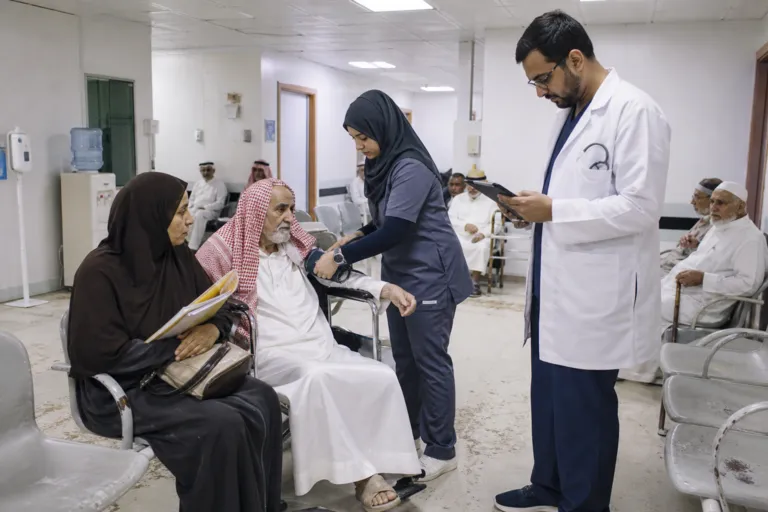
Saudi geriatric care is becoming a central healthcare priority. Health leaders are facing a demographic shift linked to longer life expectancy and lower birth rates. HealthManagement reports that the share of citizens aged 60 and above has exceeded 7%. Another projection says that by 2030, over 11% of the total population will be above 60 years old. These changes can stress hospitals, families, and community services at the same time.
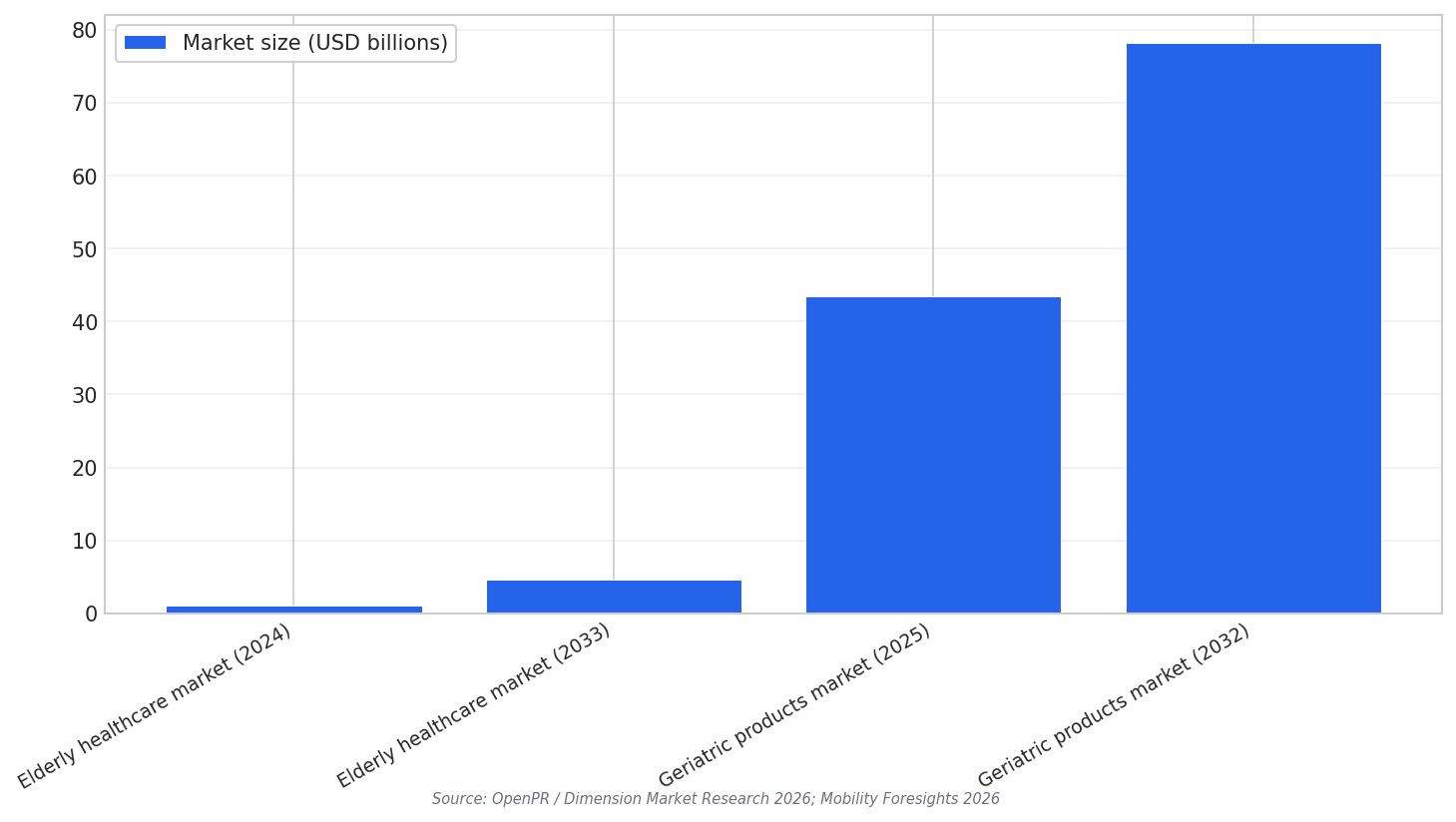
Several sources also show rapid market growth tied to this shift. One projection says the KSA elderly healthcare market will move from USD 1,012.6 million in 2024 to USD 4,542.4 million by 2033. A separate forecast projects the Saudi Arabia geriatric healthcare products market to grow from USD 43.5 billion in 2025 to USD 78.2 billion by 2032. These figures point to rising demand for services, products, and new delivery models.
The clinical load is also changing. HealthManagement highlights non-communicable diseases such as diabetes, hypertension, and cardiovascular disorders among older adults. It also notes comorbidity, where many older people live with multiple chronic conditions at once. This makes treatment harder and increases healthcare costs. Mental health is another concern, including depression, anxiety, and cognitive decline, especially when social isolation and limited mobility are present.
Lifestyle risk adds pressure. HealthManagement states that nearly 67% of older Saudis are either overweight or obese. That figure signals the need for prevention and better long-term support, not only acute care. Without strong follow-up, chronic conditions can worsen and require more complex treatment.
What Must Change in Saudi Geriatric Care Delivery
Access is a major gap. HealthManagement notes uneven healthcare distribution and staff shortages that affect rural and remote communities. It also flags limited geriatric expertise and low digital literacy as structural barriers. This means the same health need can lead to very different outcomes depending on where an older adult lives and what support they have.
Policy and technology are moving in the right direction. Vision 2030 is linked to preventive care and digital health adoption, including telehealth and remote monitoring. HealthManagement describes tools such as wearables, AI, and telehealth that can improve monitoring, safety, and access. Self-management programmes can also help older adults take more control of daily health habits and outcomes.
Saudi Arabia is also formalizing strategy. Ken Research states that in 2023 the government implemented an “Elderly Care Strategy,” including funding for new facilities, training programs for caregivers, and community support systems. Together, these steps support a more integrated model that can combine family-based care values with technology-enabled services such as home healthcare and remote monitoring, as described in the OpenPR and Me’kaaz discussions.
Why is saudi geriatric care becoming more urgent now?
What health issues are most linked to ageing in Saudi Arabia in the sources?
What barriers make elderly care harder in rural areas?
What does Vision 2030 emphasize for elderly care delivery?
What is the “Elderly Care Strategy” mentioned in the sources?