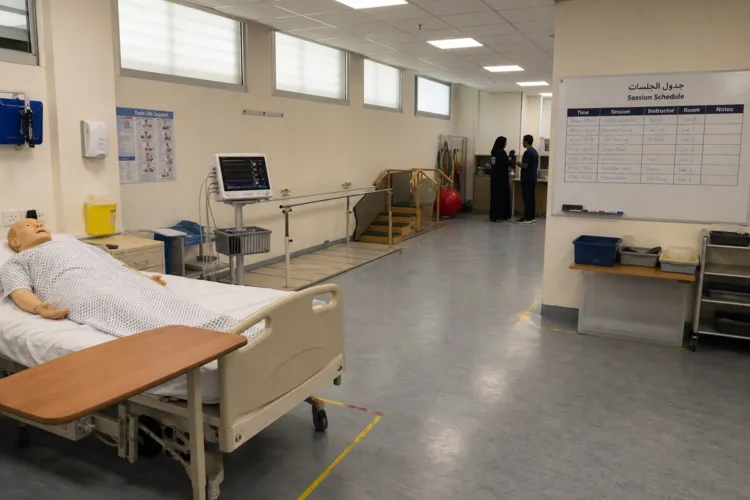
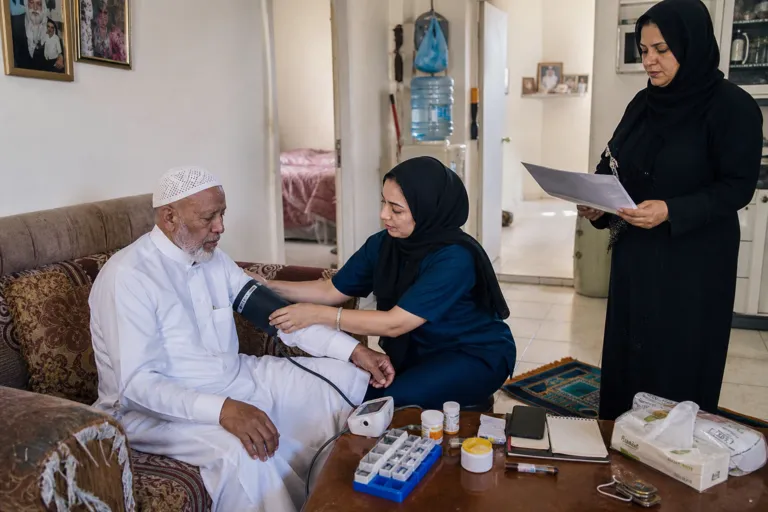
The saudi home healthcare market is often discussed through two connected lenses. One is the steady rise in demand linked to aging societies. The other is the Vision 2030 push to improve quality of life and modernize service delivery. Vision 2030 is described as a broad economic and social transformation, and Saudi Arabia’s investment minister said 85% of the kingdom’s Vision 2030 targets were complete or on track as of the end of 2024. That kind of implementation momentum matters for healthcare, because it shapes how quickly new care models can become embedded in daily life.
Home healthcare growth is not a Saudi-only story, and global context helps explain why the model keeps gaining focus. A MarketsandMarkets report cited by Asian Business Review forecasted the global home healthcare market to reach $473.8b by 2030. In the same report coverage, Asia Pacific was expected to witness the fastest growth, reflecting a projected 10.1% CAGR. The drivers highlighted included a surge in healthcare demand across emerging economies such as China, India, and Japan. This broader growth backdrop can influence investment interest and business models across multiple regions, including the Gulf.
Vision 2030 Signals That Support Home-Based Care
Vision 2030 places strong emphasis on building a vibrant society and enhancing quality of life, as described by Arab News reporting on the program’s priorities. That framing aligns naturally with home healthcare, where services can be delivered closer to patients and families. Reuters also reported that 675 companies’ regional headquarters are now located in the Saudi capital, reflecting continued efforts to attract international business activity into the Kingdom. While these figures are not healthcare-specific, they are part of the operating environment in which home healthcare providers, suppliers, and digital health partners plan expansion.
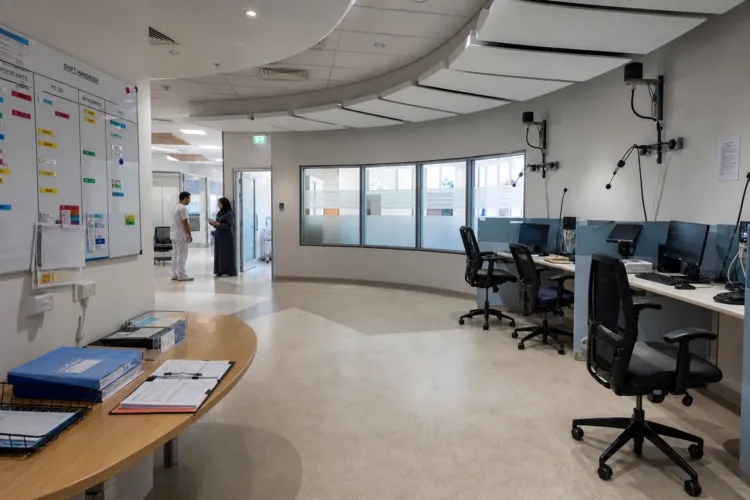
Workforce readiness is another relevant factor when home-based care expands. Arab News cited the Ministry of Human Resources and Social Development’s Skills Taxonomy as a tool to align labor capabilities with evolving job demands, with cross-sector mobility expected to play a vital role, especially in digital health. The same coverage emphasized that internal mobility, upskilling, and cross-training can help organizations build teams with needed market skills. For the saudi home healthcare market, these signals point to how staffing models may evolve as care increasingly shifts beyond hospital walls.
Aging-related demand also appears in adjacent healthcare categories that can feed into home care. Asian Business Review, citing Polaris Market Research, projected the global durable medical equipment (DME) market to reach US$414.05b by 2034 at a 5.8% CAGR, describing the ageing population as a foundational driver. The same report noted the home healthcare segment as an emerging fast-growing end-use channel for DME. In parallel, an AI-investing article cited Datamintelligence figures for the global AI in elderly care market at $34.42b in 2024, projected to reach $208.59b by 2032, growing at a 25.26% CAGR. These are global markets, but they show the types of technologies and equipment ecosystems that can strengthen home care delivery.
In practice, a Vision 2030-aligned home healthcare strategy tends to rely on three pillars implied by the sources: strong execution progress (with 85% of targets complete or on track as of end-2024), skills alignment and digital-health talent mobility, and the ability to adopt the broader global wave of home healthcare, DME, and AI-enabled elderly care innovation. Together, these themes help explain why the saudi home healthcare market is positioned as a growth area tied to an aging-population narrative within a wider transformation agenda, even when the most detailed growth figures available in the sources are global rather than Saudi-specific.
What is the saudi home healthcare market being linked to in Vision 2030 discussions?
What does the global outlook say about home healthcare growth?
What Vision 2030 progress statistic is relevant to the operating environment?
How do workforce initiatives relate to home healthcare expansion?
Which adjacent global markets point to home care enablers?