Vaccine sovereignty is about control. It means a country can secure supply during crises, and it can keep immunization programs stable. Recent moves show Saudi vaccine manufacturing is becoming a national priority, tied to Vision 2030 and the National Transformation Program. Several partnerships now focus on local production, skills, and long-term resilience.
A key step came on 2025-10-27. Sanofi and Lifera, a PIF company focused on growing Saudi Arabia’s biopharmaceutical sector, signed a Memorandum of Understanding to explore local manufacturing of selected Sanofi vaccines in Saudi Arabia. The announcement was attended by the Minister of Health Dr Fahd Aljalajel and the Minister of Industry and Mineral Resources Bandar Al Khorayef, as well as Sanofi’s Chairman Frédéric Oudéa.
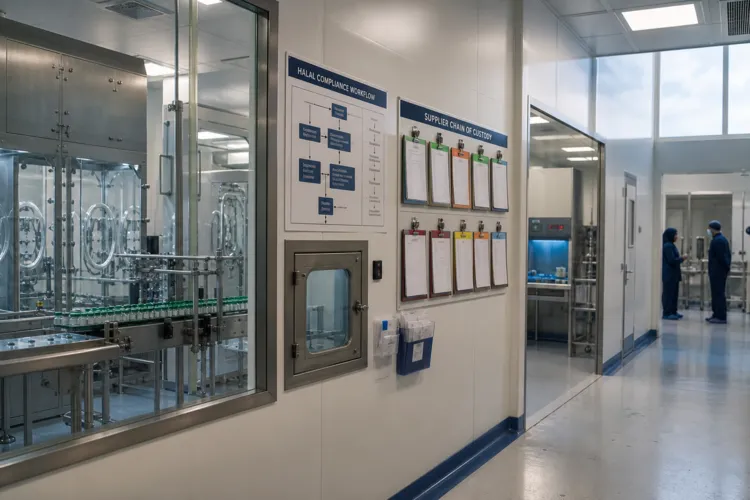
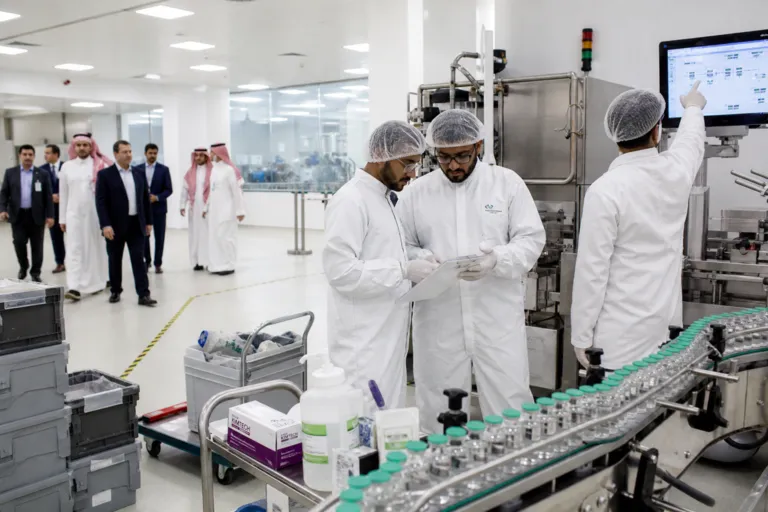
Under this MoU, the parties will evaluate building a fully certified manufacturing facility in Saudi Arabia. The facility would be compliant with EU, U.S., and local current Good Manufacturing Practices. Lifera would develop the facility. It would be designed to handle aseptic filling and packaging operations for Sanofi’s vaccines once operational. Sanofi would provide vaccine bulk supplies, technical expertise, and technology transfer support so selected vaccines can be manufactured and released to the market locally.
Why Arabio and Policy Strategy Matter
The Sanofi-Lifera plan also includes Arabio, described as Sanofi’s current manufacturing and distribution partner in Saudi Arabia. The goal is a seamless transition that supports uninterrupted vaccine availability for the public. This matters because localization is not only about building equipment. It is also about keeping supply steady while new capabilities are built.
Another view of this ecosystem appears in a 2025-10-02 profile of Tamer Group. It says Tamer is a majority shareholder in Arabio and that it leads the local production of vaccines, including those for meningitis, in partnership with Sanofi and Lifera. The same source also describes a tripartite agreement to produce seven essential vaccines in the Kingdom. It adds that vaccines for influenza, meningitis, and pediatric immunizations are being localized to meet domestic demand and enable regional exports across the MENA region.
Lifera is also evaluating another route to localization. On 2025-10-27, Lifera announced an MoU with MSD to evaluate localization of vaccine production in Saudi Arabia. Lifera was launched in 2023 and says its Lifera Biologics unit is developing local manufacturing capacity for insulin and other peptides, vaccines, monoclonal antibodies, and other biologics. Together, these moves aim to strengthen the pharmaceutical manufacturing ecosystem and support health security goals aligned with Vision 2030.
Legal and strategy work is part of the sovereignty story too. Research published in 2025 highlights key legal issues in local vaccine production in Saudi Arabia within Vision 2030, including how domestic legal frameworks can enable or limit localization. Another 2025 study frames localization as important because Saudi Arabia relies on healthcare imports during crises. Taken together, the message is clear: Saudi vaccine manufacturing is not one project. It is a coordinated push across industry partnerships, manufacturing capability, and policy support.
What is Saudi Arabia trying to achieve with vaccine localization?
What does the Sanofi and Lifera MoU include?
How does Arabio connect to the Saudi vaccine manufacturing plan?
Which vaccines are mentioned as being localized in Saudi Arabia?
Why do legal frameworks matter for saudi vaccine manufacturing?