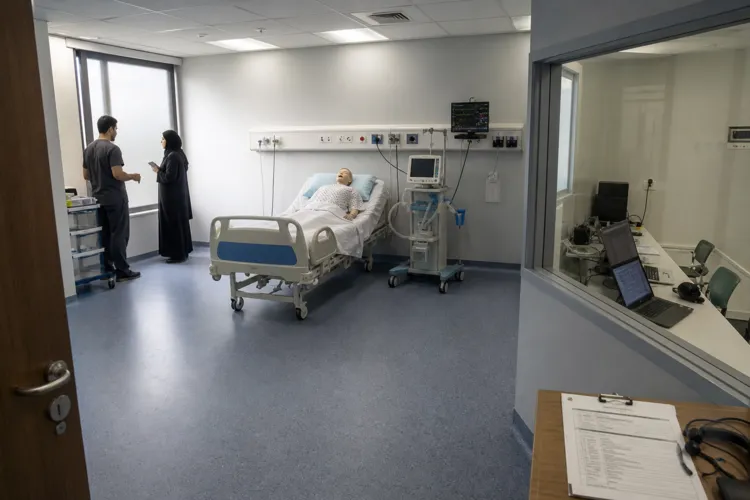
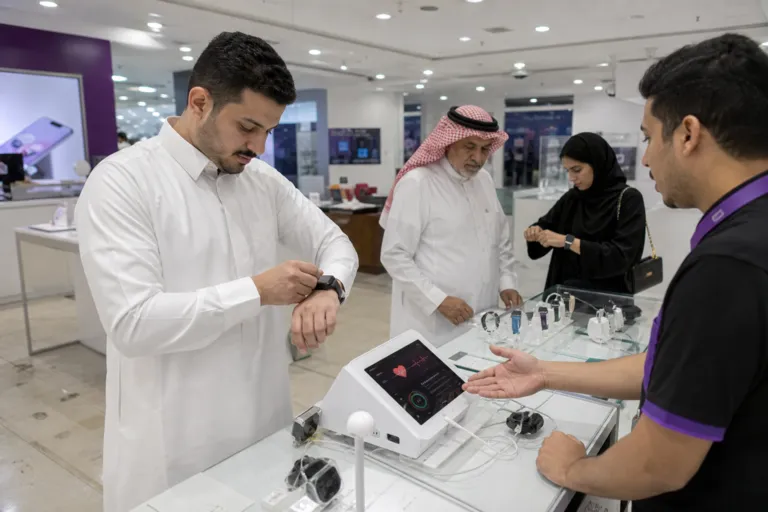
Preventive health is becoming more personal. It is also becoming more connected. The smart-watch wave is not only about style. It is about daily health signals that people can see and act on. In Saudi Arabia, this matters because smartwatches are already the most popular wearable device known by most of the population. Researchers also note that factors such as age, education, gender, and income can significantly affect the adoption of wearable devices in Saudi Arabia. That means growth is not just a tech story. It is also a people story, where device design and health support can change who adopts wearables.
Market momentum is strong, even beyond Saudi Arabia. Allied Market Research says the global wearable technology market was valued at USD 54.8 billion in 2020 and is projected to reach USD 183.2 billion by 2031. The same source projects a CAGR of 12.75% from 2022 to 2031. In the Middle East and Africa, Mordor Intelligence values the smartwatch market at USD 1.78 billion in 2025, estimates USD 2.04 billion in 2026, and forecasts USD 3.63 billion by 2031. These figures show why operators and brands keep investing in wearables.
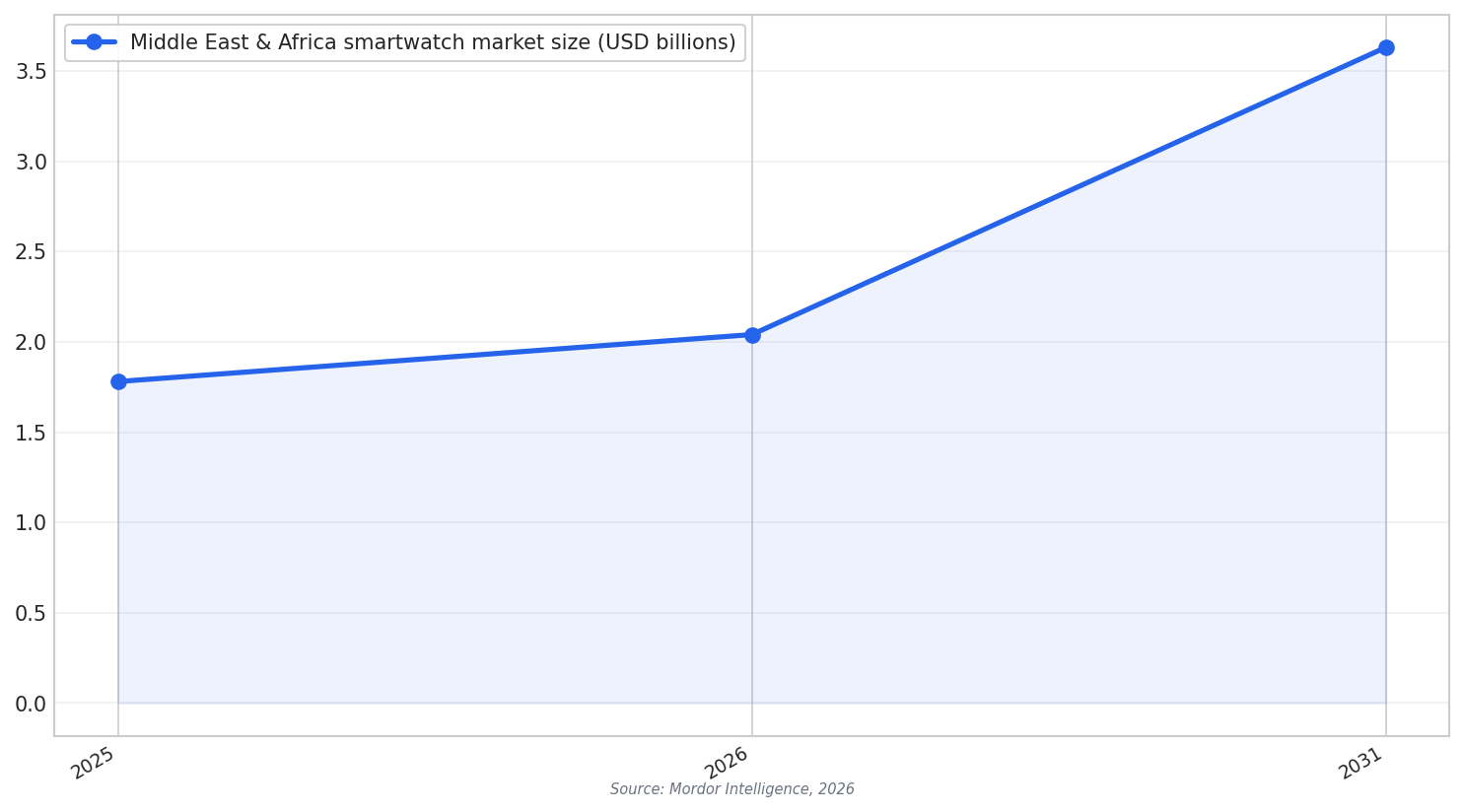
This regional chart is not Saudi-only. But it still helps explain the business forces that Saudi users will feel. Mordor Intelligence links smartwatch growth to digital health mandates across the GCC, fintech partnerships that embed tap-to-pay credentials in wearables, and 5G RedCap rollouts that reduce radio module power draw by half. It also says cellular connectivity is redefining watches as telemedicine endpoints. In simple terms, the watch is becoming less dependent on the phone. That makes it easier to use health features on the go.
What Makes the Smart-Watch Wave Feel Different Now
Wearables are also changing because health monitoring is growing fast. Allied Market Research calls healthcare and medical monitoring the fastest-growing application vertical. It links this to increasing clinical validation for ECG monitoring, blood glucose estimation, SpO2 tracking, and fall detection in wearable devices. Another source focused on preventive health wearables says that, by May 2026, clinical integration of these devices has increased by 42% globally. The same source defines preventive health wearables as an ecosystem of biosensors and algorithms used to monitor markers such as HRV, SpO2, and glucose to preemptively identify disease states.
Samsung is pushing this direction with its Galaxy Watch lineup. Samsung says Galaxy Watch7 supports personalized workouts and “preventative health monitoring capabilities.” It also highlights performance changes that can shape daily use. Galaxy Watch7 uses a 3nm processor for the first time in the Galaxy Watch line-up. Samsung states three times faster CPU and 30% improved power efficiency for the application processor. Samsung also says Galaxy Watch7 is the first Galaxy smartwatch with a dual-frequency GPS system for more precise location tracking, even in dense urban environments. These details matter because better battery and better tracking can make health monitoring easier to keep up with.
For Saudi wearable health devices to stick, the basics still matter. A Saudi-focused study in Frontiers says smartwatches are the most popular wearable device known by most of the population. It also says user acceptance is influenced by factors tied to perceived usefulness and perceived ease of use, including heart health, weight management, sleep improvement, wearable design, graphical user interface, and health information support. This is where telecom players like STC can play a practical role, by bundling connectivity and making setup simpler, while device makers keep improving health features people actually understand.
What do the sources say about the growth of wearable markets?
Which health features are driving wearable medical monitoring growth?
What affects adoption of saudi wearable health devices?
What does Samsung claim is new in Galaxy Watch7 that can help daily use?