The saudi mother and child healthcare market is gaining pace as Saudi Arabia invests in digital healthcare and stronger care pathways. New projections show fast growth in maternal health devices, smart hospitals, and healthcare insurance. These areas touch prenatal monitoring, delivery support, newborn care, and access to services. They also fit with national healthcare reforms and programs linked to Vision 2030.
Market numbers from recent reports highlight how quickly the ecosystem is expanding. Saudi Arabia’s maternal health device market is projected to grow from USD 3.1 billion in 2025 to USD 6.9 billion by 2031, at a CAGR of 14.6%. Saudi Arabia’s smart hospital market is projected to reach $1.77bn by 2033, up from $674.89m in 2024, with a projected compound annual rate of 11.33% from 2025 to 2033. Saudi Arabia’s healthcare insurance market generated USD 12,936.4 million in 2025 and is expected to reach USD 19,709.7 million by 2033, at a CAGR of 5.3% from 2026 to 2033.
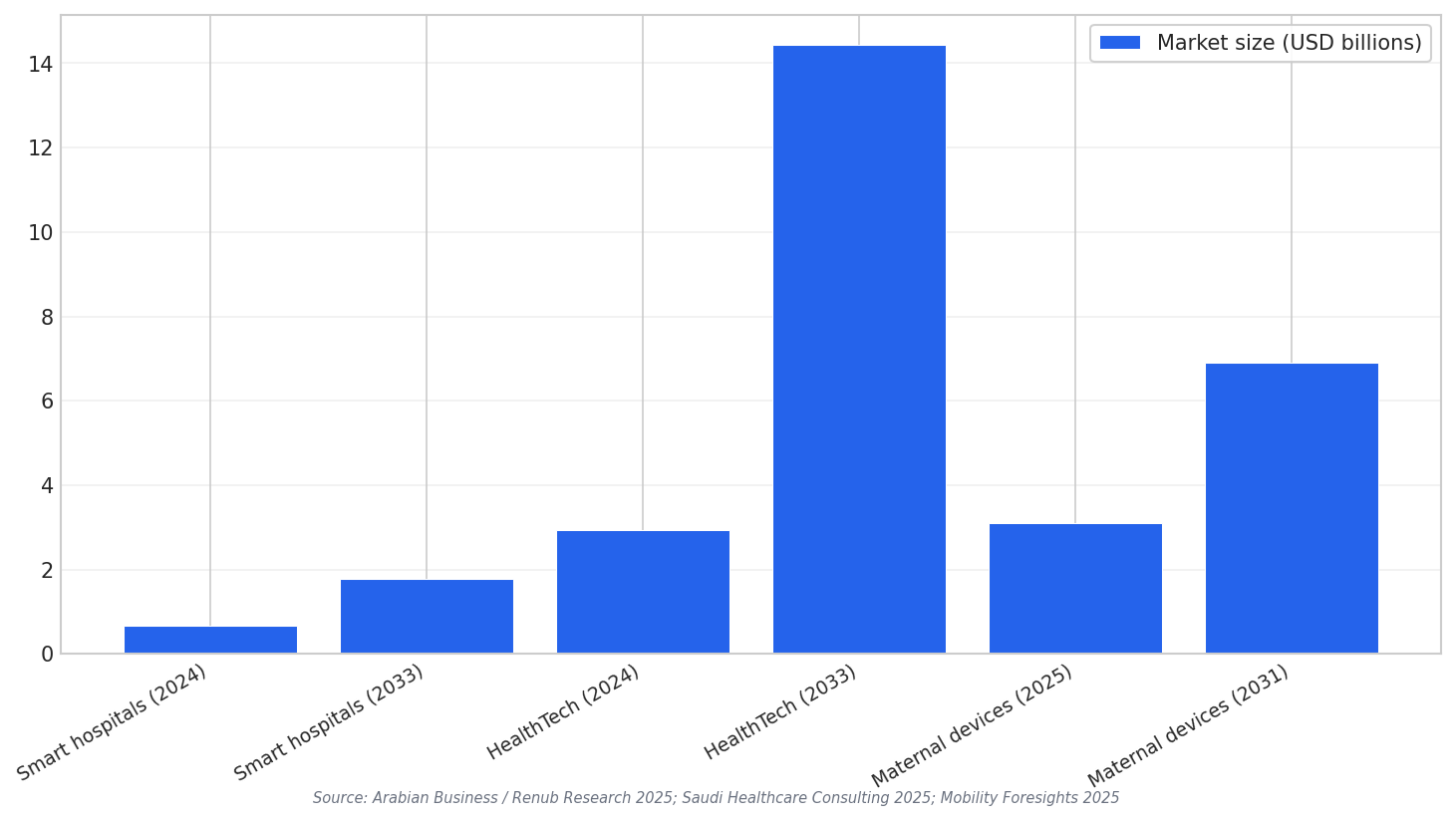
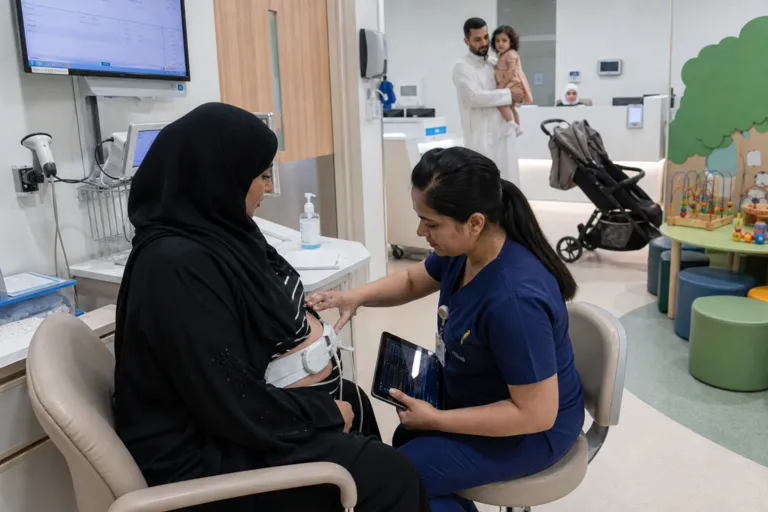
Maternal health devices are a clear driver inside mother-and-baby care. The device category includes fetal heart rate monitors, maternal vital-sign monitors, ultrasound systems, contraction monitors, pregnancy wearables, and labor-delivery equipment. One report links demand to the increasing prevalence of high-risk pregnancies, gestational diabetes, and hypertension. It also says hospitals and maternity units are investing in advanced fetal monitoring systems, maternal vitals trackers, and AI-assisted labor-progress analysis devices.
Digital Care Is Moving Into Homes and Hospitals
Care is also shifting beyond the hospital. Home-based pregnancy monitoring is expanding as portable and wearable technologies become more accessible. Wearable maternal devices that track fetal movement, contractions, blood pressure, glucose levels, and maternal heart rate are gaining popularity. These tools offer non-invasive, real-time insights and support early detection of abnormalities in high-risk pregnancies. Hospitals and maternity clinics also encourage wearables to reduce admissions and improve prenatal decision-making.
On the facility side, smart hospitals strengthen the setting where complex maternal and newborn cases are treated. A report ties smart-hospital growth to national reforms, major government investment, and accelerating adoption of digital health technologies. It highlights AI diagnostics, robotics, remote monitoring, and 5G-enabled systems as key forces changing Saudi hospitals. It also notes that Riyadh, Jeddah, and Dammam lead adoption due to concentrated investment and advanced infrastructure.
Insurance growth matters because it affects access and payment across the care journey. Saudi Arabia’s healthcare insurance market is expected to grow from USD 12,936.4 million in 2025 to USD 19,709.7 million by 2033. Public insurance was the largest segment with a 76.66% revenue share in 2025, and it is also described as the fastest-growing and most lucrative segment during the forecast period. Alongside this, research on maternal and child health in Saudi Arabia discusses integrating maternal and child health activities with primary health care to achieve optimal quality care, using census and demographic survey data from 1992 to 2017.
What is driving growth in the saudi mother and child healthcare market?
How fast is Saudi Arabia’s maternal health device market growing?
What technologies are shaping smart hospitals in Saudi Arabia?
How large is the Saudi healthcare insurance market expected to be by 2033?