
Saudi Arabia’s healthcare system is already built on universal, government-funded care for citizens, delivered through multiple public agencies and supported by a growing private sector. But the discussion around saudi universal health insurance 2026 signals a new phase: not a shift away from coverage, but a shift in how care is purchased and organised. For citizens, it can change how they access care and how eligibility is handled. For providers and insurers, it can change demand, contracts, and competition.
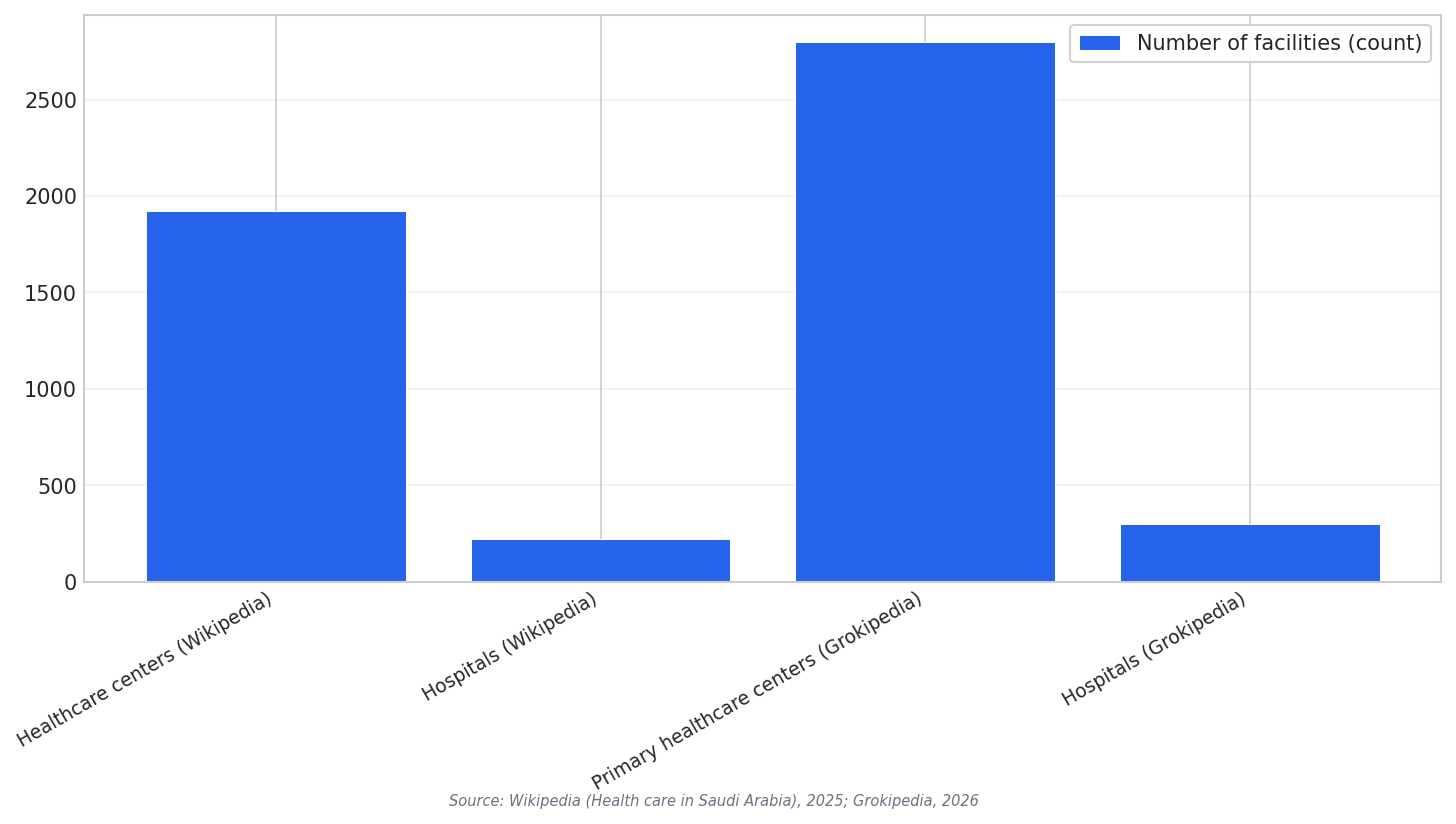
Today, the Ministry of Health is the main public provider. Wikipedia describes a network of 1,925 healthcare centers and 220 hospitals. Another overview source describes a larger footprint, with over 2,800 primary healthcare centers and 300 hospitals, plus specialized facilities. Alongside the Ministry of Health, other public systems serve specific groups, including the armed forces and security sectors, and several autonomous agencies that deliver or finance care for defined populations.
These sources show different counts, but they point in the same direction: Saudi Arabia is managing a very large delivery system. To make that scale easier to compare, here are the latest center and hospital counts stated in the sources: 1,925 healthcare centers and 220 hospitals (Wikipedia), and over 2,800 primary healthcare centers and 300 hospitals (Grokipedia).
What the 2026 Rollout Means for Citizens, Providers, and Payers
For citizens, the key idea in the 2026 rollout is the purchasing model. In an interview, the Secretary General of the Council of Health Insurance says the reform creates “a clearer separation between public financing and private insurance.” He adds that “a central public purchaser will fund care for citizens not covered by private insurance.” In simple terms, the state keeps a baseline role, while more citizens may use a private insurance-based pathway for accessing care.
For providers, this can reshape demand and how care is monitored. The same interview notes that providers have dashboards tracking utilisation and patient experience. It also describes early use cases for automation, including prior authorisation and readmission prediction. If purchasing becomes more standardised, hospitals and clinics may see clearer rules on what is covered, how referrals work, and how performance is measured.
For payers, the change is about roles and competition. The interview says private insurers will operate in “a more competitive environment with clearer rules,” while the public payer ensures baseline coverage. Separately, the Council of Cooperative Health Insurance (CCHI) is described as the primary body regulating health insurance, with coverage areas that include inpatient and outpatient care, emergency services, prescription medications, and preventive screenings and vaccinations.
Saudi Arabia also links these reforms to broader outcomes. Arab News reports the Kingdom scored 83 points in the latest Universal Health Coverage update, a nine-point increase within two years. The same report says life expectancy rose from 74 years in 2016 to about 79.7 in 2025. As saudi universal health insurance 2026 progresses, the practical test will be whether new purchasing and insurance structures keep access strong across regions, while supporting quality and sustainability.
What is saudi universal health insurance 2026 expected to change?
Do Saudi citizens already get free healthcare?
Which body regulates health insurance in Saudi Arabia?
What does the latest Universal Health Coverage update say about Saudi Arabia?