Medical waste is easy to overlook because it disappears behind hospital walls. But in Saudi Arabia, policy and procurement are pulling it into the spotlight. As part of its National Transformation Program, Saudi Arabia has launched a system for municipal waste management to tackle many solid waste types, including medical waste, hazardous waste, asbestos waste, and used oils. That broader push matters because it creates demand for solutions that work across collection, treatment, and compliance, not just disposal. The opportunity also sits inside a large national waste context. A U.S. government commercial guide notes total municipal solid waste (MSW) produced in Saudi Arabia amounts to 110 million tons annually, underscoring why regulators and major buyers are looking for more structured waste services.
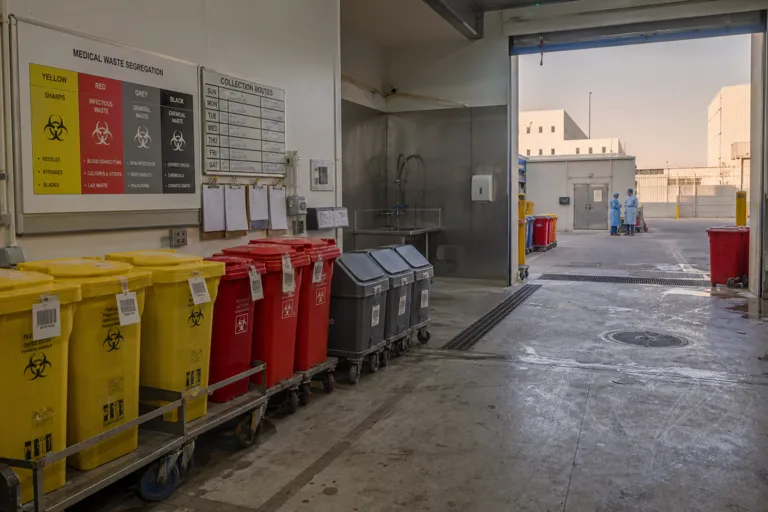
For healthcare operators, the shift is also technical. A Saudi-focused market report defines medical waste management as controlled handling, treatment, and final disposition of materials generated during diagnosis, treatment, or immunization. It notes sterilization parameters typically exceed 121°C for autoclaving cycles to achieve microbial inactivation. That same source says autoclaving holds the largest operational share due to lower capital requirements and residual air emission profiles, while incineration retains priority for anatomical and pharmaceutical waste streams where complete combustion is mandated. Waste types behave differently as well. Infectious material is described as having the highest per-tonne handling cost structure, and sharps containers require specialized containerization and tracking protocols.
What’s Creating the Window: Enforcement, Privatization, and Procurement
Momentum is increasingly coming from enforcement and contracting change. MarkWide Research says the Saudi Food and Drug Authority’s 2024 medical waste segregation standards are compelling hospital networks to replace informal disposal with certified third-party contracts. It also highlights how Saudi Vision 2030 hospital privatization is transferring waste volume ownership from Ministry of Health facilities to private operator contracts, forcing compliance upgrades under segregation mandates and reshaping procurement timelines across Riyadh and Jeddah medical clusters. Entry requirements are becoming clearer and more layered. The same report points to SFDA segregation standards, MOHAP facility licensing requirements, and ISO 14001 environmental management certifications as shaping access thresholds, with CEA electrical safety mandates adding compliance layering for installed treatment equipment such as microwave or chemical systems.
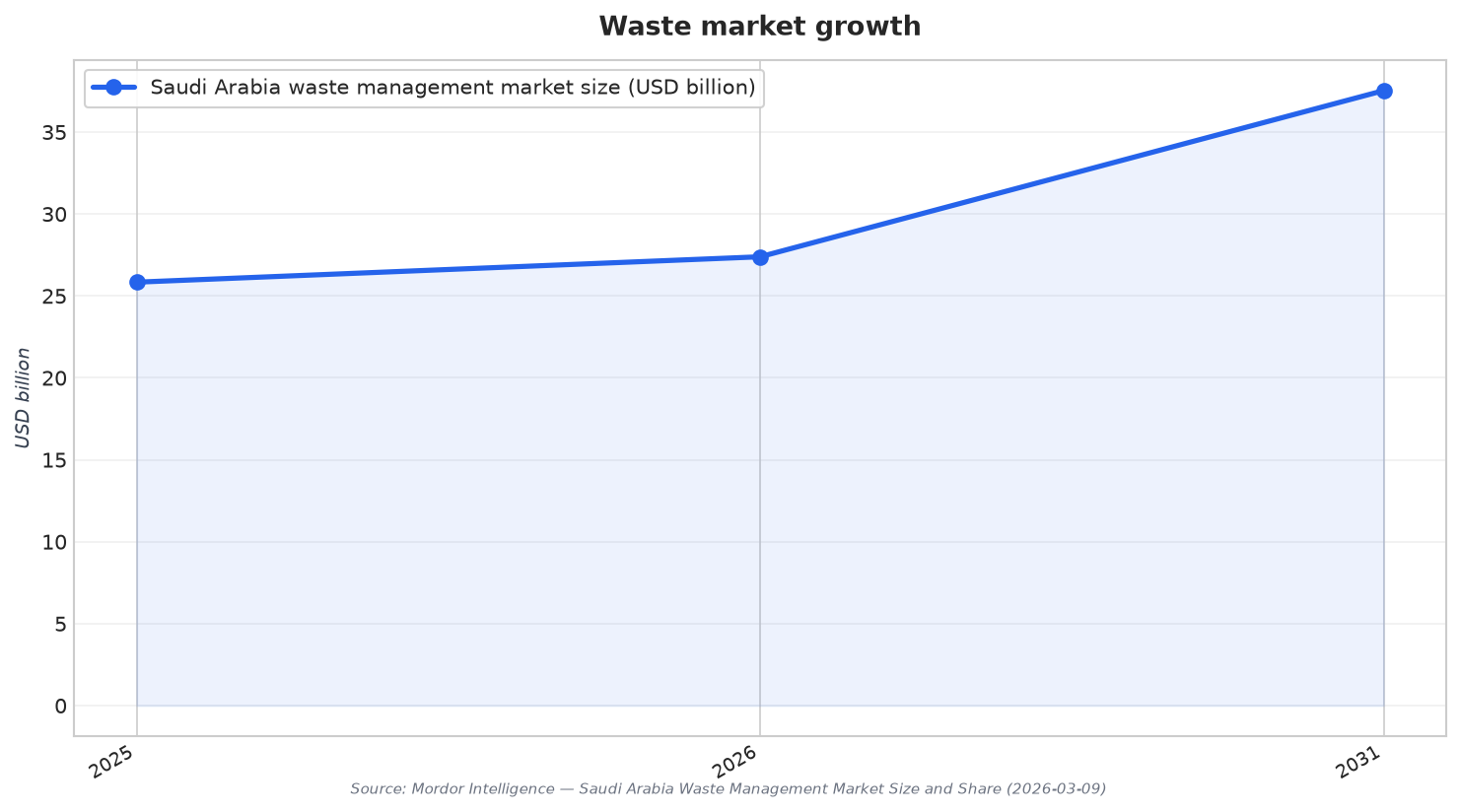
Investors and operators can also read the medical segment through the national waste market’s direction of travel. Mordor Intelligence values the Saudi Arabia waste management market at USD 25.84 billion in 2025 and estimates growth from USD 27.39 billion in 2026 to USD 37.53 billion by 2031, at a CAGR of 6.5% (2026–2031). It further reports that Riyadh accounted for 38.5% of market size in 2025. That scale explains why leading groups are building capacity and winning multi-year work. The same source says Saudi Investment Recycling Company (SIRC), Veolia, SUEZ, Averda, and BEEAH collectively managed more than 50% of treated volumes in 2025, and that SIRC alone recycled 16 million tons of C&D waste that year—evidence of operational reach that can be leveraged into tightly regulated streams.
The global and regional backdrop adds another layer of urgency, without replacing Saudi-specific drivers. Global Market Insights values the global medical waste management market at around USD 16.7 billion in 2025, projecting growth from USD 17.9 billion in 2026 to USD 34.3 billion in 2035 at a 7.5% CAGR, and it describes Saudi Arabia as expected to see “significant and promising growth” from 2026 to 2035. For companies positioning in Saudi medical waste management, the practical takeaway is simple: win on compliance, segmentation know-how, and verifiable service quality. The U.S. commercial guide explicitly calls out opportunities for technology owners and service providers, including solutions to treat hazardous waste and automation and Artificial Intelligence solutions—capabilities that align with the tracking and treatment rigor hospitals increasingly need.
What is driving demand for medical waste services in Saudi Arabia?
Which treatment methods are emphasized for healthcare waste?
What sterilization benchmark is cited for autoclaving medical waste?
How large is Saudi Arabia’s overall waste management market?
What should companies prioritize when entering Saudi Arabia’s medical waste market?