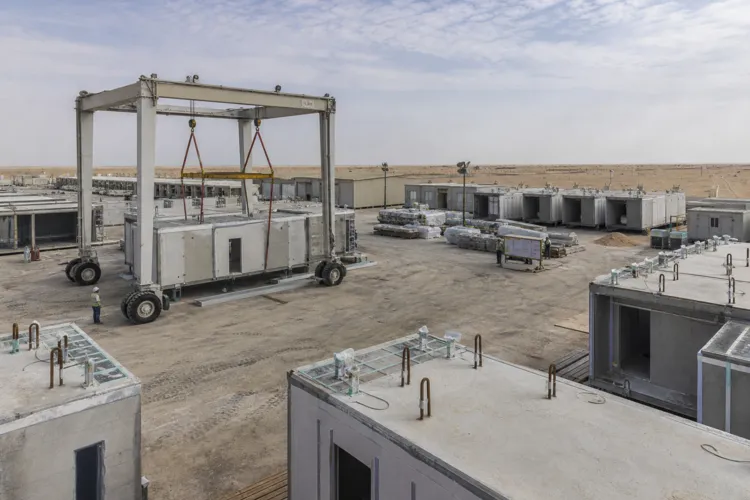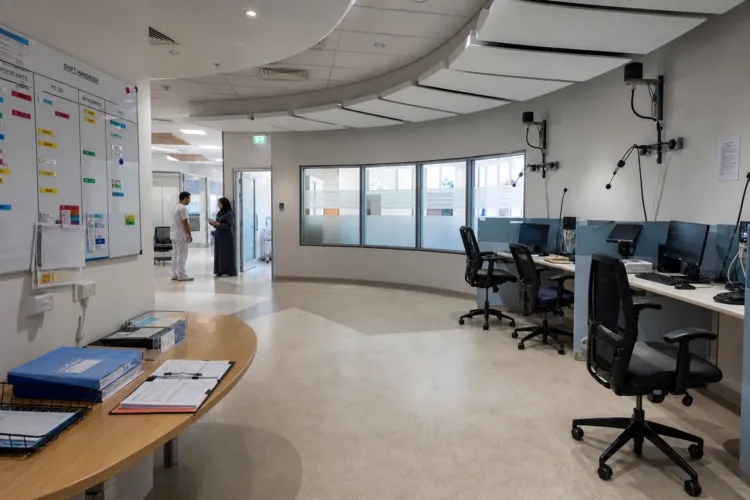
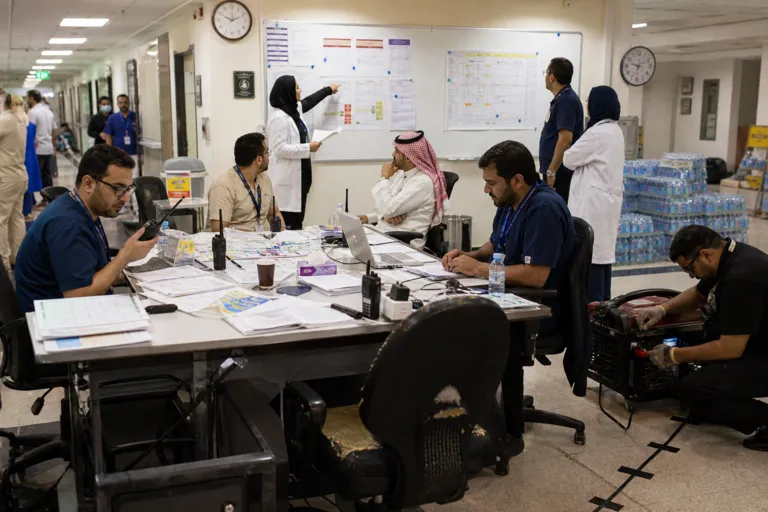
KSA hospital planners preparing for Hajj 2026 can treat the event as a mass gathering medicine stress test. It pushes emergency pathways, clinical governance, staffing models, and downtime readiness to their limits. Planning for saudi hajj medical services should therefore prioritize systems that stay safe under surge and uncertainty. Recent Saudi healthcare initiatives and cross-sector forums provide practical signals on what to standardize, what to drill, and what to govern tightly. The goal is not a one-off campaign. It is repeatable operational discipline aligned with national transformation priorities.
A first lesson is to anchor Hajj operations in governance and a scalable care blueprint. In October 2025, Saudi Health Holding Co. and Mass General Brigham advanced work tied to implementing the Saudi Model of Care, accelerating nationwide adoption, building national capacity, and strengthening clinical governance, in support of Saudi Vision 2030’s goal of a world-class, patient-centered health care system. For Hajj planners, that framing matters because mass gathering medicine exposes gaps in standardization. Strong governance supports consistent triage rules, escalation criteria, and safety guardrails across sites, shifts, and mixed-experience teams.
Emergency care readiness is a second lesson, because surge often lands first in the ED. In AlUla, collaboration work transformed emergency care services, and Prince Abdul Mohsen Hospital’s Emergency Department earned its first national accreditation. The same initiative significantly reduced patient wait times while maintaining high standards of care and safety. Hajj planners can translate this into operational priorities: make ED flow improvements measurable, keep safety standards explicit, and use accreditation thinking to structure policies, documentation, and compliance checks. Reduced waits and maintained safety are compatible targets during peak load.
Workforce, Values, and Downtime Drills Define Readiness
Third, workforce development must be treated as a clinical safety lever, not an HR afterthought. A Leadership Essentials Program was launched in collaboration with the Institute for Excellence in Health Leadership (IEDLI), described as the first program of its kind in the Middle East, with an inaugural session held in AlUla in December 2024 to train a new generation of Saudi healthcare leaders. Separately, a two-day forum in Jeddah gathered more than 250 officials, experts, and academics under the theme “Building People, Empowering Capabilities, and Creating Impact,” with discussions highlighting Saudization as a key driver reshaping the training ecosystem. Planning should connect surge rosters, leadership coverage, and competency sign-offs to this skills-based direction.
Fourth, planners should treat downtime resilience as a clinical workflow requirement. A 2026 resilience planning article stresses that having a downtime plan is only the first step and that organizations need to test plans so clinical staff know what to do when systems go down. It also emphasizes documenting and practicing manual downtime processes and running drills so everybody is aware of what they need to be doing, including basic steps such as locating whiteboards. For Hajj operations, this means rehearsing paper triage, manual bed tracking, and fallback communication routines, not just writing them.
Finally, planners can learn from how Saudi convenes leaders to manage uncertainty and execution. The Future Hospitality Summit (FHS) Saudi Arabia 2026 is scheduled for 22–24 June 2026 at Mandarin Oriental Al Faisaliah in Riyadh. Its program includes sessions dedicated to recovery, resilience, and recalibrating growth strategies amid ongoing regional uncertainty, and it will feature more than 30 presentations, debates, forums, and networking events. While this is a hospitality context, the operational language maps well to mass gathering medicine: resilience planning, structured convening, and cross-sector coordination. For saudi hajj medical services, these are not buzzwords. They are the planning cadence that reduces surprises.
What should guide saudi hajj medical services planning for 2026?
What is a concrete emergency care lesson KSA planners can reuse?
How does leadership training connect to mass gathering medicine readiness?
What downtime practice should be emphasized in hospital surge operations?
Why mention a 2026 Riyadh summit when discussing hospital planning?