Saudi Arabia’s push to train more clinicians is closely tied to workforce realities. A case study on healthcare education and training in the Kingdom states that 232,000 expatriates staffed the sector, including about 60% of doctors and 57% of nurses. In the same context, Vision 2030 set an aim to train 175,000 new Saudi health professionals, while domestic programs were described as not producing enough graduates and lacking hands-on training. These pressures shape the Saudi medical education market, where stakeholders are focused on building local capacity while upgrading the learning experience from classroom-heavy delivery to practical, supervised clinical competence.
On the professional training side, Ken Research segments Saudi Arabia’s healthcare professional training landscape by training type, including pre-service education and residency programs, CME and CPD, simulation-based clinical skills training, digital and e-learning modules, certification and credentialing programs, and leadership and quality and safety training. It identifies CME and CPD as the leading subsegment, supported by mandatory continuous professional development requirements set by national regulators. By profession, physicians are described as the most significant subsegment, reflecting demand for specialist and subspecialist training as Saudi Arabia expands tertiary and quaternary care services and increases structured residency and fellowship programs across major disciplines.
What Modernization Looks Like: Curriculum, Simulation, and Residency Scale-Up
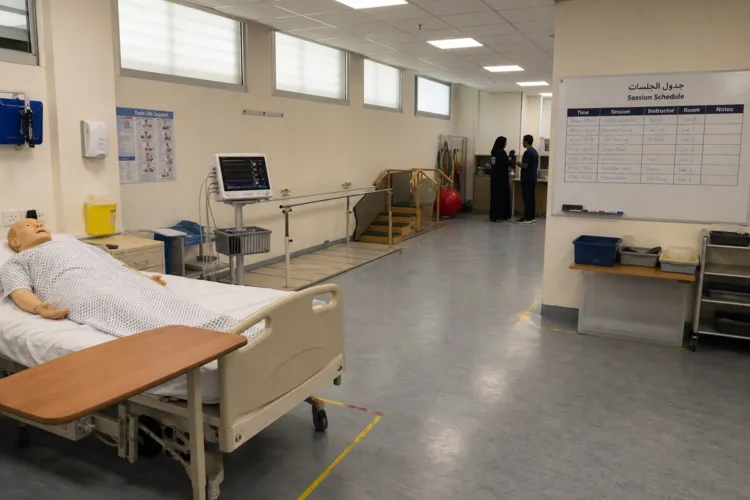
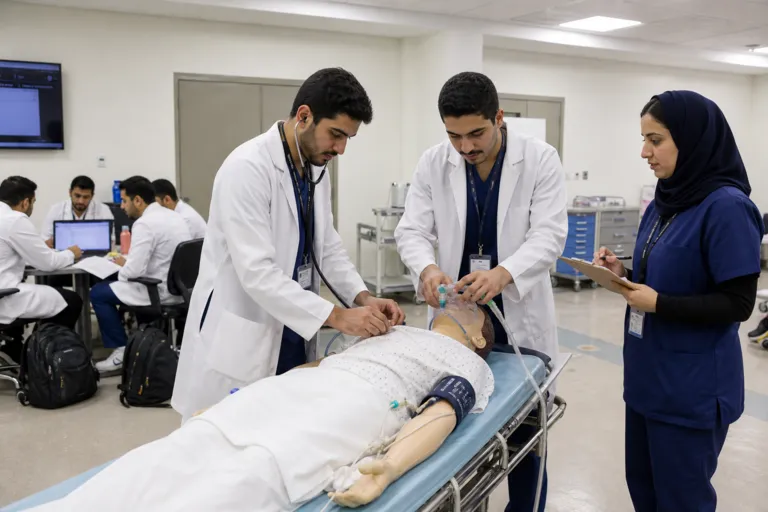
The education-and-training case study describes a multi-layer approach: expanding medical schools and nursing colleges, boosting enrollment capacity, and modernizing curricula to emphasize practical skills and technology such as health informatics and telemedicine. It also highlights a blueprint for a state-of-the-art Medical Simulation Center with simulation labs, virtual reality training tools, and standardized patient programs to strengthen clinical readiness for students and support ongoing skill development for working practitioners. The same plan calls for faculty development, including training and exchange opportunities with international medical schools, and for expanding residency and fellowship programs in hospitals, especially in family medicine, emergency, and critical care.
Training is also becoming more embedded in how healthcare organizations operate. Ken Research’s report on training education services outsourcing in Saudi Arabia describes clinical training as the most dominant segment, driven by the need for hands-on experience in patient care. It also identifies hospitals as the largest end-user segment because they need continuous staff training to keep up with medical technology and patient care practices. That same report values the Saudi Arabia healthcare training education services outsourcing market at approximately USD 390 million, linking growth to demand for training services, government investments in modernization, and specialized skill development.
Broader policy and investment signals reinforce this direction. The U.S. International Trade Administration notes that under Vision 2030, Saudi Arabia is prioritizing training for the Saudi labor force and encourages companies to invest in the Kingdom. It also states that the 2019 Private Health Institutions Law permits foreign investors to own, operate, and manage hospitals and health centers through PPP and build-operate-transfer models, and that the sector is open to wholly foreign-owned businesses. In parallel, Ken Research values the Saudi Arabia corporate education and training market at USD 3.6 billion and notes increased healthcare-sector training needs tied to regulatory standards and specialized skills in digital health and patient safety, while anticipating Saudi Arabia’s digital learning market could reach SAR 2 billion (USD 533 million) in the future.
Why is Saudi Arabia prioritizing medical education and training now?
Which training formats lead healthcare professional development in Saudi Arabia?
What does modernization in the Saudi medical education market look like in practice?
How big is the outsourced healthcare training services segment in Saudi Arabia?