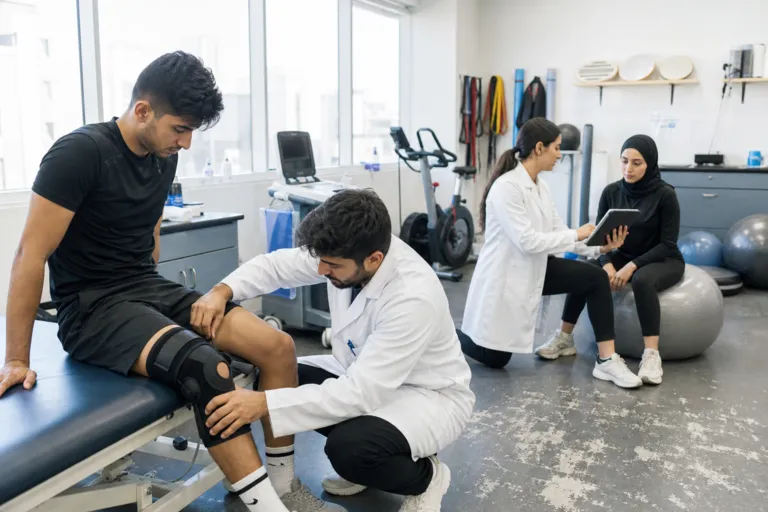
Saudi Arabia’s healthcare landscape is shifting as sports medicine becomes a clearer priority under Vision 2030. JLL describes a “sports medicine revolution” supported by government backing, favourable demographics, and robust demand. As part of Vision 2030 initiatives, the government is investing approximately USD 500 million in sports infrastructure, according to the Saudi Ministry of Investment (Sports Sector Report 2024). Participation goals also matter for care demand: the target is to lift sports participation from 13% in 2018 to 40% by 2030 (Saudi Vision 2030 Health and Sports Initiatives Update, 2023). More athletes and more fitness activity typically translate into greater need for prevention, diagnostics, and return-to-play support.
Care demand is also being pulled by wider rehabilitation needs. JLL notes growth drivers that include rising sports injuries, road accidents, and increasing rates of chronic diseases such as diabetes and heart conditions. The World Health Organization (WHO, 2023) adds urgency: lifestyle-related diseases account for approximately 74% of total deaths in Saudi Arabia. That backdrop helps explain why rehabilitation services and integrated athletic care models can attract both public and private attention. Grand View Research also frames the Middle East picture around government emphasis on quality care in hospitals, a rising number of orthopedic surgeons, and sports injuries among young and active populations in the UAE and other countries, with Saudi-specific momentum linked to increasing doping cases among Saudi players and the establishment of medical institutes offering specialized degrees in sports medicine.
From Regional Benchmarks to Major Events: Raising the Bar
Regional standards are influencing expectations inside the Kingdom. JLL points to Aspetar in Doha, Qatar, as a regional gold standard for sports medicine and rehabilitation, highlighting its focus on injury prevention, treatment, and rehabilitation, supported by advanced technology, expert staff, and research. In Saudi Arabia, this type of benchmark supports the case for world-class infrastructure and consistent clinical pathways. At the same time, demand is becoming more event-driven. JLL notes Saudi Arabia is preparing to host the FIFA World Cup 2034, expected to drive upgrades to sports infrastructure and healthcare services, including athlete care, injury prevention, and rehabilitation capabilities (FIFA 2034 Hosting Agreement, 2024). The AFC Asian Cup 2027 is also cited as reinforcing Saudi Arabia’s position as a regional football hub, bringing visiting teams and audiences that expect advanced medical support.
Within the Saudi sports medicine market, technology-enabled rehabilitation is becoming a practical differentiator, especially for lower-limb injury management and performance optimization. IndexBox reports that the Middle East and Africa account for approximately 5% of global demand for gait assessment and training systems, with the UAE, Saudi Arabia, and South Africa as key markets. It also estimates that sports medicine and athletic training centers constitute about 25% of that market, with demand growing at an estimated 10–13% CAGR through 2035. These systems are used for biomechanical analysis to optimize running form, prevent injuries, and guide return-to-play decisions after lower-limb injuries, supported by broader trends such as AI integration and remote monitoring.
Injuries remain the constant that keeps sports medicine essential across levels of play. Grand View Research cites a Safe Kids World survey indicating young athletes globally are admitted to emergency departments over a million times annually for athletic-related injuries, underscoring the scale of the challenge beyond any single country. Towards Healthcare adds another global context point from John Hopkin Medicine reports: more than 3.5 million kids under 14 get hurt every year playing sports or having fun, and over 775,000 in that age group go to the emergency room because of sports-related injuries. As Saudi Arabia builds more complexes, gyms, and rehabilitation centres (as noted by JLL), the focus is likely to keep shifting from reactive treatment toward preventive care and structured rehabilitation pathways that match rising participation and higher performance expectations.
What is driving growth in Saudi Arabia’s sports medicine and athletic care sector?
How much is Saudi Arabia investing in sports infrastructure under Vision 2030 initiatives?
How do major events affect the Saudi sports medicine market outlook?
What role do gait assessment systems play in modern athletic care in the region?
What do global injury figures suggest about demand for sports medicine services?