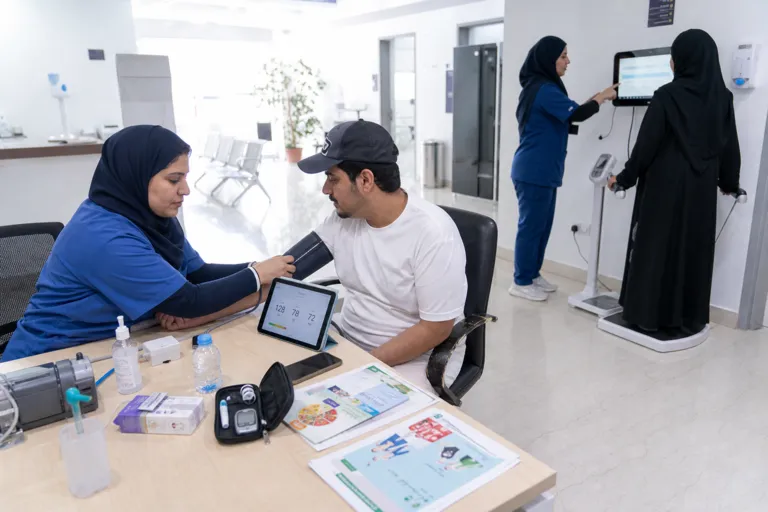
Saudi Arabia’s health policy is increasingly framed around prevention because non-communicable diseases (NCDs) remain a central challenge. A 2030-focused perspective on sector transformation notes that NCDs account for roughly 73% of all deaths in Saudi Arabia. That context helps explain why Vision 2030 and the Health Sector Transformation Strategy highlight preventive care alongside patient-centered care, technology integration, workforce capacity, and research. The shift is not only clinical. It is also structural, with new operating models designed to create a continuum of care across primary care clinics, hospitals, and specialized centers, supported by better referral pathways and communication.
Funding signals the scale of intent behind the move. A U.S. government commercial guide states that Saudi Arabia accounts for 60% of Gulf Cooperation Council (GCC) countries’ healthcare expenditure. It also reports that the Saudi government allocated SAR 214 billion (about USD 57.1 billion) to the healthcare sector in 2024, representing approximately 17% of the total budget. The same guide describes a planned USD 13.8 billion investment in medical facilities by 2030. These figures matter for prevention because they create room for primary-care development programs, expanded digital health and virtual care, and broader system redesign rather than only acute, hospital-based growth.
From Treating Illness to Managing Risk Factors
Prevention is also being defined by measurable risk-factor priorities. OECD analysis using its Strategic Public Health Planning for NCDs model indicates that, between 2010 and 2022, overall changes in risk factors increased the incidence of new NCD cases compared with a scenario where 2010 risk-factor levels were maintained. For premature mortality, the OECD identifies obesity, air pollution, and physical activity as the top three risk-factor priorities for Saudi Arabia, stating these together can deliver 92% of the impact. This framing supports prevention programs that target lifestyle and behavioral change, including school and community interventions discussed in research on the system’s transition toward value-based care.
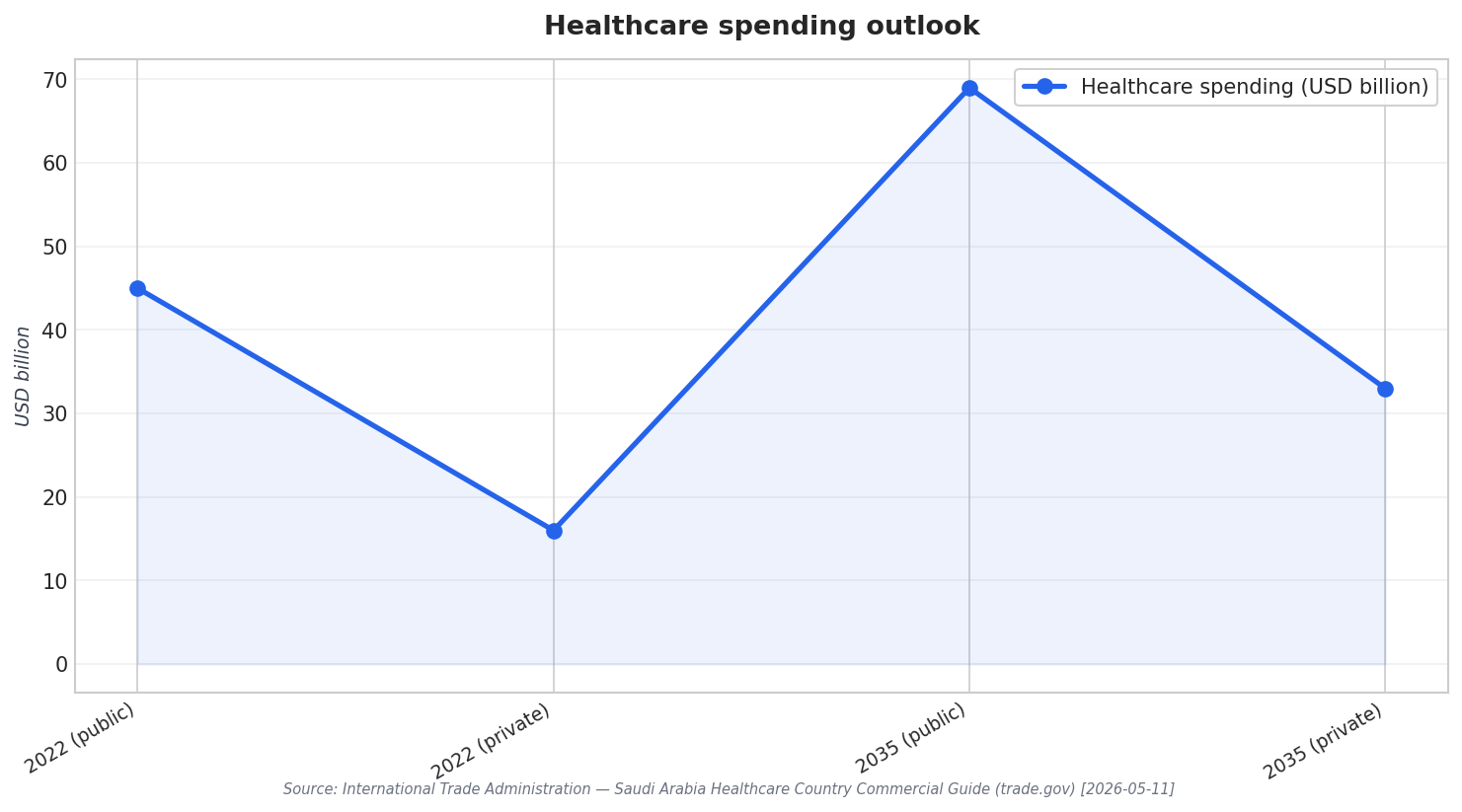
Operational reforms are being paired with market change. The trade guide describes how the Ministry of Health has transitioned away from its previous role as healthcare provider, while the Health Holding Company delivers day-to-day administration and primary healthcare development programs, including expanded digital health and virtual care. At the financing and purchasing layer, the Center for National Health Insurance is positioned to pay for services delivered through the Health Holding Company and its subsidiaries. In parallel, the government aims to raise private-sector contribution from 25% to 35% by 2030, aligning investment incentives with system goals that reward earlier intervention and stronger chronic disease management.
Prevention is also showing up in adjacent sectors that influence daily behavior. A Nexdigm report on health and fitness services links demand for fitness services to a push toward preventative healthcare, noting Saudi Arabia’s health budget exceeded SAR 200 billion (about USD 53 billion) in 2022. The same report adds that initiatives include the “Healthy Saudi, Healthy Home” program, focused on promoting physical fitness to prevent NCDs. It also cites the Ministry of Communications and Information Technology reporting over 30 million internet users in 2023, with a significant portion engaging in virtual fitness services. Together, these details reflect how Saudi preventive healthcare can connect clinical prevention with digitally enabled lifestyle support.
Why is Saudi Arabia prioritizing prevention for non-communicable diseases?
What budget figures show Saudi Arabia’s commitment to health reform?
Which risk factors are the highest priorities for reducing premature mortality in Saudi Arabia?
How is the system being reorganized to support prevention and continuity of care?
What does Saudi preventive healthcare look like beyond clinics and hospitals?