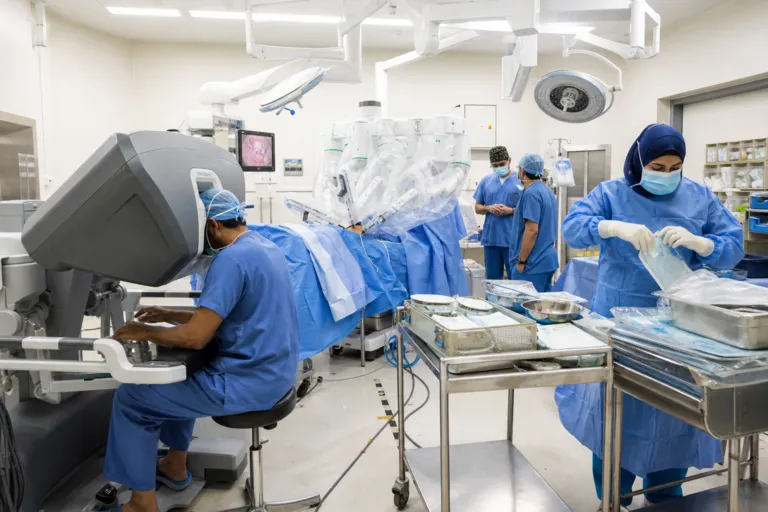
Saudi Arabia’s robotic surgery boom is being built on a clear shift toward minimally invasive care and the hospital investments needed to deliver it. In the Saudi Arabia Laparoscopic Robotic Assisted Procedures Market, Ken Research values the segment at USD 38 million based on a five-year historical analysis. A separate Ken Research view of the Saudi Arabia Surgical Robot Procedures Market values it at approximately USD 50 million. While these studies measure different scopes, together they show strong commercial attention to robot-assisted procedure ecosystems, and they help frame where the Saudi robotic surgery market is being prioritized: precision, surgeon capability, and patient demand for less invasive approaches.
Policy and clinical demand are pulling in the same direction. Ken Research cites the World Health Organization estimate that approximately 8 million adults in Saudi Arabia are living with diabetes “as of now,” a burden that can increase the need for advanced interventions. It also cites the Saudi Ministry of Health expectation that around 65% of surgeries in Saudi Arabia are expected to be minimally invasive in the future, a signal that care pathways are evolving beyond traditional open procedures. As adoption grows, tertiary hospitals and medical cities are described as dominant users because they can handle complex robotic-assisted cases, while specialized surgical centers are also gaining traction for targeted procedures.
What’s Powering the Boom: Systems, Services, and Consumables
Market structure matters because robotic surgery is not just a capital equipment purchase. Ken Research segments Saudi Arabia’s surgical robot procedures market into robotic surgical systems, instruments and accessories, and services, noting that robotic surgical systems lead due to adoption for precision and minimally invasive techniques. It also highlights that instruments and accessories are growing rapidly because consumables recur and applications are expanding, while services such as maintenance and training support longevity and efficiency. IndexBox similarly defines the Saudi Arabian Surgical Robot Procedures market as an integrated ecosystem of capital equipment, disposable and reusable instruments, software, and services enabling robot-assisted minimally invasive surgery (MIS).
Recurring disposables are a central part of the economics and procurement conversation. IndexBox describes Saudi Arabia’s role in robotic surgical system disposables as a high-value, tender-driven import market rather than a manufacturing or supply-chain hub for these high-precision devices. It ties growing domestic demand intensity to government healthcare investment, a rising burden of diseases amenable to minimally invasive surgery, and the prestige associated with advanced robotic programs in both public and private hospitals. The same IndexBox scope defines disposables as single-use, procedure-specific instruments, accessories, and consumables engineered exclusively for integration with robotic-assisted surgical platforms, used across workflow stages from pre-operative kit selection to post-procedure disposal and cost reconciliation.
Technology direction is also shifting toward more software-driven capability. IndexBox’s Saudi-focused study frames “AI Based Surgical Robots” as systems that integrate artificial intelligence for planning, guidance, and execution, designed to enhance precision, autonomy, and surgeon capabilities, and it notes historical analysis typically covering 2012 to 2025 with forward-looking scenarios through 2035. Ken Research also expects AI and machine learning integration into robotic systems to enhance surgical precision and efficiency as hospitals expand capabilities. In parallel, Global Market Insights points to regional growth being driven by investments in healthcare infrastructure in countries including Saudi Arabia, as governments modernize hospitals and establish advanced surgical centers, supported by initiatives and public-private partnerships aimed at improving healthcare quality.
How large is Saudi Arabia’s robotic surgery market today, based on published reports?
What share of surgeries in Saudi Arabia is expected to be minimally invasive?
Which end users are leading adoption of surgical robots in Saudi Arabia?
Why are robotic disposables important in Saudi Arabia’s robotic surgery ecosystem?
What is driving the Saudi robotic surgery market toward more precision care?