
The “golden hour” mindset is about compressing delay. It is not only a hospital challenge, but a network challenge that links first contact, transport, triage, surgery, ICU, and rehabilitation. Saudi Arabia has national road traffic injury and death data for 2018 to 2020, drawn from Saudi Ministry of Health (MOH) tables and analyzed as a retrospective secondary analysis. That same study notes important limits: because it used already-published aggregate tables, it could not independently verify whether all sectors of care were captured, such as private, military, or university hospitals, and it could not quantify residual under-reporting. A connected system must therefore plan for both speed and visibility, so the right patient reaches the right capability quickly and the system can learn from every case.
In road trauma, who is injured and who dies are not the same planning problem. The national Saudi road traffic injury trend analysis found injuries and deaths were most prevalent in young adults, which points to prevention and enforcement strategies aimed at high-exposure groups. Yet the same analysis also reported that older adults had a higher risk of death from injuries, highlighting why post-crash care, rapid transport, and trauma care tailored to older patients matter even when the pool of injuries is smaller. In practice, the “golden hour” becomes a design requirement: dispatch and transport pathways must be clear, receiving facilities must be prepared, and inter-facility transfers must be decisive when higher-level services are needed.
From Sites and Roads to Hospitals and Rehab: Connect the Whole Pathway
Workplace injuries add another high-volume stream that should be engineered into the same coordinated response. Based on GOSI claims data summarized in an industrial safety analysis, construction, manufacturing, and transport are consistently the three highest-injury sectors in Saudi Arabia, accounting for over 60% of all compensated injuries. The same source warns that occupational injury underreporting is a structural feature of the labor market and can materially affect the reliability of GOSI statistics as a true picture of safety performance, particularly for vulnerable migrant workers. Network design has to accommodate this reality. Linking on-site reporting, emergency response protocols, and hospital handoffs reduces friction, while also improving the chance that cases enter a system that can measure outcomes.
Clinical coordination also includes how teams communicate in early assessment, because early decisions drive downstream care. A JAMA Surgery commentary describes analysis of audiovisual data from initial assessments of injured patients at 6 Level I trauma centers, examining how trauma-informed care (TIC) principles were applied and how language barriers affected clinician-patient interaction. While those centers are not in Saudi Arabia, the operational lesson travels: language access and patient-centered communication are part of time-critical quality, not an “extra.” For a modern Saudi trauma care network, triage and transfers should be matched by structured communication practices that work across diverse patient populations.
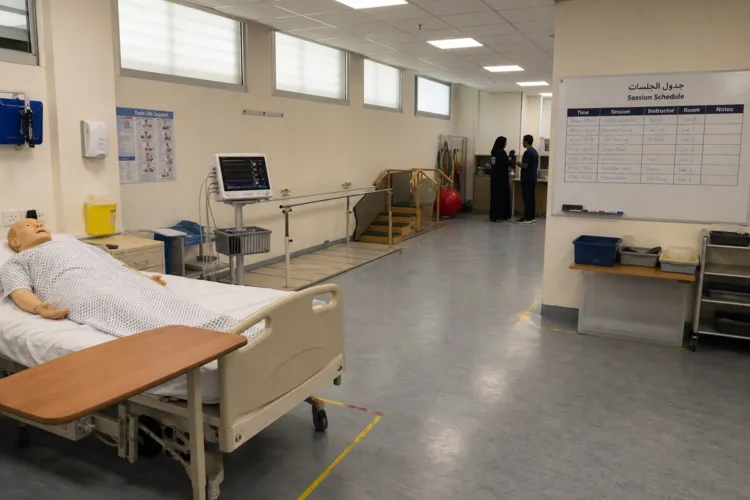
Rehabilitation capacity is the other half of a trauma system’s promise. In Saudi Arabia, an IndexBox report projects the rehabilitation products market to expand at a 7–9% compound annual growth rate through 2035. It also estimates import dependence at 75–85% of domestic supply, with mobility aids at roughly 25–30% of market value, and typical imported equipment lead times of 8–16 weeks. These realities shape discharge planning and continuity of care after road and workplace injuries. A connected Saudi trauma care network should plan rehab as a pathway, aligning acute care discharge decisions with equipment availability, home healthcare distribution trends (about 30–35% of sales volume), and the staffing constraints the report flags for physiotherapists and rehabilitation technicians.
What does “golden hour” thinking change in Saudi trauma system planning?
Which workplace sectors should be prioritized for injury response integration?
How reliable are workplace injury statistics for planning capacity?
How can a Saudi trauma care network reduce friction at the first assessment?
What rehabilitation constraints should planners account for after acute trauma care?