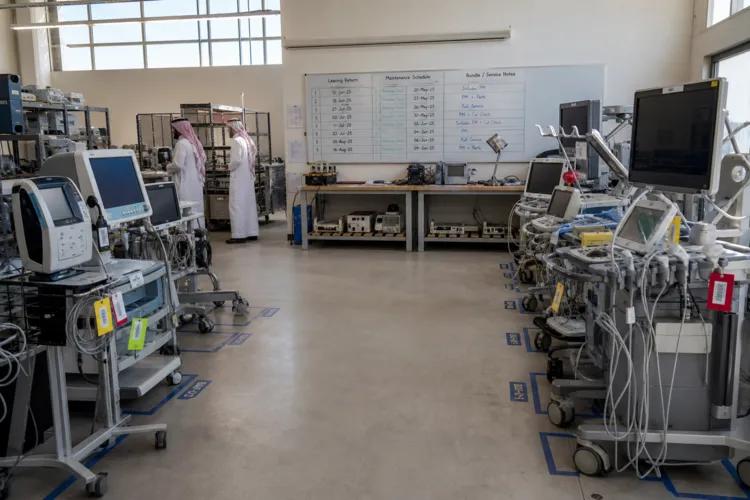
Saudi Arabia’s healthcare transformation depends on more than doctors and nurses. It also depends on allied health professionals who deliver diagnostics, rehabilitation, and many high-volume services that turn clinical decisions into outcomes. Workforce planning tied to Vision 2030 has framed the need at roughly 175,000 additional healthcare workers by 2030, including approximately 42,000 allied health professionals, alongside around 69,000 doctors and 64,000 nurses. At the same time, the system has historically leaned on international staffing: one Saudi-market case study cites 232,000 expatriates in the sector, including about 60% of doctors and 57% of nurses, while a GCC-focused report states expatriate healthcare professionals account for around 90% of the private sector workforce in Saudi Arabia.
The scale of the overall pipeline is moving, and it provides a base to build from. Figures released by the Saudi Commission for Health Specialties (SCFHS) show Saudi Arabia’s healthcare workforce exceeded 801,000 registered practitioners in 2025, up 4.5% versus 2024. The same SCFHS release also reports that the workforce includes around 460,000 Saudi practitioners and professionals from 140 countries, highlighting both localization progress and continued diversity of supply. On the education side, SCFHS reported 5,540 graduates in 2025, described as its largest graduating class, which was an 8% increase compared with 2024. It also reported 25,880 trainees enrolled in SCFHS-administered programs, indicating a multi-year development path that can be shaped toward allied health as well as medical specialties.
Where the “Missing Middle” Shows Up in Training
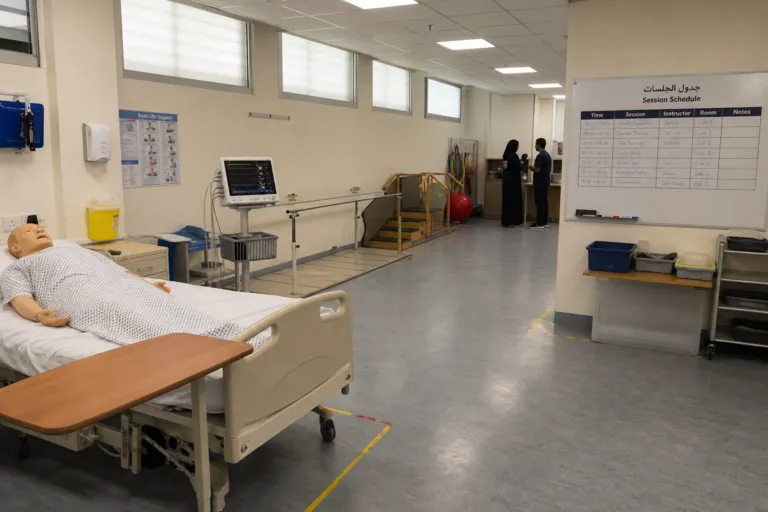
The missing middle is often a training design issue, not just a hiring issue. A Saudi-focused training market review notes that continuing education remains central: Continuing Medical Education (CME) and Continuing Professional Development (CPD) are the leading training subsegment, supported by mandatory continuous professional development requirements set by national regulators and the need to keep up with evolving guidelines and technologies. The same review frames healthcare training needs across professions, including allied health professionals such as pharmacists, lab, radiology, and rehabilitation roles. A separate Saudi workforce development case study argues that domestic programs were not producing enough graduates and that curricula were outdated and lacked hands-on training, which contributed to continued reliance on foreign workers. Its proposed response emphasized modernized curricula, a blueprint for a Medical Simulation Center, and expanded on-the-job training and CPD, including e-learning.
Building a stronger allied health pipeline also means treating enabling capabilities as core infrastructure. The Saudi training market landscape described includes public bodies and training centers such as SCFHS, the Saudi Health Council, the Ministry of Health (Saudi Arabia), and multiple universities and hospital systems offering accredited programs, simulation-based training, and digital learning solutions. That ecosystem can help allied health roles scale faster when programs are competency-based and linked to real clinical placements. In parallel, a GCC-oriented analysis highlights a gap in specialized training programs for physicians and allied healthcare professionals in the region, reinforcing why structured pathways matter. The goal is not simply to add seats, but to ensure practical readiness through simulation, clinical rotations, and ongoing CPD that supports consistent professional practice across settings.
Finally, the missing middle is also operational. A Saudi-focused venture analysis argues that treating the 2030 target as a pure staffing problem is insufficient and points to system design questions, including hybrid workflows and the institutional “adoption infrastructure” needed to deploy new tools at scale. While its clinician usage statistics come from a 2025 survey of over 1,000 US physicians across 106 specialties, it uses those findings as directional context, noting that comparable GCC-specific adoption data at that scale does not yet exist. For Saudi Arabia, the practical implication is that allied health workforce growth must be paired with better implementation capacity in hospitals and clinics, including training that keeps pace with technology, clearer pathways from graduation to supervised practice, and CPD that stays aligned with regulatory expectations and service demand.
Why is the Saudi allied health workforce described as a “missing middle”?
How large is Saudi Arabia’s registered healthcare workforce, according to SCFHS?
What does SCFHS report about graduates and trainees in 2025?
What training formats are emphasized for building healthcare skills in Saudi Arabia?
How dependent is Saudi Arabia’s private healthcare sector on expatriate professionals?