The Saudi healthcare market is one of Vision 2030's largest opportunities, with about US$66 billion earmarked for healthcare projects through 2030, according to the CEO Guide to KSA. Pharma, medtech, health IT and genomics are priority areas, and companies like Roche show how exporters can move into local production and joint ventures.
Eurogroup Consulting's The CEO Guide to KSA: Saudi Arabia Reimagined, Are You Ready?, published in March 2024, examines healthcare as one of the sectors supporting Saudi Arabia's Vision 2030 economic diversification, alongside practical lessons from international companies already operating in the Kingdom.
How Big Is the Opportunity in the Saudi Healthcare Market?
According to Eurogroup Consulting's CEO Guide, approximately US$66 billion was earmarked for healthcare development projects through 2030. This figure represents an investment ambition reported in the 2024 publication, rather than expenditure already completed.
The guide also identifies an estimated 25,000 healthcare-related jobs expected to be generated by 2030, reflecting the anticipated workforce implications of sector development.
Investment opportunities are not limited to constructing hospitals or expanding bed capacity. Healthcare facilities require diagnostic equipment, laboratory systems, medical supplies, information technology, maintenance services, and specialized operational capabilities.
A hospital technology supplier, for example, faces different customers, procurement processes, and regulatory obligations from a pharmaceutical manufacturer or healthcare software provider. As a result, understanding the sector's structure is essential before choosing an investment or market-entry strategy. Commercial viability depends on demand, procurement arrangements, operating capabilities, and the ability to deliver reliable services within the local healthcare system.
Which Healthcare Segments Are Growing Fastest?
The CEO Guide highlights the Kingdom's ambition to become a regional leader in genomic research and personalized medicine. Advanced diagnostics, pharmaceuticals, healthcare IT, and specialized medical technologies are among the areas identified for development.
At the same time, localization is increasingly relevant to international suppliers. For companies, this creates strategic choices between importing products, establishing distribution arrangements, entering manufacturing partnerships, or developing local production capabilities.
Local manufacturing may require substantial capital expenditure, specialized technical expertise, regulatory approvals, and reliable demand. Distribution partnerships can offer an alternative for companies seeking market access with a lower initial operating commitment.
International pharmaceutical participation is already established in the Kingdom. The guide identifies healthcare and pharmaceuticals among the five principal sectors in Saudi Arabia's commercial relationship with Europe, and its historical pharmaceutical-sector overview includes major international companies such as Pfizer, Sanofi, Novartis, and GSK.
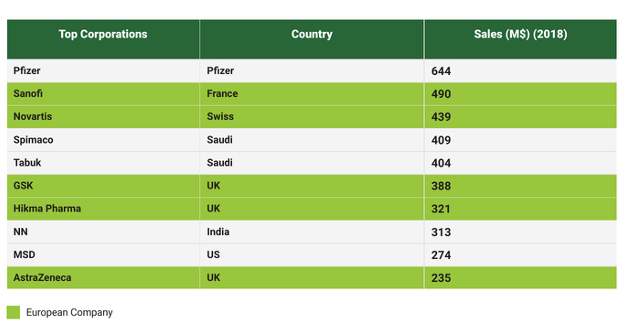
Figure 1: Top Pharmaceutical Corporations in Saudi Arabia by Sales, 2018 (US$ Mn). Source: The CEO Guide to KSA, Eurogroup Consulting (p. 49).
The 2018 sales comparison reflects the historical competitive landscape rather than current market rankings. Its significance extends beyond product exports: technology transfer, distribution partnerships, and localized operations can create opportunities for companies with specialized healthcare capabilities.
How Did Roche Build Its Presence in Saudi Arabia?
Roche provides a useful example of how an international healthcare company can develop its market presence progressively. The Swiss pharmaceutical group initially supplied Saudi Arabia through local distributors. According to the CEO Guide, Roche distributed approximately 25 pharmaceutical products through local agents.
In 2018, the company signed a memorandum of understanding with Saudi Pharmaceutical Industries & Medical Appliances Corporation (SPIMACO), supporting local production of selected pharmaceutical products. The agreement was associated with approximately SAR 100 million in annual sales, according to the report. Roche also established a diagnostics joint venture with a local partner, obtaining the relevant investment license in September 2018.
Explore how SPIMACO and joint ventures are shaping pharmaceutical localization in Saudi Pharmaceutical Localization: Vision 2030 Momentum, SPIMACO Gains and JV Breakthroughs.
The guide quotes Ali Al Watban, General Manager of Roche Diagnostics Saudi Arabia, describing the partnership's benefit as:
"immediate access to patients and decision-makers."
However, the Roche approach should not be treated as a universal template. Appropriate entry models depend on product characteristics, commercial objectives, regulatory requirements, and available partners. For pharmaceutical businesses, localization decisions must also account for quality assurance, manufacturing standards, technical expertise, and supply-chain requirements.
From Investment Ambition to Healthcare Market Execution
Healthcare investment opportunities depend on implementation capabilities as much as the scale of announced government programs. Product registration, market authorization, pricing, technical standards, and local representation can affect the feasibility of individual investments.
For pharmaceutical manufacturers, production partnerships introduce additional questions concerning quality systems, manufacturing responsibilities, and operational oversight. Read more about this changing landscape in The Outsourcing Edge in Saudi Pharma: Contract Manufacturing Momentum.
Key considerations for healthcare investors include:
- Demand assessment: Identify priority healthcare segments and unmet customer requirements.
- Regulatory readiness: Understand approvals, product requirements, and relevant operating obligations.
- Localization strategy: Evaluate distribution, partnerships, and potential domestic manufacturing.
- Commercial feasibility: Assess financing, procurement structures, operating costs, and competition.
- Partner selection: Identify organizations with suitable technical and market capabilities.
The CEO Guide to KSA examines these considerations within the wider Saudi business environment. Investment announcements indicate potential market direction, but individual opportunities must still be evaluated against customer demand and practical implementation requirements.
For tailored support, explore our healthcare consulting services or contact our team to discuss your requirements.
Frequently Asked Questions
How much investment is planned for Saudi Arabia's healthcare sector?
According to Eurogroup Consulting's CEO Guide to KSA, published in March 2024, approximately US$66 billion was earmarked for healthcare development projects through 2030, covering hospitals, medical technologies and pharmaceutical development. The guide also expects around 25,000 healthcare-related jobs by 2030. These are announced plans rather than verified totals of completed expenditure.
Which healthcare segments offer opportunities in Saudi Arabia?
The CEO Guide identifies advanced medical technologies, pharmaceuticals, healthcare information systems, genomics and personalized medicine as key development areas, reflecting the Kingdom's ambition to lead the region in genomic research. Opportunities also extend to hospital equipment, diagnostics and healthcare services, but companies should assess demand, procurement rules and regulatory conditions for each segment.
How can foreign pharmaceutical companies enter Saudi Arabia?
Many pharmaceutical companies start by exporting through local agents and distributors, then move into local production partnerships or joint ventures as they gain market knowledge. Roche followed this path, distributing around 25 drugs through local agents before signing a 2018 memorandum of understanding with SPIMACO and establishing a diagnostics joint venture licensed in 2018.
Why is pharmaceutical localization important in Saudi Arabia?
Localization supports Vision 2030's goals for domestic industrial capability and more resilient medicine supply. Partnerships such as Roche's agreement with SPIMACO, linked to about SAR 100 million in annual sales according to the CEO Guide, show how local production can grow. However, it requires sufficient demand, technical expertise, quality systems and regulatory compliance.
Explore Healthcare Investment Opportunities in Saudi Arabia
For business leaders assessing expansion, Eurogroup Consulting's CEO Guide provides a wider examination of market conditions, regulatory frameworks, and practical entry strategies.