Saudi Arabia is turning “destination health” into a national strategy. Multiple market trackers link the country’s momentum to Vision 2030 and a deliberate focus on healthcare infrastructure, skilled medical professionals, and patient-centric services. Market estimates cited by IMARC Group place the medical tourism market at USD 1,633.5 million in 2025, with a forecast of USD 8,887.9 million by 2034 at a 20.71% CAGR from 2026–2034. Separate reporting also states the Saudi Arabian medical tourism market was valued at USD 1.34 billion in 2024 and is expected to reach USD 7.92 billion by 2033, underscoring strong growth expectations in the Saudi medical tourism market conversation.
What is drawing patients in is the breadth of specialized care and the promise of an easier end-to-end experience. Sources describe demand across cosmetic surgery, dental procedures, cardiovascular care, orthopedic treatment, bariatric surgery, fertility treatment, ophthalmic services, and organ transplantation. This range is paired with accessibility factors, including direct flights, geographic positioning, and cultural similarities that can make the Kingdom feel familiar to patients from the Middle East, Africa, and Asia. Ken Research also frames the market through use cases like inpatient services, outpatient services, rehabilitation services, plus wellness and preventive care—signaling that medical travel is not limited to one procedure type or one care setting.
How Vision 2030 Is Making Care Easier to Access
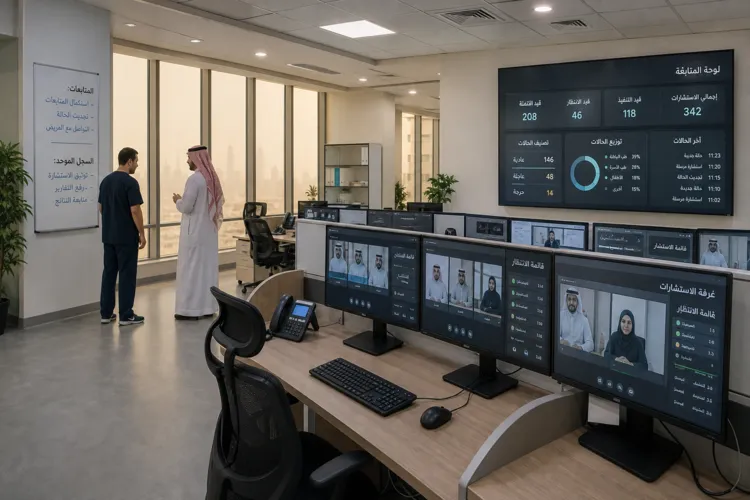
Vision 2030 is repeatedly cited as the policy backbone for medical tourism expansion, with sources pointing to investment in technology, international accreditation, and service design that prioritizes the patient. One cited driver is government-led visa simplification initiatives aimed at reducing friction for inbound travelers seeking care. Digital health is also central to the story. IMARC Group reporting highlights the SEHA Virtual Hospital as a platform linking over 150 facilities to enable remote consultations and even AR-guided procedures, alongside app-based features that can support booking and continuity of care. The same reporting connects these moves to broader healthcare sector development under Vision 2030.
The provider landscape is both public and private, with growing emphasis on premium experiences and personalized packages that appeal to international patients. Ken Research lists leading participants including King Faisal Specialist Hospital & Research Centre, Saudi German Hospital, Dallah Hospital, Dr. Sulaiman Al Habib Medical Group, International Medical Center, and several major medical cities in Riyadh. Regional demand is described across the Northern and Central Region, Western Region, Eastern Region, and Southern Region, with key hubs concentrated in Riyadh and Jeddah. This geographic spread matters because it allows different cities to compete on specialties, capacity, and patient experience rather than relying on a single gateway.
Saudi Arabia’s destination-health narrative is also developing within a wider GCC context. Travel And Tour World reports that between 2021 and April 2025, Saudi Arabia and the UAE together accounted for around 92% of healthcare transactions in the GCC, reflecting heavy regional activity in healthcare expansion. At the same time, sources note practical challenges, including limited international marketing efforts, which can cap awareness even when care quality and technology are improving. Still, with continued infrastructure investment, policy reforms, telemedicine-enabled follow-up, and the integration of wellness services with clinical care, Saudi Arabia’s medical tourism proposition is being shaped as a scalable pillar aligned with Vision 2030.
What is driving Saudi Arabia’s rise as a destination-health hub?
How big is the Saudi medical tourism market expected to become?
Which treatments are most associated with Saudi Arabia’s medical tourism offering?
What role does SEHA Virtual Hospital play in medical tourism?
What is one challenge mentioned for Saudi Arabia’s medical tourism growth?