
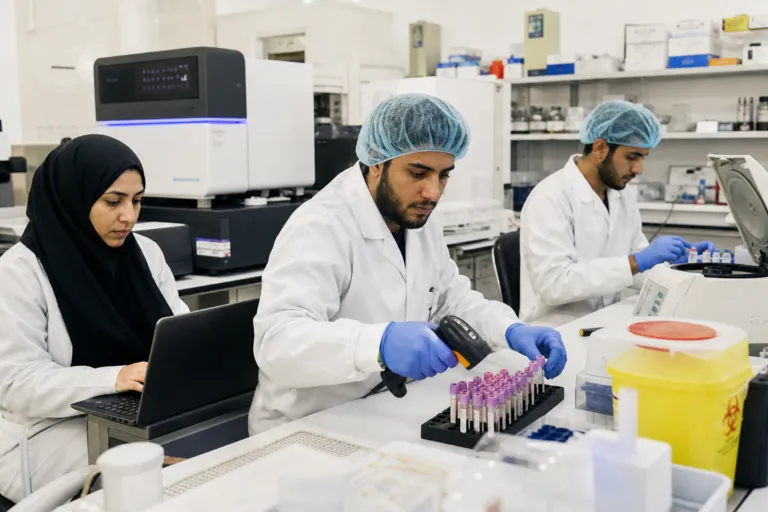
The saudi human genome program is a national effort to turn DNA data into better healthcare decisions. It supports precision medicine, where diagnosis and treatment are guided by a person’s genetics. The work also links directly to local research and product development, including genetic testing, pharmacogenomics, and targeted therapeutics.
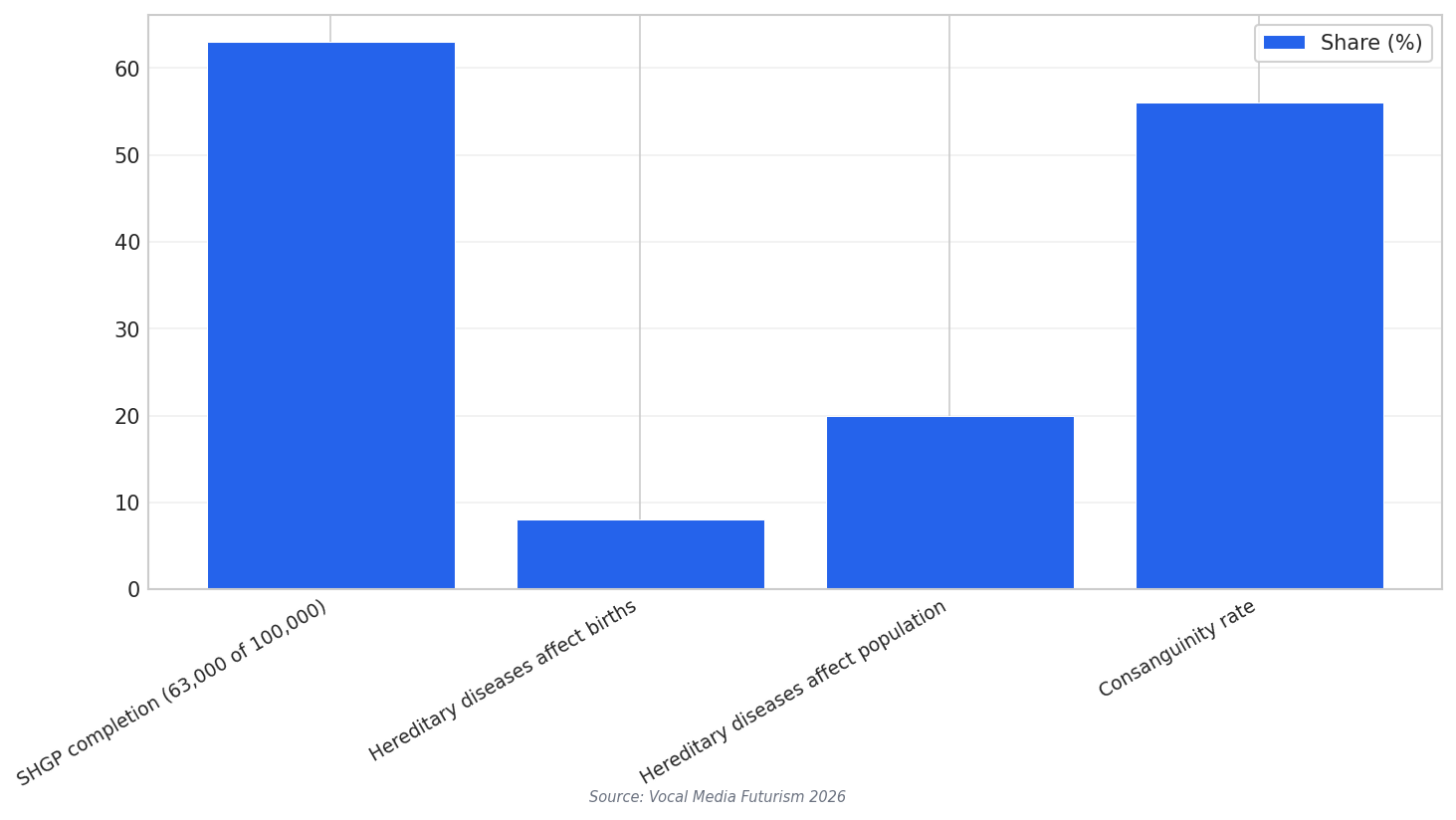
Several figures show the scale of the program and the health need it addresses. The program targets sequencing 100,000 Saudi genomes. By one update, 63,000 genomes had been sequenced, described as 63% completion. The same source links the effort to hereditary disease burden, stating hereditary diseases affect 8% of births and 20% of the population, alongside 56% consanguinity rates.
Regional context matters. One Middle East overview says the Saudi Human Genome Program is sequencing 100,000 genomes to generate a Saudi-specific reference genome called KSA001. The same discussion highlights why local databases matter, because Western datasets dominate much of global genomics research while regional genomes can show distinct variations that affect disease risk and drug response.
How Genomic Data Powers Care and Discovery
Saudi Arabia’s wider genomics and precision medicine market is described as valued at USD 215 million, based on a five-year historical analysis. The drivers listed include improvements in DNA sequencing that reduced costs and increased speed and accuracy, and increasing adoption of next-generation sequencing (NGS). The same market overview notes that Riyadh, Jeddah, and Dammam dominate due to advanced healthcare facilities and research institutions, and it points to the Saudi Human Genome Project as boosting demand for sequencing technologies.
Policy is also part of the story. A market report links genomics growth to the Saudi Vision 2030 strategy, issued in 2016, which emphasizes healthcare innovation and fosters research in genetic diseases and epigenetics. It also describes a framework to integrate genomic data into healthcare systems, promote collaboration between academic institutions and global biotech firms, and establish regulatory guidelines that support innovation in precision medicine. The same framework includes provisions for local drug manufacturing and reducing dependency on imports.
Investment guides add a product-development angle. One Vision 2030 investment guide says the Saudi Human Genome Program has a database of over 100,000 genomes and that this creates a research and product development platform for genetic testing, pharmacogenomics, and targeted therapeutics, especially in the context of consanguinity-related genetic disorders. It also notes that the Saudi Food and Drug Authority (SFDA) is the principal regulatory authority for pharmaceuticals, biologics, medical devices, and clinical trials.
What is the saudi human genome program trying to achieve?
How far along is the Saudi Human Genome Program today?
Why is a Saudi-specific genome reference important?
How does this connect to local drug discovery and development?