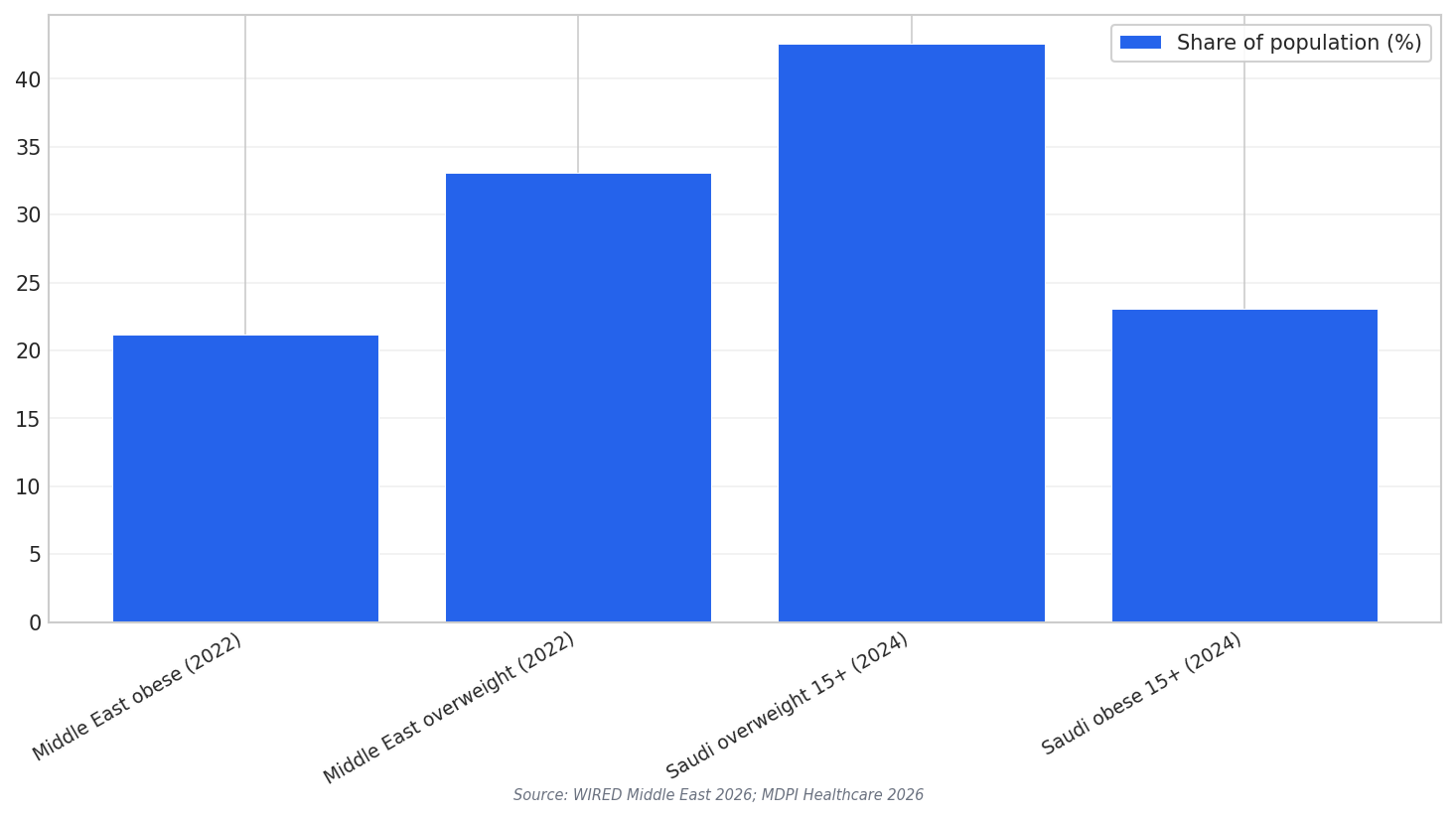
Saudi obesity treatment is entering a new boom. More people are looking for medical weight management, not only diet tips. In 2024, 42.6% of individuals aged 15 years and older were classified as overweight, and 23.1% were classified as obese. This demand is helping expand medications, surgery, and clinic-based wellness programs.
Three numbers show how big this issue is in Saudi Arabia and the region. In the Middle East, a 2022 study found 21.2% of people are obese and 33.1% are overweight. In Saudi Arabia, the 2024 figures are 23.1% obese and 42.6% overweight for people aged 15 and above. These are separate studies, but together they show why treatment options are growing.
GLP-1 receptor agonist drugs are a major reason for the surge. WIRED Middle East describes the promise as a single injection once a week for major weight loss. A 2024 study from King Abdulaziz University in Saudi Arabia found that patients using GLP-1 medications lost an average of 10.11kg. International research also points to large effects: the Step-1 trial found an average 15% reduction in body weight over 68 weeks with weekly semaglutide injections in people without diabetes.
Surgery and Clinics Expand, but Access Is Not Equal
Bariatric surgery is also part of the boom. A meta-analysis of five cohort studies cited in an Eastern Province study found bariatric surgery was linked to lower risks of all-cause mortality, major adverse cardiovascular events, and heart failure compared with GLP-1 therapy, while also noting that randomized trials are needed for clearer comparisons. At the same time, a large Saudi analysis in BMC Public Health reports that bariatric surgery rates have increased in recent years, but access remains limited mainly to major urban centers.
Wellness and aesthetic clinics are marketing weight-loss injections too. A Riyadh provider, Royal Clinic, says it has “13+ years of experience” and claims a “more than 90% success rate of all procedures.” It also says its team includes obesity medicine specialists and bariatricians. The clinic explains that these injections copy a natural hormone called GLP-1 and describes using higher doses of semaglutide for weight management.
Policy and market forces are supporting growth, but barriers remain. Ken Research values the Saudi Arabia Obesity Treatment Devices and Therapeutics Market at USD 52 million and notes that Riyadh, Jeddah, and Dammam dominate due to infrastructure and access. It also states that in 2023 the Saudi government implemented the National Strategy for Obesity Control, which promotes evidence-based protocols and aims to improve access. Still, BMC Public Health says the introduction of novel anti-obesity medications has been slowed by high costs and limited insurance coverage, and that primary care systems may lack comprehensive obesity-management infrastructure.
What is driving the saudi obesity treatment boom?
How much weight loss has been reported with GLP-1 drugs in Saudi studies?
Are bariatric surgery services widely available across Saudi Arabia?
What is slowing adoption of newer anti-obesity medications like GLP-1s?