Saudi robotic surgery is entering a bolder phase. The Da Vinci system is already used in many hospitals for general, colorectal, urology, and gynecology surgery. Now, teams in Saudi Arabia are also testing how far robotics can go in complex cases, and what it could mean for remote care by 2026.
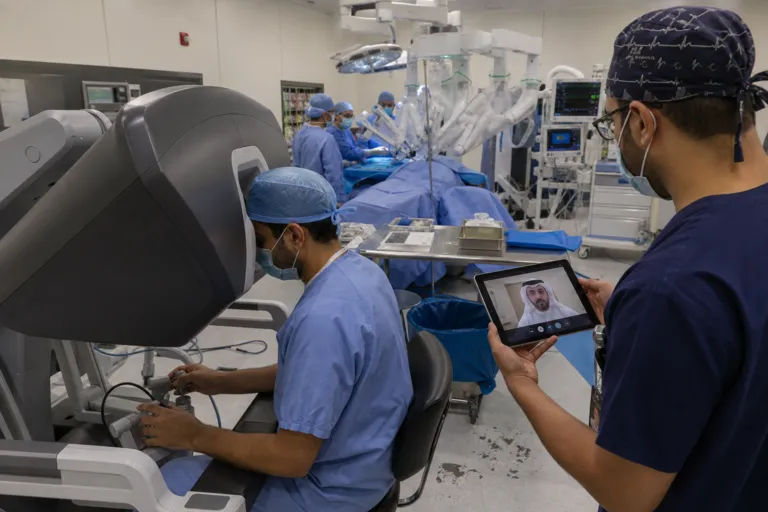
One of the clearest signals came from King Faisal Specialist Hospital and Research Centre in Saudi Arabia. Dr. Homoud Aldahash performed what was described as the world’s first remote robotic brain surgery, using robotic arms he controlled from a console three meters away. The patient was 68-year-old Mohammed Almutrafi, and the tumor removed was described as about the size of a walnut.
Aldahash said Almutrafi recovered four times as fast as the average patient. He also said the patient went home in less than 24 hours, while a typical window is 48 to 72 hours. The surgeon described the robot as shock-absorbing tremors and sudden movement, helping him avoid micro-injuries to surrounding brain tissue. The console provided a 3D live feed and could zoom in up to 10x from any direction.
From Pilot Use to High-Stakes Operating Rooms
In Riyadh hospitals, AI-assisted surgical robotics has moved from pilot projects to routine use, according to a February 2026 report. The same report described what is regarded as the first fully robotic heart transplant in history, done in September by a cardiac team at King Faisal Specialist Hospital. The procedure took about two and a half hours, and it was done without opening the chest cavity. The Da Vinci Surgical System, created by Intuitive Surgical, was used.
The Riyadh report also described AI systems that analyze streams of patient data, identify irregularities, and make recommendations for corrections. It stressed that human judgment is not replaced. It also highlighted the training burden, saying operating the robot can feel more like aviation than traditional surgery. Before the transplant, the team practiced the full procedure seven times over three days.
Outside Riyadh, Da Vinci use is expanding too. In Makkah, King Abdullah Medical City announced it performed the first precise robotic thoracic surgery using the Da Vinci Xi system. Together, these milestones show how Saudi robotic surgery is spreading across specialties, while also pushing into more demanding procedures.
Research trends also suggest rapid growth, but uneven adoption. A 2025 scoping review reported a search that identified 3859 studies, with 85 included. Most included studies originated from the Central region (n = 61), which the review linked to regional disparities in implementation. Looking to 2026, the most disruptive idea is telesurgery: if remote robotic methods are adopted widely, Aldahash believes they could increase access to highly skilled neurosurgeons worldwide, but he also noted more operations are needed to validate early claims.
What is Saudi robotic surgery mainly using today?
What happened in the remote robotic brain surgery case in Saudi Arabia?
How did recovery and hospital stay compare in that brain surgery report?
What is regarded as the first fully robotic heart transplant mentioned in Riyadh?
Is adoption of robotic-assisted surgery even across Saudi Arabia?