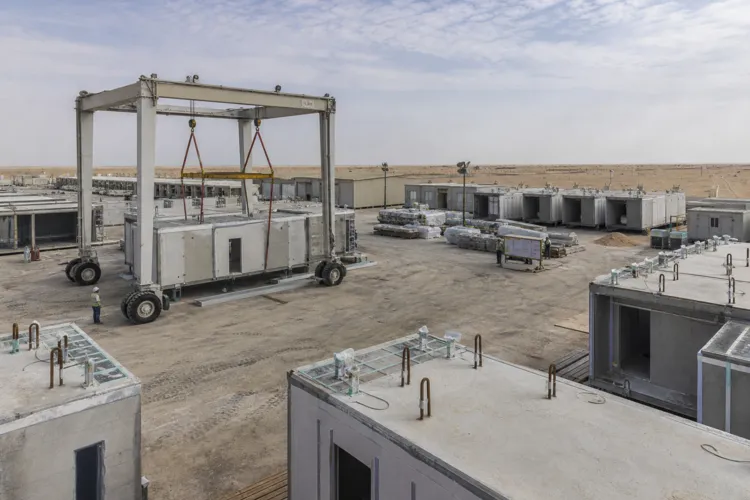
NEOM is a megaproject in Tabuk Province in Saudi Arabia. It includes plans for a linear smart city called The Line. One article describes The Line as 170 km long and 200 metres wide, and about half a kilometre tall. NEOM has been described as a $1 trillion+ project, and it has also been reported as initially estimated at $1.6 trillion, with estimated costs by 2025 in excess of $8.8 trillion.
Inside this huge plan is neom healthcare. NEOM’s Sector Head, Health and Wellbeing, Mahmoud AlYamany, said the project gives a rare chance to build a health system from scratch. He said the system is being designed around three major challenges he sees globally: quality of care, access, and sustainability of cost.
NEOM’s urban vision has also been tied to proximity. Architects and planners for The Line were inspired by Carlos Moreno’s “15-minute city” concept. In that model, daily needs such as work, schools, healthcare, culture, and shops are meant to be close enough to reach on foot or by bicycle.
NEOM’s scaling questions can be seen in three figures reported in different sources: The Line is planned as 170 km in length, but a Bloomberg-linked report cited in April said only 2.4 km would be completed by 2030, and it would house 300,000 people by then. These numbers show why neom healthcare planning is closely tied to delivery timelines and what gets built first.
The “4P” Care Model and Digital Twins
NEOM’s health system is framed around what AlYamany calls a “4P approach”: Personalised, Predictive, Proactive, Preventative. He said the focus on prevention will reduce the need for ongoing medical interventions. He also said NEOM aims to provide high-quality personalised care to residents who opt in.
A key idea is to build “digital twins” for each NEOM resident. AlYamany described the digital twin as a living and growing avatar built on genome sequencing data from omics, plus data from wearables, environment-sensors, behaviours, nutrition, excretions, and ongoing encounters with the healthcare system. He said AI would be used to predict potential diseases based on an individual’s profile and other specific variables.
NEOM has also discussed partnerships to support this kind of transformation. In May 2025, Alfaisal University hosted a delegation from NEOM Health to discuss collaboration in healthcare education, workforce development, and system innovation. Alfaisal News said NEOM presented a model built around upstream prevention, personalized care, and health system transformation, with holistic approaches that incorporate AI, genetics, environment, lifestyle, and social determinants of health.
At the same time, NEOM faces heavy criticism and uncertainty. Reports and summaries have described delays, cost overruns, and scaling back. There have also been serious human rights allegations related to forced relocations and violence during evictions, including reporting of people expected to be forcibly relocated and cases of resistance. For neom healthcare, these realities matter, because trust, access, and long-term stability are part of any health system’s foundation.
What is neom healthcare trying to build?
What does the 4P approach mean in NEOM’s plan?
What is a “digital twin” in NEOM’s healthcare vision?
How does the NEOM city plan connect to healthcare access?
What uncertainties could affect NEOM’s hospital-of-the-future idea?