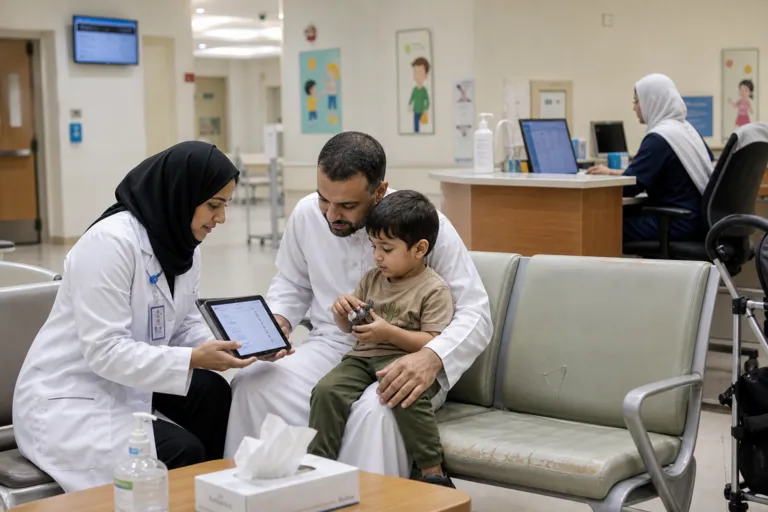
Saudi pediatric healthcare is moving in a direction that links specialty institutions with broader, prevention-focused system change. Several recent developments point to the same theme: better planning, better coordination, and better support for families. A Saudi Medical Journal study discussed in early 2026 argued autism spectrum disorder (ASD) prevalence among children in the Kingdom is higher than the currently cited figure. The authors advised revising public health planning, early screening initiatives, and resource allocation for autism services. In parallel, specialized hospitals and national programs are also placing more emphasis on integrated care pathways and the infrastructure needed to sustain them.
Childhood disease strategy starts with accurate estimates and action that follows. The autism prevalence study cited a currently cited figure of 0.6%, but advised a calibrated range of 1.7% to 1.8% for ASD among children in Saudi Arabia. It also highlighted that local factors such as population structure, healthcare access, and diagnostic practices matter when calibrating estimates. The takeaway is practical: planning and screening must match the real context. One of the study’s messages emphasized the importance of timely support, so that families, educators, and healthcare professionals can respond with confidence and compassion.
Specialty hospitals remain a core pillar of pediatric care, especially for complex conditions that demand advanced expertise. At King Faisal Specialist Hospital and Research Centre (KFSHRC), Wareef Charity is described as integrating philanthropy into the care ecosystem to expand access and improve patient quality of life. One initiative, the Make A Wish program, has fulfilled the wishes of more than 350 children undergoing cancer treatment at KFSHRC. While not a clinical metric, the program is presented as supporting psychological resilience that strengthens response to therapy. This is one example of how pediatric experience and family support can be designed into specialty care.
From Specialty Care to a National Model of Care
A childhood disease strategy also depends on how the overall health system is organized. The Saudi Model of Care is described as a comprehensive, prevention-focused framework designed to deliver integrated, equitable, and high-quality care across the Kingdom’s 20 health clusters. It is anchored around six pillars of care: Wellness, Planned Care, Chronic Care, Urgent Care, Safe Birth, and Palliative Care. In late 2025, Saudi’s Health Holding Company and Mass General Brigham announced the next phase of a strategic partnership focused on implementation, nationwide adoption, building national capacity, and strengthening clinical governance, aligned to Saudi Vision 2030 goals.
Execution matters, and logistics and digital infrastructure shape what families experience day to day. Saudi Arabia’s Ministry of Health signed a Memorandum of Understanding with Efficio aimed at advancing supply chain, procurement, and local content excellence, as part of Health Sector Transformation Program objectives that include improving access, innovation, financial sustainability, and disease prevention, as well as expanding e-health services and digital solutions. On the provider side, Alrajhi Medicine announced it is implementing Oracle Health Foundation EHR and Oracle Fusion Cloud Applications to bring clinical and business operations together with near real-time data and AI-driven insights. These steps support a more connected approach to pediatric pathways, from screening to specialty referral and follow-up.
What does “saudi pediatric healthcare” include in this article?
What autism prevalence figures are cited for children in Saudi Arabia?
How does the Saudi Model of Care relate to children’s health services?
What examples show specialty-hospital support for pediatric patients and families?