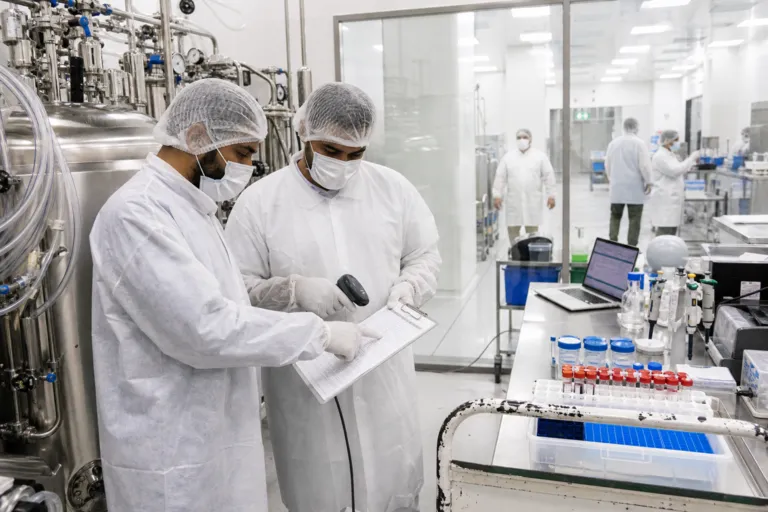
Saudi vaccine sovereignty is increasingly tied to one practical goal: ensure the Kingdom can produce critical vaccines locally when global supply chains are under stress. A Reuters report published by Al Arabiya said Australia’s CSL, through its vaccine arm CSL Seqirus, and Saudi Arabia’s Vaccine Industrial Company inked a deal with the Saudi Ministry of Health to localize manufacturing of cell-based seasonal and pandemic influenza vaccines. The same report said on-shoring manufacturing would enable scalable volumes, reduce reliance on global supply chains, and provide flexibility. This positioning matters for pandemic preparedness post-2026, because the agreement aims to help the country prepare for a pandemic in 2026 and supply cell-based flu vaccines for the 2026/27 season.
The public-health context for influenza is also clearly stated in the same source. CSL cited that influenza can cause nearly 4,440 deaths annually in Saudi Arabia. It also cited that 96 percent of patients who were admitted to intensive care with influenza in 2024 had not been vaccinated. Those two points help frame why local capacity is not just an industrial ambition, but a resilience issue. In a post-2026 world, faster access to seasonal and pandemic influenza vaccines can support continuity of care during surges, when import timelines and external prioritization can become bottlenecks for national response planning.
From Factory Floor to Supply Chain: Making Local Output Usable
Manufacturing is only one part of vaccine readiness. Saudi Arabia’s Ministry of Health signed a Memorandum of Understanding with Efficio to advance supply chain, procurement, and local content excellence in the healthcare sector, according to Consultancy-me.com. The same source defines local content as the extent to which goods, services, workforce, and technologies used within the healthcare system are sourced, produced, or delivered locally rather than imported. It also said the collaboration sits within the ministry’s efforts tied to the Health Sector Transformation Program, a key initiative of Saudi Vision 2030, and that Efficio will support professionalising supply chain and procurement operations across the value chain. For saudi vaccine manufacturing, these capabilities determine whether locally produced doses can move reliably from production to distribution at the needed speed.
Industrial modernization also supports consistent output. MenaTech reported that Saudi Arabia’s Ministry of Industry and Mineral Resources and King Abdullah University of Science and Technology launched a manufacturing technology initiative titled “Technologies for Exceptional Transformation.” The initiative is designed to help manufacturers integrate smart manufacturing solutions and applied research into day-to-day operations, with a focus on improving productivity, competitiveness, sustainability, and quality in sectors prioritized by the National Industrial Strategy. It is structured to give industrial companies access to technologies developed at KAUST, alongside support shaped with global service providers. While not vaccine-specific, this kind of manufacturing upgrade path can reinforce the quality and reliability expectations that pandemic preparedness demands.
Saudi Arabia’s broader pharmaceutical base provides additional context for post-2026 resilience. Pharmaphorum reported that the Kingdom now has 206 pharmaceutical and medical device companies with total investments above SR10 billion (about USD $2.6 billion), and that 56 are pharmaceutical facilities licensed by the Saudi Food and Drug Authority (SFDA). The same source emphasizes that SFDA oversight helps ensure domestically produced goods meet strict quality standards, and that collaborative CDMO models often split responsibilities between local compliance and international technical know-how. This matters for sovereignty because vaccine programs depend on regulatory-aligned facilities and trusted quality systems, not only on physical production lines.
Looking beyond Saudi Arabia also clarifies why localization is a strategic theme in preparedness. A Nature review discussed global COVID-19 vaccine inequity, stating that only 60% and 20% of the number of vaccine doses given per 100 people in high-income countries were administered in LMICs or LICs, respectively, based on Aug 2024 data. This broader evidence underlines a key post-2026 lesson: when demand spikes, access can diverge sharply across the world. Saudi vaccine manufacturing efforts, especially in influenza, align with a practical response to that risk: build local capability, strengthen supply and procurement systems, and anchor production in quality oversight so readiness is operational, not theoretical.
What does “saudi vaccine manufacturing” refer to in post-2026 preparedness?
Which vaccines are specifically mentioned as being localized in Saudi Arabia?
What timeline is connected to the influenza vaccine localization agreement?
What influenza-related figures were cited as context for local vaccine efforts?
What manufacturing and regulatory capacity indicators are reported for Saudi pharma?