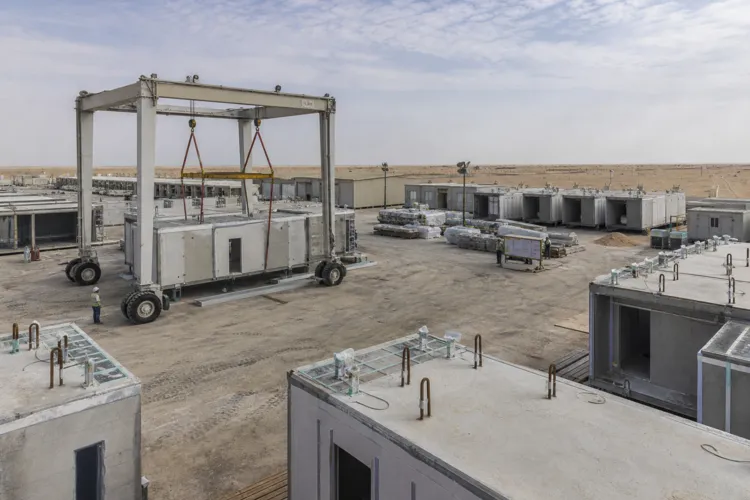
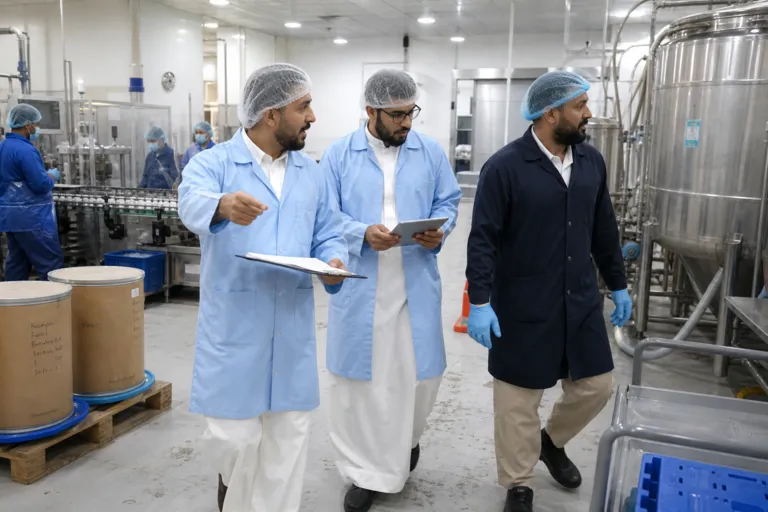
In 2026, “Generic and API Push” is becoming a working blueprint for Saudi generic drug manufacturing. The core idea is straightforward. Build more of the finished dosage form locally. Build more of the active pharmaceutical ingredients locally. And make the quality system credible under SFDA oversight. Saudi Arabia is already positioning itself as a manufacturing destination through steady investment and growing pharmaceutical infrastructure. One snapshot shows 206 pharmaceutical and medical device companies with total investments above SR10 billion, and 56 pharmaceutical facilities licensed by the Saudi Food and Drug Authority (SFDA). This creates a platform for local production models that can scale without losing control of compliance.
A useful external reference point for the “generic + API” model comes from U.S. policy pilots that link regulatory speed to local sourcing. In the U.S., reviews for abbreviated new drug applications for generics generally take about 10 months. The FDA described eligibility conditions for faster review that require bioequivalence work in the U.S., “exclusively” domestic API sourcing, and local manufacture of the finished dosage form. The same sources also describe why this exists: more than half of pharmaceuticals in the U.S. are imported, and only 9% of API manufacturers are located in the country, compared with 22% in China and 44% in India. For KSA, this is not a template to copy word-for-word, but it is a clear policy logic to learn from.
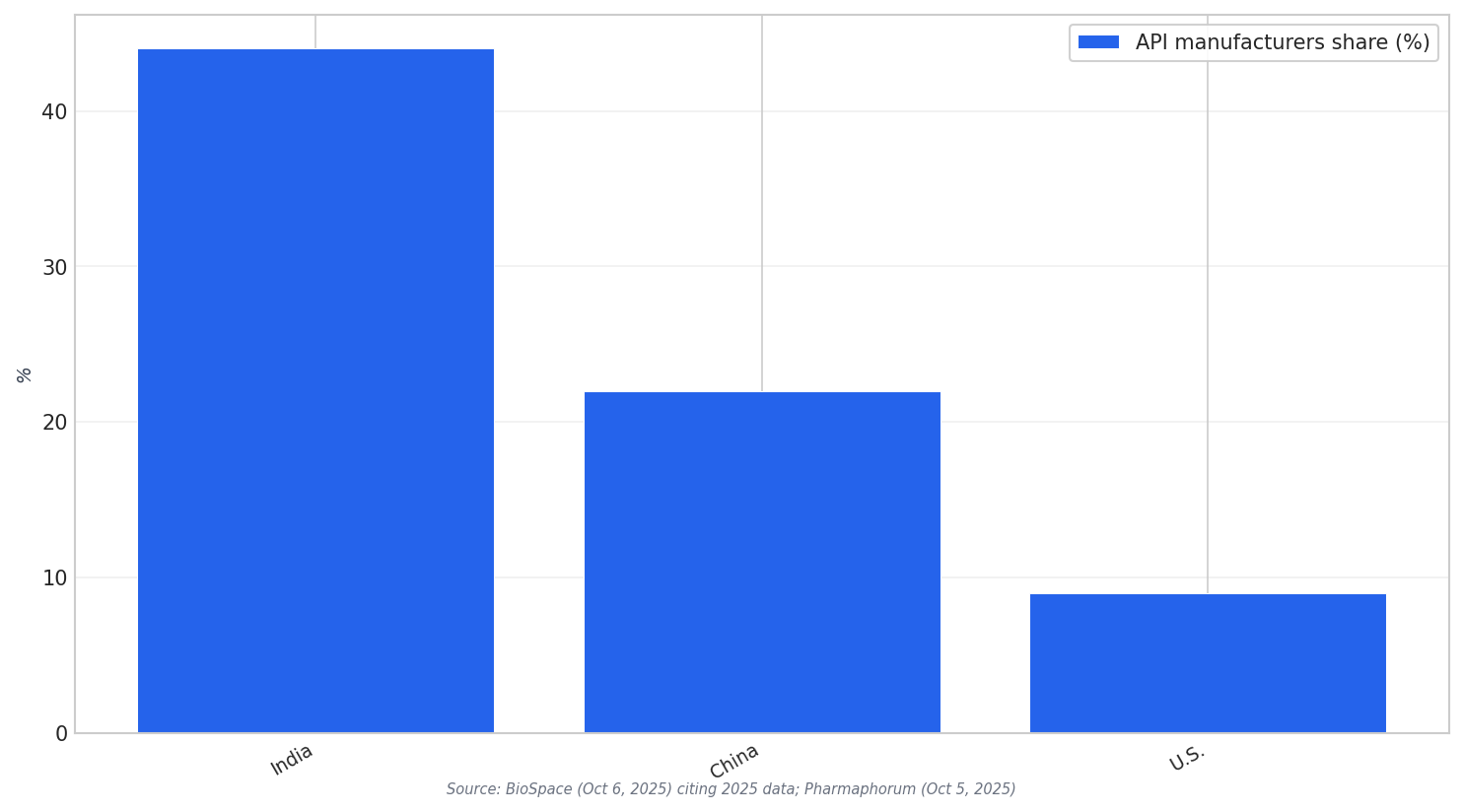
Those same global figures also show the concentration risk that a Saudi playbook can target, without pretending the numbers are KSA-specific. 2025 data cited by regulators show a distribution for API manufacturing shares that places India at 44%, China at 22%, and the U.S. at 9%. This kind of concentration is exactly what “generic and API push” programs aim to offset. For a Saudi program, the practical takeaway is sequencing. Put API localization alongside generics, not after them. Also tie localization to measurable requirements in filings and inspections. That is how an incentive system can stay operational rather than symbolic.
How SFDA-Backed Operating Models Make Localization Real
SFDA’s role is not just administrative. It directly raises the legitimacy of Saudi CDMOs by guaranteeing that domestically produced goods meet strict quality standards. One described model is explicitly cooperative: Saudi partners oversee local compliance and inspections, while international partners provide development data and technical know-how to help ensure quality through development and commercialisation. This structure matters for generics and APIs because it addresses the common failure point of technology transfer. If Saudi facilities expand capacity, they still need repeatable systems for quality and inspection readiness. SFDA oversight, paired with defined responsibility splits, can keep scale from diluting standards.
Industrial execution is the other half of the playbook. Saudi Arabia is framing its manufacturing shift through Fourth Industrial Revolution technologies, including automation, artificial intelligence, robotics, and data-driven systems to increase efficiency and reduce operational costs. The industrial base is also widening in complexity. Over the past five years, the range of manufactured goods expanded to 612 in 2024, which is 54 more than in 2020. The number of complex, knowledge-intensive products increased from 100 in 2020 to 123 in 2024. In parallel, by the third quarter of 2025, non-oil business activity rose 48% year-on-year. These are enabling conditions for scaling regulated production, including pharmaceuticals, without treating manufacturing as low-tech assembly.
Finally, the playbook needs sites and projects that can move from plan to land. A concrete example is Sudair Industrial City in the Riyadh region, described as one of Saudi Arabia’s leading industrial hubs, with a role in Vision 2030 to diversify the economy and strengthen local manufacturing capabilities. In April 2026, a joint venture tied to Co-Diagnostics secured an industrial land allocation there following approval by MODON, with the final lease expected after site infrastructure requirements are completed. For Saudi generic drug manufacturing, the lesson is procedural. Land allocation, infrastructure readiness, and regulator-aligned quality systems must be planned together, or timelines slip and capabilities arrive out of sync.
What does “Generic and API Push” mean for saudi generic drug manufacturing?
What concrete capacity signals support a 2026 local manufacturing playbook in KSA?
Which global API manufacturing shares are cited as a concentration risk?
How does SFDA oversight support CDMO and manufacturing credibility?