Saudi health information exchange is becoming a practical need, not just a technology goal. As more care moves across hospitals, clinics, labs, and pharmacies, providers need patient data that can follow the patient. Several national programs now connect electronic health records (EHRs), virtual care, and payer transactions into one more consistent digital flow.
Public investment is a major driver. Vision 2030’s Health Sector Transformation Program includes digital infrastructure investments exceeding USD 66 billion, and the government allocated SAR 214 billion for health and social development. EHR adoption is a core focus, with one source stating it covers 70% of patient activities. Another source says more than 80% of Saudi hospitals now use EHRs, helping information flow between providers.
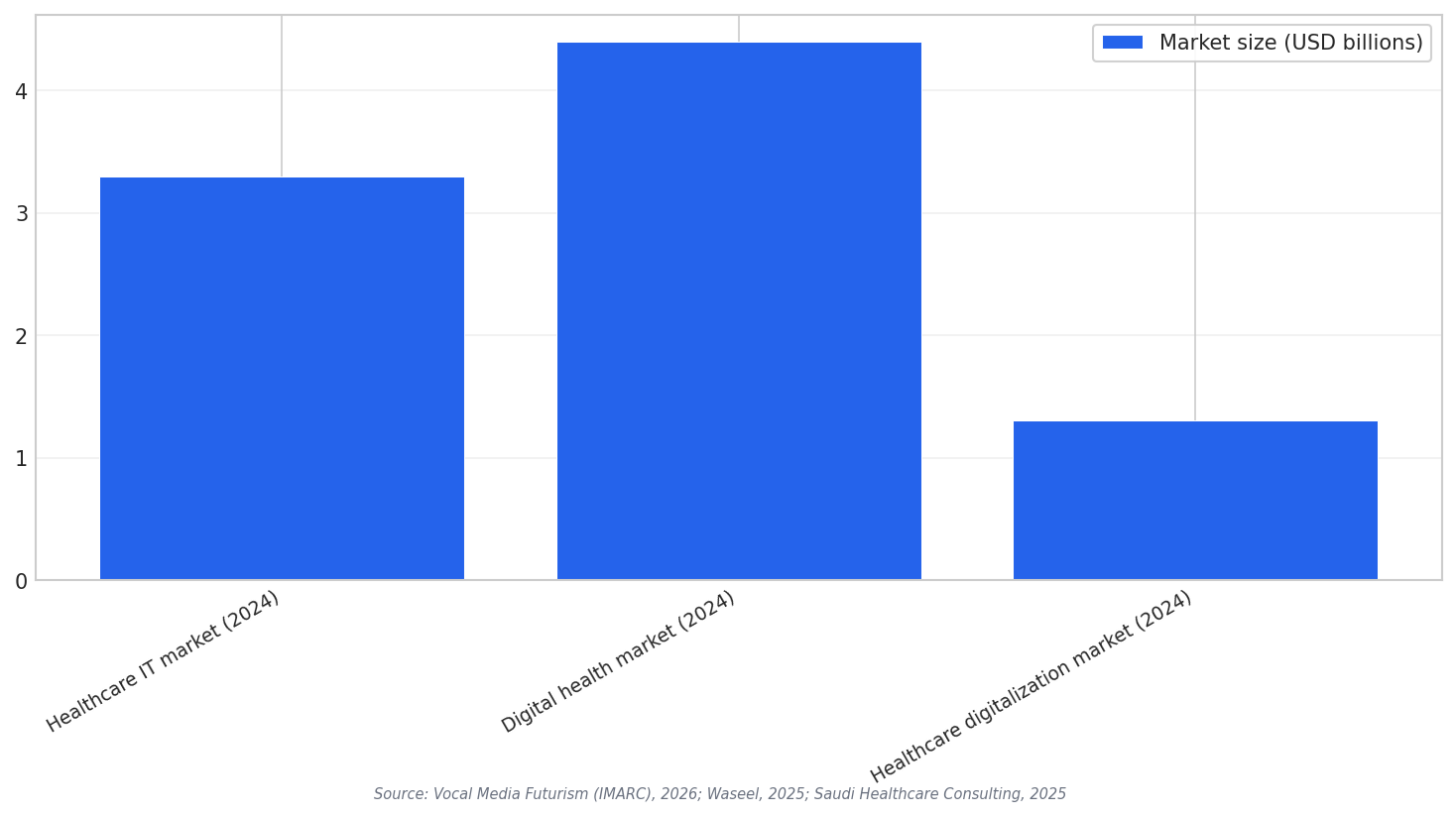
Market growth signals the scale of this shift. IMARC Group research cited in one report says the Saudi Arabia healthcare IT market reached USD 3.3 billion in 2024 and is projected to reach USD 7.7 billion by 2033. A separate report states the digital health market reached USD 4.4 billion in 2024 and is projected to hit USD 15.3 billion by 2033. Another source places healthcare digitalization at USD 1.31 billion in 2024, reaching USD 5.03 billion by 2033.
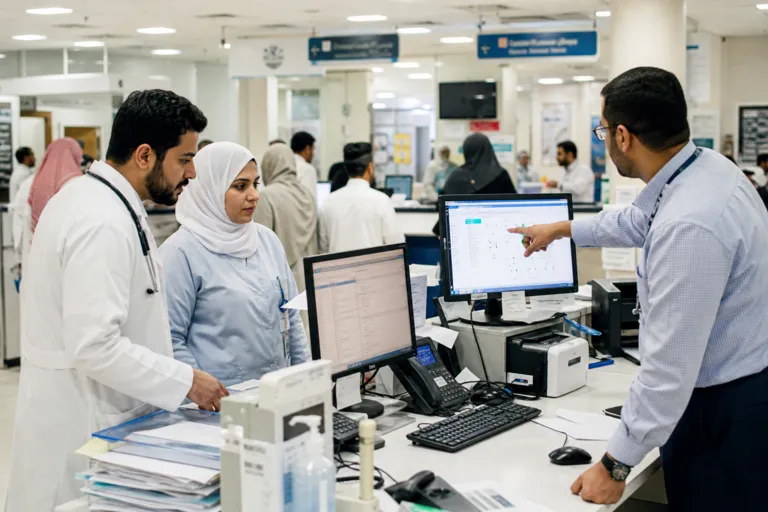
These investments matter because interoperability is hard in real hospitals. Nexdigm notes that many institutions still run legacy hospital information systems that were not designed for modern digital integration. When new platforms are added, compatibility and interoperability challenges can appear. This is why strategic partnerships between hospitals, technology firms, and government authorities are highlighted as important for nationwide adoption.
What Nationwide Interoperability Looks Like in Practice
Interoperability is also shaped by connected care models. Seha Virtual Hospital is described as connecting more than 220 facilities in one source, and 224 hospitals nationwide in another. One report also says AI-driven diagnostics at Seha Virtual Hospital achieve diagnostic accuracy between 82% and 97% for use cases like medical imaging, pathology, and heart disease detection. When virtual care expands across many sites, consistent data exchange becomes more urgent.
National-scale exchange also depends on clear requirements for platforms and transactions. A 2026 report summary highlights NPHIES transaction enablement as a day-one operating dependency rather than an interface project. It also points to SeHE interoperability expectations, plus privacy and cyber assurance requirements, in-Kingdom hosting, resilience, and auditability as procurement gates. This frames exchange as governance and operations, not only software.
Saudi healthcare consulting sources describe Health Information Exchanges as part of efforts to unify patient data across 290 hospitals and 2,300 health institutions, aiming for real-time decisions and less duplication of services. At the same time, enforcement of strict data governance protocols by the Ministry of Health and the National Cybersecurity Authority is described as supporting patient privacy and system interoperability. Together, these steps show how Saudi health information exchange is being built through policy, platforms, and daily clinical workflows.
What is the main goal of saudi health information exchange?
How widely are EHRs used in Saudi Arabia today?
What makes interoperability hard to achieve across the country?
How do NPHIES and SeHE relate to nationwide interoperability?