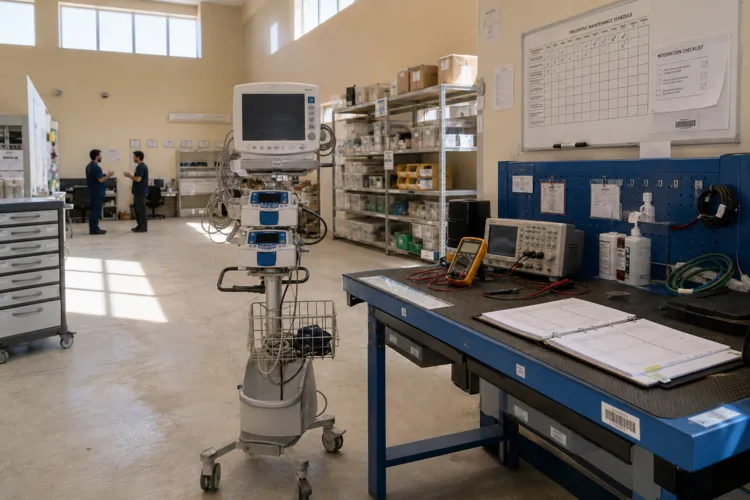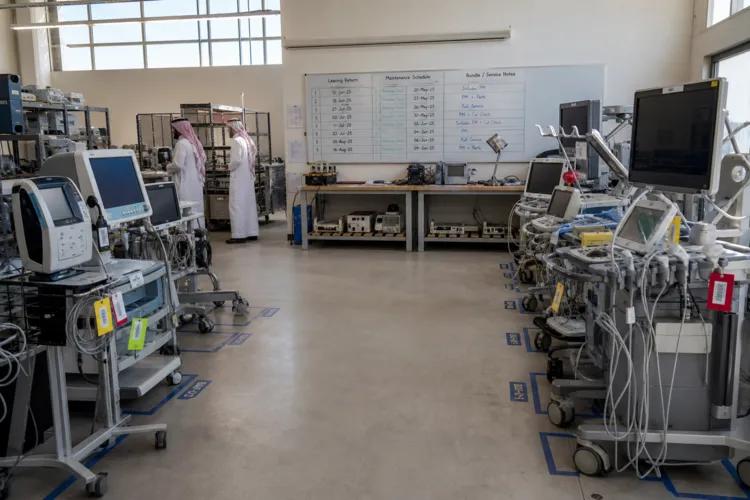
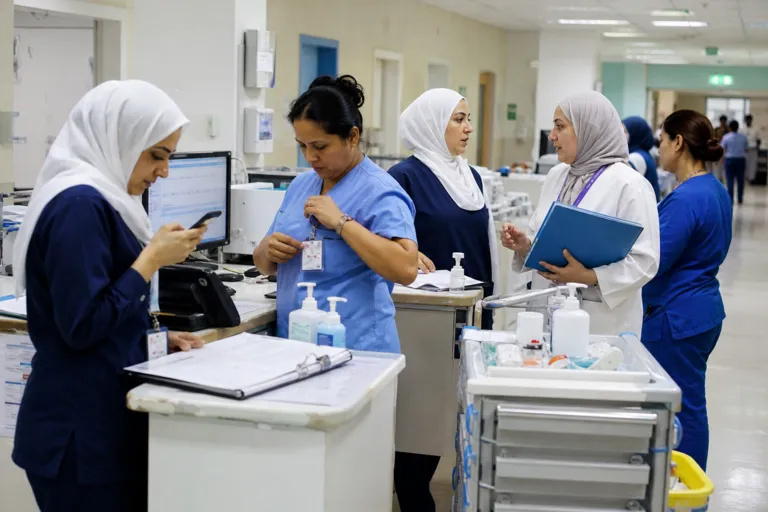
The saudi nursing workforce sits at the center of Saudi Vision 2030 and the Health Sector Transformation Program. Yet the challenge is not only how many nurses exist. It is also about uneven distribution, heavy dependence on non-Saudi staff, and working conditions that can drive turnover. Several recent sources point to the same message: growth is happening, but stability and fairness are still hard to achieve.
National data show progress and strain at the same time. A regional analysis using the Ministry of Health’s 2023 Statistical Yearbook found the national nursing workforce increased by 9% from 2019 to 2023, reaching 213,110 nurses. However, nurse-to-1,000 population ratios still varied sharply across regions, from 3.13 to 9.89. The same study reported an overall Gini coefficient of 0.48, pointing to unequal distribution.
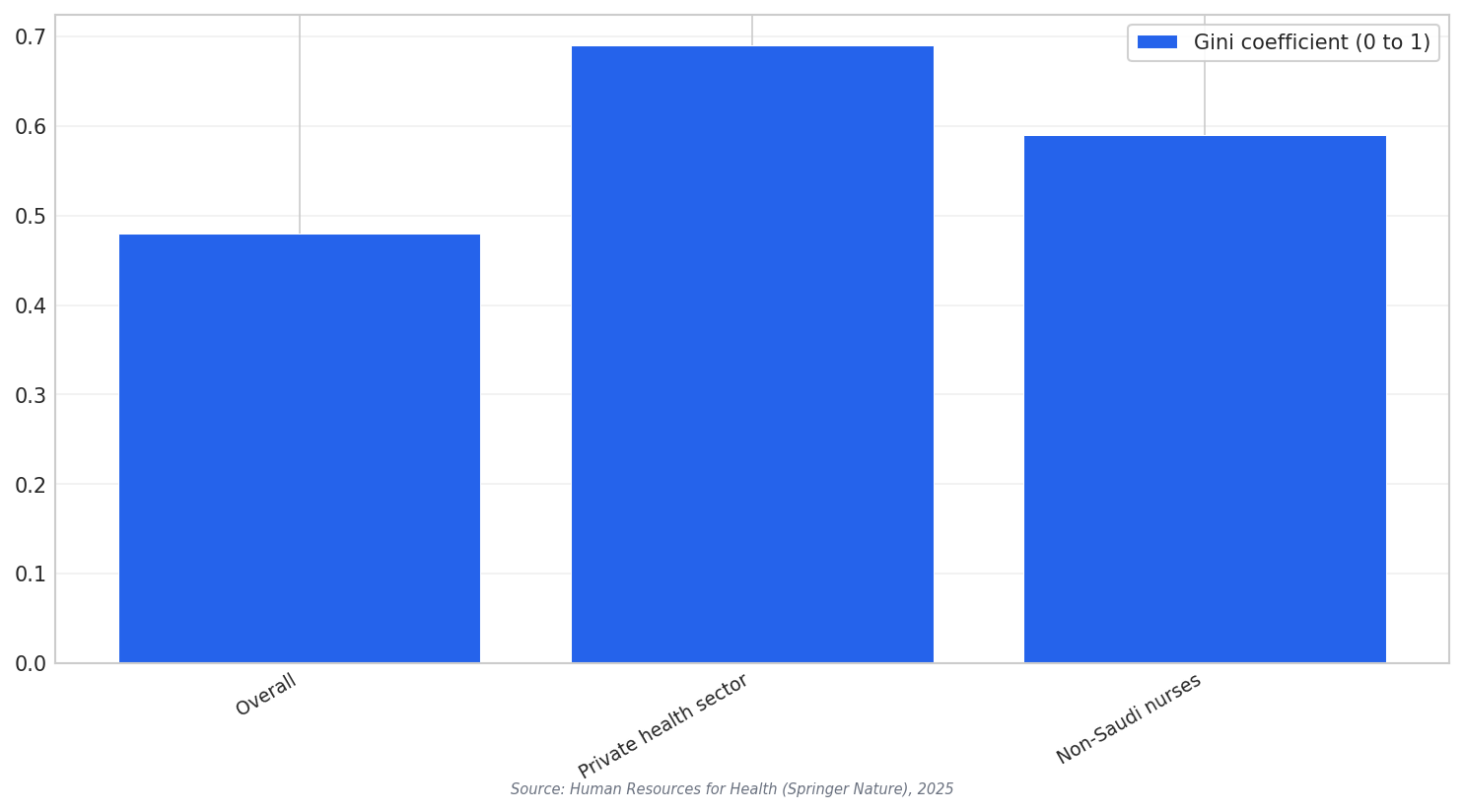
These gaps are not equal across sectors or groups. Inequalities were more pronounced in the private health sector (Gini coefficient = 0.69) and among non-Saudi nurses (Gini coefficient = 0.59). Saudization is moving forward, but it is still uneven. Saudi nationals comprised 44.22% of the nursing workforce in 2023, according to the same regional analysis.
What Recruitment and Retention Must Solve Together
Hiring difficulty is a day-to-day reality for many employers. One hiring guide states that, according to industry sources, 85% of healthcare facilities in KSA struggle to hire licensed nurses. It also describes complex licensing requirements, niche specialty needs, and multi-step background checks as hurdles. These steps can slow hiring even when demand is urgent.
Retention matters because Saudi Arabia still relies on an expatriate workforce. A 2025 qualitative study argues the Saudi healthcare system must proactively develop strategies for recruitment and retention of expatriate staff, especially as immigration policies may keep changing. It also describes a workforce made up of many nationalities, with acceptance linked to whether Saudization aligns with Vision 2030.
Working life conditions can push nurses away. A Frontiers narrative review based on 36 studies highlights inadequate housing and labor market fragmentation, plus gender, pay, religious, language, and racial discrimination against nurses from low and middle-income countries. It also warns that shortages can lead to shifts, overtime, and a lack of flexible work, which can cause stress, burnout, low job satisfaction, and high turnover. Another paper on expatriate lived experience calls for better recruitment processes, education to build knowledge and skills, and organizational changes that improve job satisfaction. In that study, most expatriate nurses (86.1%, n = 31) intended to remain in Saudi Arabia, showing retention is achievable when conditions support it.
How large is the saudi nursing workforce today based on the sources?
What does the data say about inequality in nurse distribution across Saudi Arabia?
How far has Saudization progressed in nursing?
Why is nurse recruitment still difficult in KSA?
What retention issues do the sources highlight for migrant and local nurses?