Designing care at the “last mile” is not only a logistics problem. It is a care-network problem. Recent market research values the Saudi palliative care market at USD 680 million and links growth to an aging population, a rising chronic disease burden, and stronger awareness among clinicians and patients. The same coverage points to government initiatives to improve infrastructure, expand access to specialized care, and integrate palliative care into national health strategies. In practice, this means care is shifting from “only the final days” to support across serious illness, with more explicit expectations for symptom relief, values-aligned decisions, and family support.
But access is not evenly distributed. Riyadh, Jeddah, and Dammam are highlighted as key cities shaping the local landscape because of advanced facilities, concentrated healthcare professionals, and continued investment in hospital infrastructure. Riyadh is described as having the highest number of hospitals and specialized clinics. Jeddah is framed as a major hub for the western region. Dammam is positioned as an emerging center supported by a growing population and healthcare investments. That clustering can improve multidisciplinary care where it exists, while also underscoring the design challenge: make comfort-focused care consistent outside major urban hubs.
From Policy to Practice: Settings, Skills, and Standards
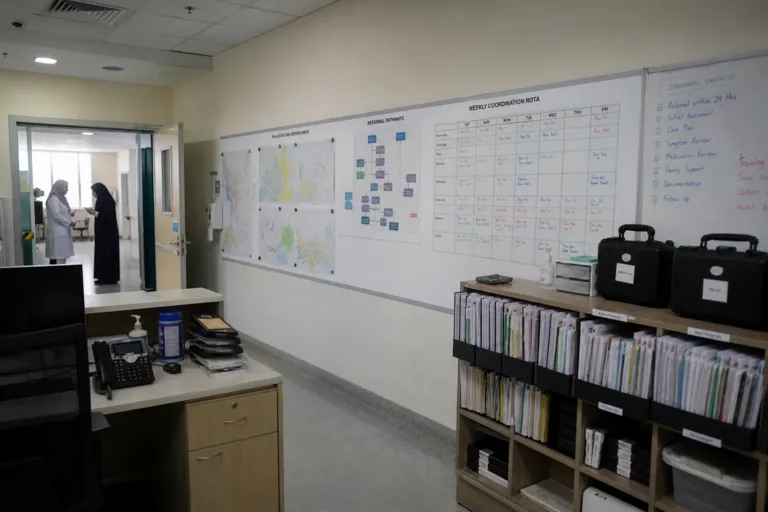
Policy direction is already defined in national market coverage: the 2023 National Palliative Care Strategy issued by the Ministry of Health aims to enhance quality of life for patients with life-limiting illness. It includes establishing specialized palliative care units in hospitals, developing national guidelines, and rolling out training programs for healthcare professionals. Those components matter for last-mile design because they translate into repeatable pathways: who can consult, where symptom crises go, how families are supported, and how end-of-life care protocols work across settings. Without standardized protocols and trained teams, a “network” becomes isolated sites rather than coordinated care.
The service mix described in market segmentation helps map the network. Types include inpatient care, outpatient care, home care, hospice care, and others, with inpatient care identified as the leading segment due to demand for intensive symptom management and multidisciplinary teams in hospitals. Outpatient care is described as gaining traction because it supports ongoing treatment while people maintain daily routines. End users are segmented too: hospitals are dominant due to infrastructure and complex-case capability, while home healthcare agencies are noted as growing as more patients prefer receiving care at home. A last-mile approach connects these segments with shared triage, referral rules, and follow-up that prevent gaps at transitions.
Workforce readiness is a constraint that network design must address directly. A systematic review in Saudi Arabia highlights systemic barriers such as workforce shortages, uneven access to services, and the absence of standardized care protocols, emphasizing the need for culturally and contextually appropriate guidelines reflecting societal and religious norms. Another systematic review of Knowledge, Attitudes and Practices (2012 to 2026) reports low levels of palliative care knowledge among health practitioners in Saudi Arabia, alongside lack of formal training, opioid hesitancy, and lack of implementation of end-of-life care protocols, especially in high acuity settings such as ICUs. For Saudi palliative care services, the last mile is therefore partly educational: consistent training and protocol use can be as decisive as geography.
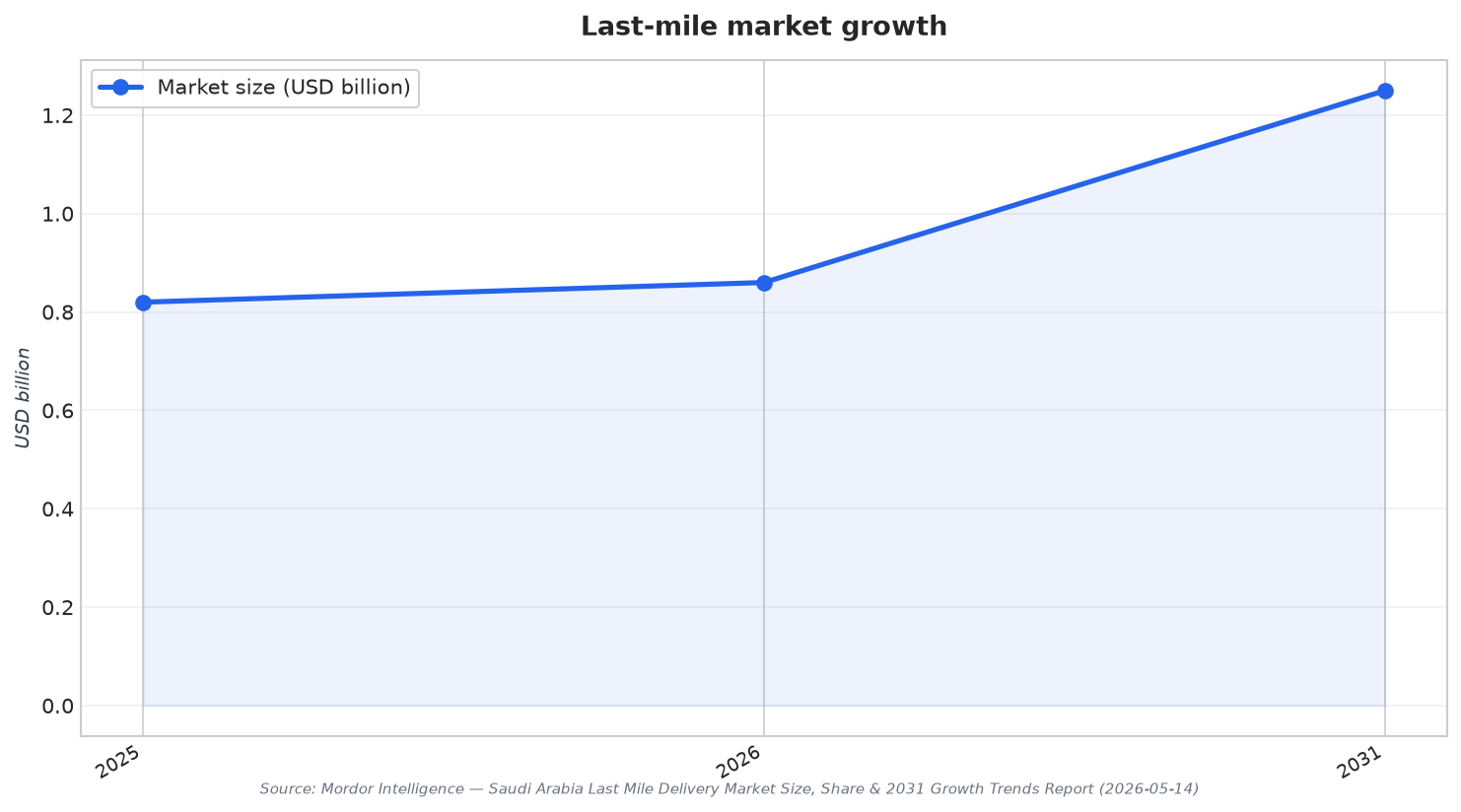
Measurement can anchor improvement where expansion is underway. In Qassim, a cross-sectional descriptive study of 147 oncology palliative care patients used patient-centered tools, including the EQ-5D-5L, and argues for integrating standardized health-related quality-of-life tools into routine practice under the Saudi Model of Care to support continuous monitoring and evidence-based improvements. In parallel, Saudi Arabia’s last-mile delivery market report shows how quickly service expectations can scale: the market is projected at USD 0.86 billion in 2026 and USD 1.25 billion by 2031, with 118 million e-commerce transactions in Q1 2026 (up 49% year-on-year) and Riyadh generating 44% of orders. Healthcare and medical supplies are advancing at a 9.74% CAGR to 2031, suggesting that as consumer delivery networks mature, palliative care can borrow operational discipline for home-based support without confusing delivery speed with clinical quality.
What is driving momentum for palliative care in Saudi Arabia?
Which Saudi cities are highlighted as key hubs for palliative care access?
What does the 2023 National Palliative Care Strategy include?
What barriers do reviews identify for end-of-life care practice in Saudi Arabia?
How should Saudi palliative care services be designed for the “last mile”?