Private investment interest is rising across Saudi Arabia’s dermatology and aesthetic medicine ecosystem, and several published forecasts help define where returns may concentrate. Grand View Research estimates Saudi Arabia’s aesthetic medicine market generated USD 425.6 million in revenue in 2024 and could reach USD 1,068.5 million by 2033, with a 10.9% CAGR from 2025 to 2033. In parallel, Reed Intelligence values the Saudi Arabia medical aesthetics market at USD 1,604.11 million in 2024 and projects USD 3,541 million by 2033, growing at a 9.16% CAGR over 2025–2033. These outlooks frame a market where scale, consolidation, and service-line expansion can matter as much as single-procedure economics.
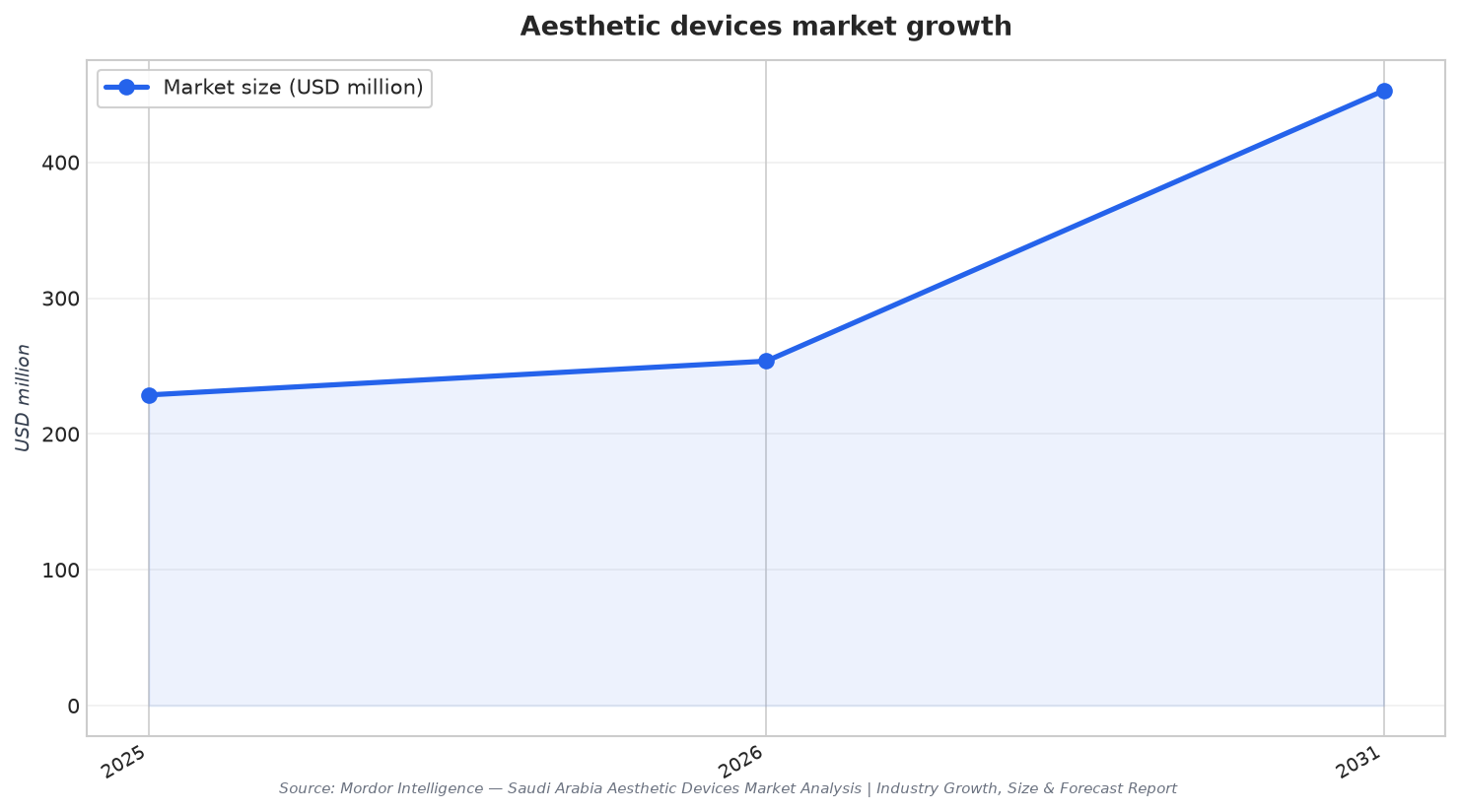
For investors assessing equipment-led growth, Mordor Intelligence forecasts the Saudi Arabia aesthetic devices market at USD 228.71 million in 2025 and USD 253.60 million in 2026, reaching USD 452.76 million by 2031 at a 12.29% CAGR from 2026 to 2031. The same report links momentum to Vision 2030-related healthcare privatization, a 79% social-media penetration rate that amplifies beauty trends, and streamlined Saudi Food and Drug Authority (SFDA) approvals for Class IIb devices. It also cites the Ministry of Finance’s SAR 260 billion (USD 69.3 billion) healthcare allocation for 2025–2026, with language that raises the private-sector share of service delivery from 25% to 35%. Together, these factors point to investment themes that combine clinic growth, procurement cycles, and compliance readiness.
Where Private Capital Can Focus: Devices, Clinics, and Patient Mix
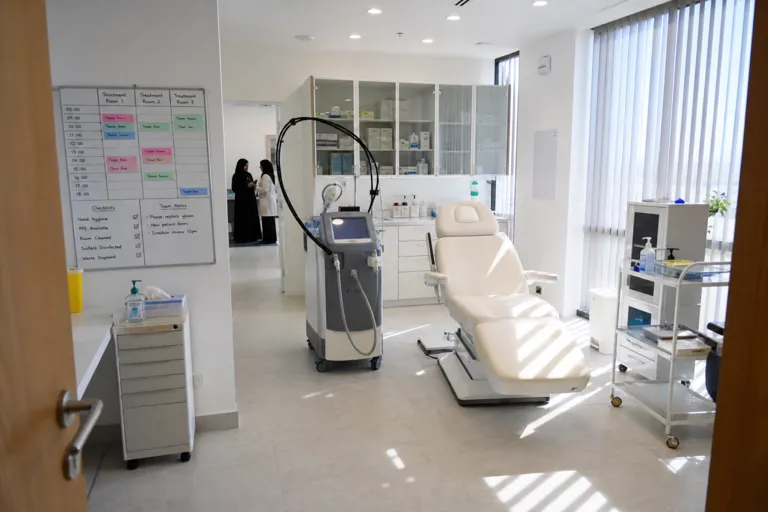
Segment detail suggests several practical entry points. Mordor reports energy-based aesthetic devices led with 58.36% market share in 2025, while non-energy platforms are projected to expand at a 15.83% CAGR during 2026–2031. On indications, hair removal captured 39.34% revenue in 2025, while body-contouring and cellulite reduction are forecast to rise at a 15.78% CAGR through 2031. Channel structure also matters for roll-ups and multi-site operations: dermatology and cosmetic-surgery centers held 44.74% of the aesthetic devices market in 2025, and home-use settings are advancing at a 14.36% CAGR to 2031. Patient mix supports targeted marketing and capacity planning, with female patients at 86.25% of 2025 procedures and male treatments slated to climb at a 14.69% CAGR.
Demand signals also align with a younger core audience and expanding use cases. Mordor reports the 18–34 cohort represented 46.92% of 2025 demand, while the 35–50 segment is moving at a 14.83% CAGR during 2026–2031. Separate market commentary describes momentum in minimally invasive facial treatment, body contouring, and skin rejuvenation, and emphasizes technology adoption through radiofrequency, ultrasound, and lasers. Investors can translate this into tangible diligence questions: which sites can standardize outcomes across high-demand indications, and which can justify premium pricing through device capability and staff training? Conference activity also signals market sophistication: IMARC notes Saudi Arabia’s aesthetic medicine conference and exhibition in Riyadh in November 2025, alongside professional gatherings such as an April 2025 international conference hosted by the Saudi Society of Dermatology and Dermatologic Surgery.
Regulation and medical tourism add another layer to the Saudi dermatology aesthetic market investment case, especially for platforms seeking international patient flows and premium positioning. Mordor describes Riyadh and Jeddah anchoring a medical-tourism program that targets 1 million inbound patients annually, and notes fast-track visa desks that shorten entry to fewer than 48 hours for GCC nationals. On the regulatory side, one cited example is September 2022, when Sientra, Inc. received SFDA approval to market its smooth-surface, high-strength cohesive silicone gel breast implants in Saudi Arabia. The same set of sources references expanded digital oversight of cosmetic safety regulation described by the SFDA in December 2025, reinforcing that compliance readiness can be a core operational capability rather than a back-office task. In addition, a post-procedure skincare forecast lists Saudi Arabia with a 7.0% CAGR outlook through 2036, highlighting how clinics can extend revenue beyond procedures through curated retail tied to clinician endorsement.
What do forecasts suggest about growth in Saudi Arabia’s aesthetic medicine market?
Which device segments are highlighted as key opportunities for clinics and investors?
How concentrated is demand by age and gender in the market?
What signals link medical tourism to dermatology and aesthetics in Saudi Arabia?
What does the Saudi dermatology aesthetic market imply for private investment strategy?