Saudi Arabia’s Vision 2030 positions sport as more than competition. It ties movement to public health, quality of life, tourism, private-sector growth, women’s participation, youth development, and global visibility. As stadiums, arenas, training centers, and community facilities expand, so does the need for injury prevention, treatment, and structured recovery. This is where Saudi orthopedic sports medicine services become a practical enabler of national ambitions, supporting both athletes and the general public across active-lifestyle projects and major urban initiatives that make movement more accessible.
Demand is also being pulled by explicit participation goals and hard investment. One market view notes government investment of approximately USD 500 million in sports infrastructure under Vision 2030 initiatives. Another stated target is to increase sports participation from 13% in 2018 to 40% by 2030. As more people train, compete, and return to activity, providers face rising caseloads from sports injuries and post-operative recovery, alongside broader contributors such as road accidents. Chronic disease adds pressure too, with the World Health Organization (WHO, 2023) stating lifestyle-related diseases account for approximately 74% of total deaths in Saudi Arabia, underscoring the need for comprehensive rehabilitation pathways.
From Event Readiness to Everyday Recovery
Major events raise the standard for athlete care and spill over into everyday services. Saudi Arabia is preparing to host the FIFA World Cup 2034, a catalyst for upgrades in sports infrastructure and healthcare services such as injury prevention and rehabilitation capabilities. The AFC Asian Cup 2027 reinforces the Kingdom’s role as a regional football hub, drawing teams and visitors who expect advanced support. Regional benchmarks matter as well. Aspetar in Doha is described as a gold-standard model for sports medicine and rehabilitation, shaping expectations for technology, specialist staff, and research capabilities across the Gulf and encouraging Saudi investment in comparable, world-class facilities.
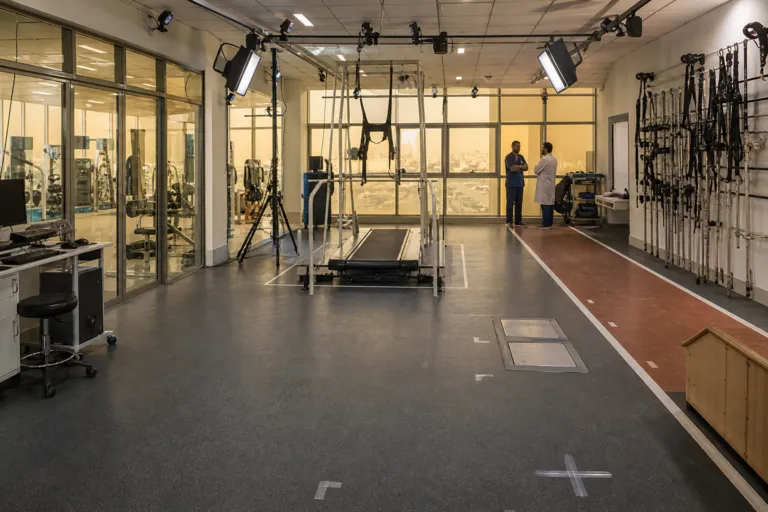
On the clinical and equipment side, rehabilitation is becoming more technology-intensive and procurement is shifting toward integrated platforms. A Saudi-focused analysis of gait assessment and training systems describes the segment as import-dependent, with over 90% of system value sourced from specialized manufacturers in the United States and Europe. The same reporting highlights a shift from standalone tools toward platforms that combine body-weight support, robotic actuation, virtual-reality biofeedback, and cloud-based data analytics. By value, integrated robotic and multi-sensor platforms are estimated to capture 60–70% of total market expenditure, with premium robotic gait training platforms priced between USD 150,000 and 350,000—often limiting adoption to major tertiary hospitals and specialized rehabilitation centers.
Capacity, access, and staffing will decide how widely these benefits spread. A Saudi-focused outlook cites shortages of rheumatologists, orthopedic surgeons, and rehabilitation therapists in rural regions, alongside limited reimbursement coverage for physiotherapy and long-term rehabilitation services compared with drugs and surgeries. Regional context shows unmet need at scale: in 2023, the region recorded over 12 million rehabilitation procedures, yet only 25% of rehabilitation needs are currently met, and more than 1.5 million people use assistive devices. For Saudi Arabia, connecting infrastructure spending, event readiness, and modern rehab pathways can help convert sports ambition into durable, recovery-first healthcare outcomes.
How is Vision 2030 increasing demand for Saudi orthopedic sports medicine services?
What health factors beyond sports injuries are pushing rehabilitation demand in Saudi Arabia?
Which major events are shaping sports medicine expectations in Saudi Arabia?
What does the Saudi market outlook say about high-tech rehab equipment costs and adoption?
What access challenges could limit rehabilitation growth across Saudi Arabia?