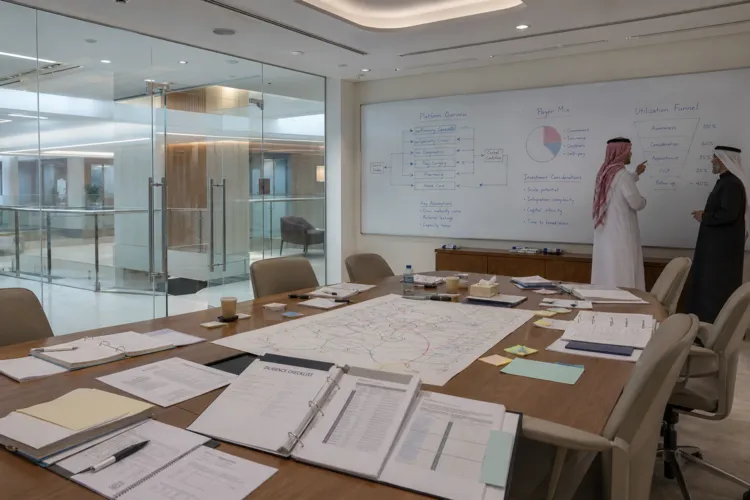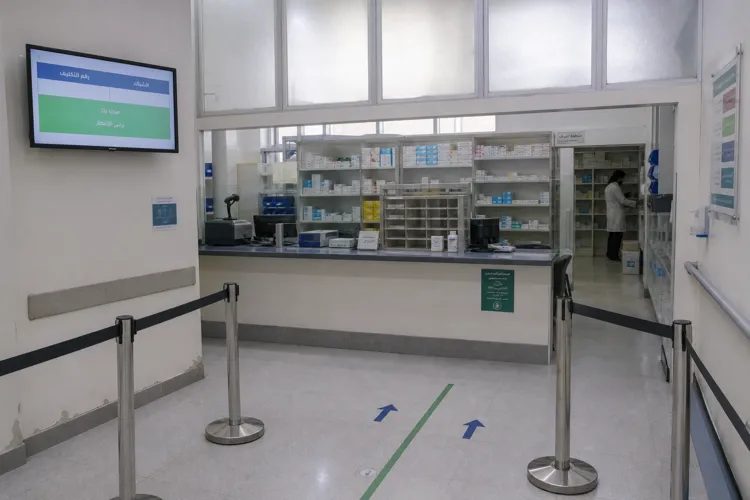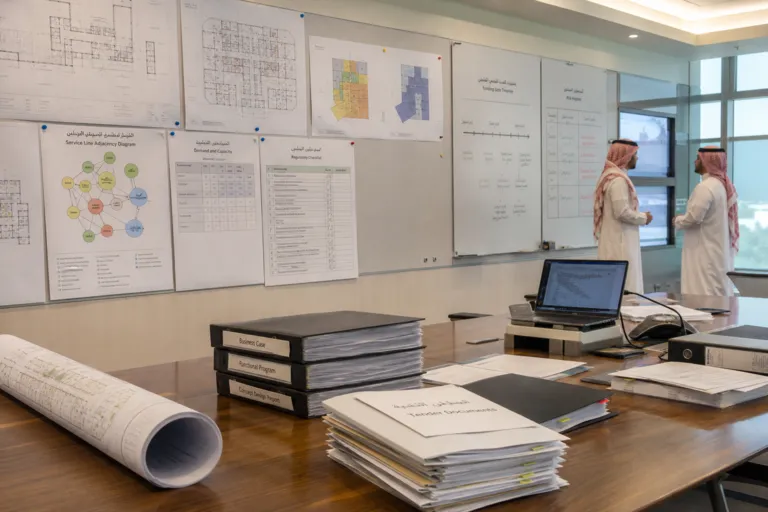
A Saudi specialty hospital feasibility study should start before land, design, or vendor decisions lock you into a cost base. In one Saudi tertiary-hospital case study, the investor needed a comprehensive assessment of demand, specialty mix, capital investment, operating costs, revenue potential, regulatory requirements, and long-term sustainability. The delivered work covered market analysis, clinical-service evaluation, competitive benchmarking, financial modeling, regulatory assessments, infrastructure requirements, and risk analysis. It also used population and epidemiological projections, service-gap quantification, patient-volume forecasting, and expected catchment-area coverage to validate whether the configuration made strategic sense for the region.
Demand and competition need more than general population counts. A practical method is to map expected demand over the first three years and then test assumptions using field interviews and official data sources. One Saudi consulting framework explicitly cites reliance on the General Authority for Statistics, the Ministry of Investment, the Monshaat platform, and direct interviews with owners of similar projects in the Saudi market. For service-gap work, a healthcare feasibility guide highlights the practitioner-to-population ratio as a key metric, and also recommends checking referral pathways and specialty wait times as signals of unmet demand. If you do not test these inputs on the ground, errors in the initial concept can flow into costs, revenues, and the eventual financing decision.
Build the Model: Service Mix, Capabilities, and Financeability
Service mix decisions drive the rest of the study. A hospital feasibility guide advises listing departments and specialties early, because choices such as emergency, maternity, surgical suites, diagnostic imaging, and outpatient clinics affect target market, staffing, equipment, and revenue projections. In the Saudi tertiary-hospital case, clinical-service mix planning defined priority specialties and diagnostic requirements, then translated them into infrastructure and operational modeling for staffing, workflows, and equipment. The same study emphasized digital readiness through HIS/PIS integration and scalable IT architecture, plus workforce sourcing strategies to secure specialized clinicians and support staff. These elements keep the feasibility study operational, not just theoretical.
To make the study finance-ready, treat it as both a decision tool and a submission document. One Saudi advisory guide states feasibility studies are a fundamental submission requirement for virtually every development finance institution, and that quality directly shapes how lenders and committees judge credibility. The Saudi case study used a multi-scenario financial model assessing CAPEX, OPEX, revenue streams, payer mix, break-even periods, and ROI potential, plus sensitivity testing and risk scenarios. In that engagement, demand forecasts indicated potential annual patient volumes exceeding 400,000 encounters, and the modeled ROI range was 12–17% depending on specialty configuration and payer mix. The same engagement reported reduced uncertainty by over 48%.
Finally, plan the work and compliance pathway so timelines do not surprise stakeholders. A step-by-step hospital feasibility guide notes that data collection, market analysis, site evaluation, financial modeling, and report writing may take 2–3 months for simple projects and 6–9 months for complex multi-specialty hospitals. It also estimates professional feasibility studies typically cost $50,000 to $250,000, depending on complexity and scope. On the regulatory side in Saudi healthcare, one business-planning guide states the Saudi Commission for Health Specialties licenses medical professionals and the Saudi Food and Drug Authority regulates pharmaceuticals and medical devices. It also notes telehealth regulations were updated in 2023, and that nursing requires 60% Saudization while administrative roles require 40–60%.
What should a Saudi specialty hospital feasibility study include before design starts?
How long does a hospital feasibility study usually take and what can it cost?
Which data sources can support Saudi market assumptions in a feasibility study?
What Saudi regulations and licensing points should be reflected in the study?
How do you quantify service gaps beyond general population growth?