Saudi Arabia’s nursing pipeline is now a core operational issue for the Health Sector Transformation Program and Vision 2030. National data summarized from the Ministry of Health’s 2023 Statistical Yearbook show the nursing workforce grew 9% from 2019 to 2023, reaching 213,110 nurses. Yet the challenge is not only the total headcount. Sources point to uneven regional coverage, strong dependence on non-Saudi staff, and working conditions that can drive turnover. Workforce planning assessments tied to Vision 2030 are also used to frame future needs, including an estimate of roughly 64,000 additional nurses by 2030.
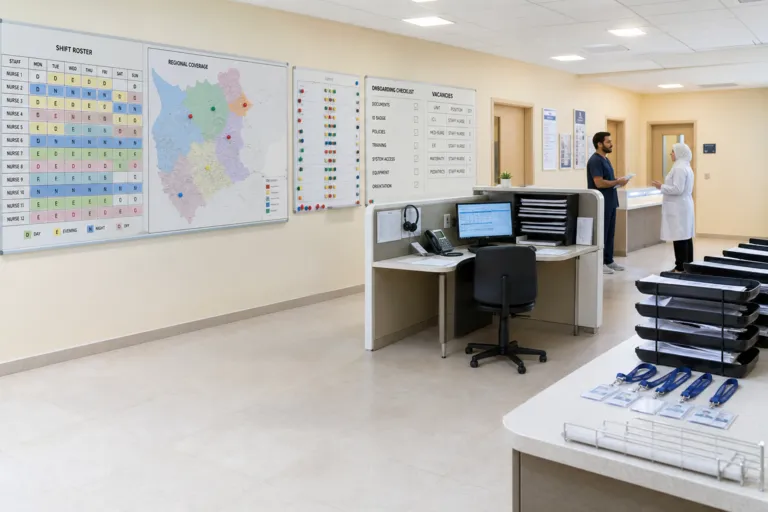
The distribution problem is measurable. The same regional analysis reports nurse-to-1,000 population ratios ranging from 3.13 to 9.89 across Saudi regions, alongside an overall Gini coefficient of 0.48, which signals inequality in where nurses are located. Inequality appears sharper in some segments. The private health sector shows a Gini coefficient of 0.69, and distribution among non-Saudi nurses shows a Gini coefficient of 0.59. These figures matter because a national total can still hide local shortages, especially when facilities in different regions compete for the same experienced staff.
Recruitment, Saudization, and Retention Must Move Together
Recruitment pressure is frequently described as immediate and operational. One hiring guide cited in the sources says industry sources estimate 85% of healthcare facilities in KSA struggle to hire licensed nurses, pointing to complex licensing requirements, niche specialty needs, and multi-step background checks that slow hiring even when demand is urgent. At the same time, Saudization is progressing but remains uneven. In 2023, Saudi nationals comprised 44.22% of the nursing workforce in the regional analysis based on the 2023 Statistical Yearbook. Another case-study source describes reliance on expatriates across healthcare, stating 232,000 expatriates staffed the sector, including 57% of nurses.
Retention is the other half of the capacity equation, because ongoing reliance on expatriate nurses makes stability sensitive to policy shifts and working-life conditions. A Frontiers narrative review based on 36 studies highlights issues such as inadequate housing and labor market fragmentation, plus discrimination risks tied to gender, pay, religious, language, and racial factors for nurses from low and middle-income countries. It also warns that shortages can translate into more shifts, overtime, and a lack of flexible work, contributing to stress, burnout, low job satisfaction, and higher turnover. Yet retention is not automatically doomed. In one study of expatriate lived experience, most expatriate nurses (86.1%, n = 31) intended to remain in Saudi Arabia, suggesting conditions and processes can materially improve outcomes.
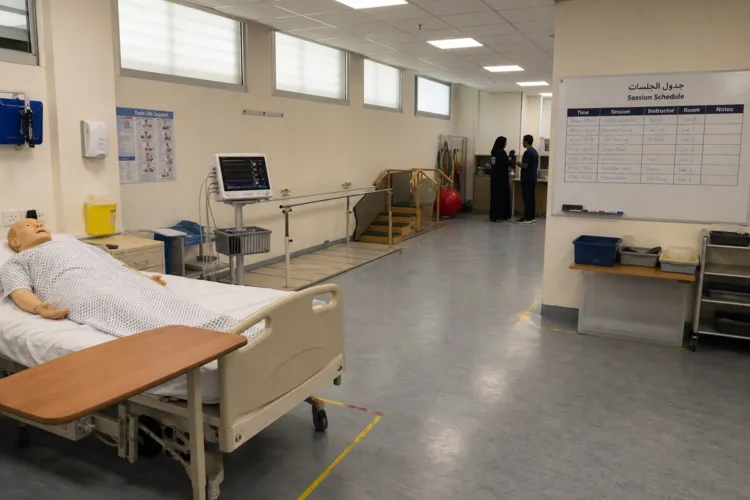
Closing gaps also depends on training and capability-building at scale, especially in regions that face the tightest staffing. A healthcare education case study notes Vision 2030 aimed to train 175,000 new Saudi health professionals and argues domestic programs were not producing enough graduates, with curricula described as outdated and lacking hands-on training. Its solution set includes expanding enrollment capacity, establishing new nursing colleges in regions with shortages, modernizing curricula, and creating simulation-based training. Investment is also visible in the professional training market: one market source values Saudi Arabia’s Healthcare Professional Training Market at USD 1.3 billion in 2025, projecting growth to USD 2.1 billion by 2031 at a 9.85% CAGR. Alongside training, sources also cite technology levers, such as administrative AI intended to reduce documentation that consumes 30–40% of a clinician’s day, as one way to improve productivity without degrading care quality.
How large is Saudi Arabia’s nursing workforce today?
What does the data say about unequal nurse distribution across Saudi regions?
How far has Saudization progressed in nursing?
Why is retention a central risk for the Saudi nursing workforce?
What are the main operational barriers to hiring nurses in KSA?