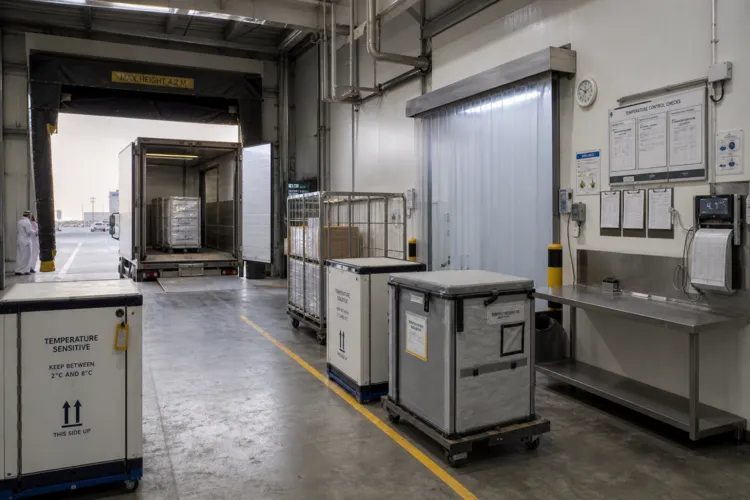
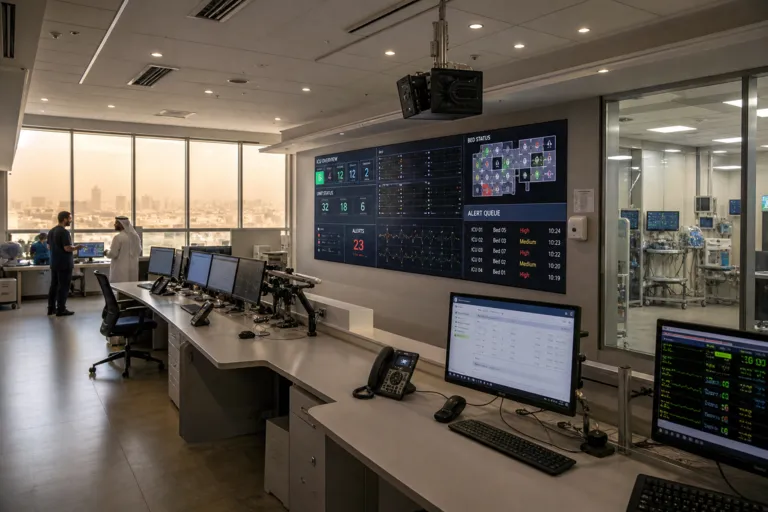
Critical care “without walls” is a practical way to describe how tele-intensive care units extend specialist coverage across multiple sites. A tele-ICU is built to let remote critical care specialists collaborate with on-site ICU teams to monitor and manage critically ill patients, especially where access to specialized professionals is limited. This approach is increasingly relevant as healthcare systems respond to the shortage of critical care specialists and the demand for high-quality intensive care services in rural and underserved areas. As adoption grows, hospitals use continuous remote monitoring to strengthen clinical decision-making while keeping the bedside team central to care delivery.
Saudi Arabia’s broader telehealth scale creates context for Saudi tele-ICU networks that need reliable referral pathways and consistent operations across facilities. One national telehealth model completed more than 11.5 million virtual clinic appointments in 2025 and supported more than 242 hospitals by 2026, according to Ken Research’s Saudi Arabia Telehealth Services Market coverage. The same source also notes that virtual clinic appointments increased by 56% in 2025 (Saudi Ministry of Health), expanding the base for follow-up consultations, specialist referrals, and chronic-care enrollment. This matters for intensive care because a mature virtual platform can help route specialist input, support standardized escalation, and connect ICU decisions to downstream follow-up services.
What a Tele-ICU Network Needs to Work Across Sites
Tele-ICU networks depend on choices about operating model and technology components. In the Middle East, Ken Research describes four tele-ICU model types: centralized, decentralized, hybrid, and others. Centralized command-center approaches are highlighted for round-the-clock monitoring and decision support, while decentralized models can appeal to large academic and specialty hospitals that want to retain local autonomy while still using tele-consults. Hybrid models combine centralized analytics and oversight with bedside-led decision-making, and are described as increasingly adopted because they offer flexibility, clinician acceptance, and improved cost-efficiency. On the build side, the same Middle East report frames tele-ICU components in practical terms: hardware such as cameras, monitors, carts, and servers; software and platforms including dashboards, decision-support tools, and integration with electronic medical records; services spanning implementation, workflow redesign, training, 24/7 monitoring, and managed services; and the network infrastructure needed for low-latency video and data transfer.
Saudi Arabia’s monitoring ecosystem is also moving toward “always-on care” that supports connected workflows, which can complement ICU command-center operations. A Saudi-focused market estimate values the Kingdom’s remote patient monitoring market at USD 274.4 million in 2026 and projects USD 457.0 million by 2031, reflecting a 10.7% compound annual growth rate through 2031. Operationally, the same Saudi RPM analysis describes accelerating adoption of Internet of Medical Things and cloud-based patient data platforms, including an estimate that 40–50% of new hospital tenders in 2025–2026 specified real-time data integration with EHRs. It also describes replacement cycles for conventional patient monitors in Saudi hospitals as estimated at 8–10 years, compressing toward 6–7 years as facilities upgrade toward predictive analytics, alarm fatigue reduction, and interoperability with telemedicine hubs.
Globally, tele-ICU momentum provides an external benchmark for how fast the category is expanding, without implying local performance. Emergen Research values the global tele-intensive care unit market at USD 6.8 billion in 2024 and projects USD 18.4 billion by 2034, registering a 10.5% CAGR, citing drivers such as demand for remote patient monitoring, the shortage of critical care specialists, and advances in telecommunication infrastructure. At the same time, market descriptions emphasize implementation challenges that health systems must plan around, including integrating tele-ICU platforms with electronic health records and maintaining interoperability across multiple medical devices. For Saudi Arabia, the strongest “without walls” story is not only about adding screens, but about connecting specialists, bedside teams, data integration, and governance so expertise can travel across facilities when minutes matter.
What does “critical care without walls” mean in tele-ICU terms?
How does Saudi Arabia’s telehealth scale support tele-ICU expansion?
Which tele-ICU operating models are commonly discussed for the Middle East?
What Saudi market signals point to stronger integration that can benefit ICU monitoring?
What is the global growth context for Saudi tele-ICU programs?