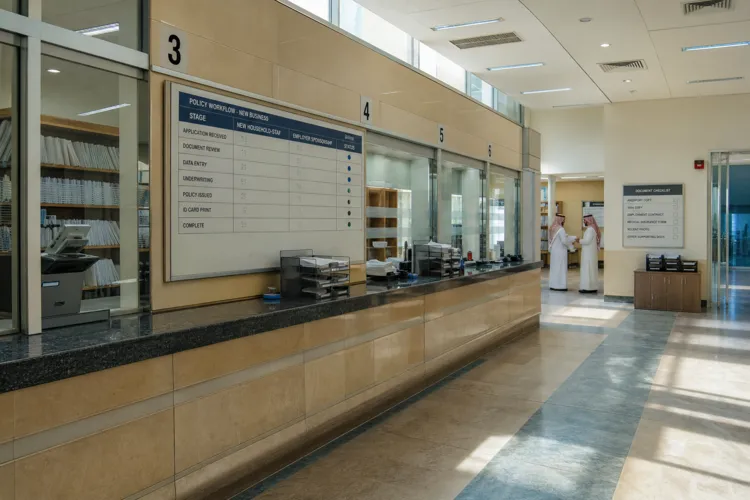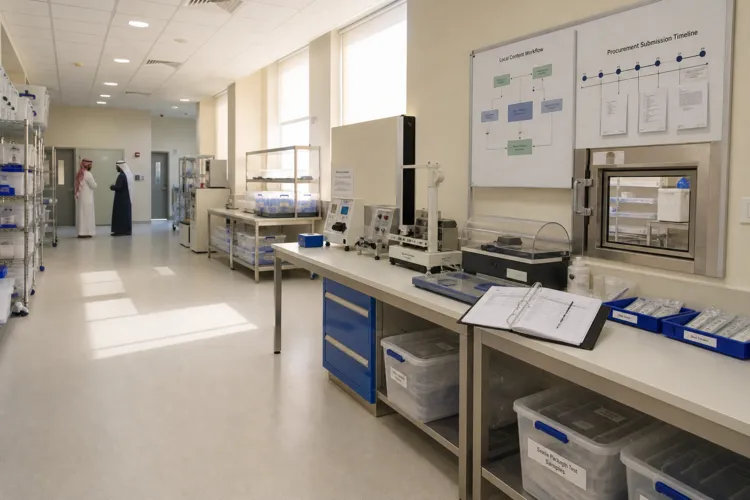
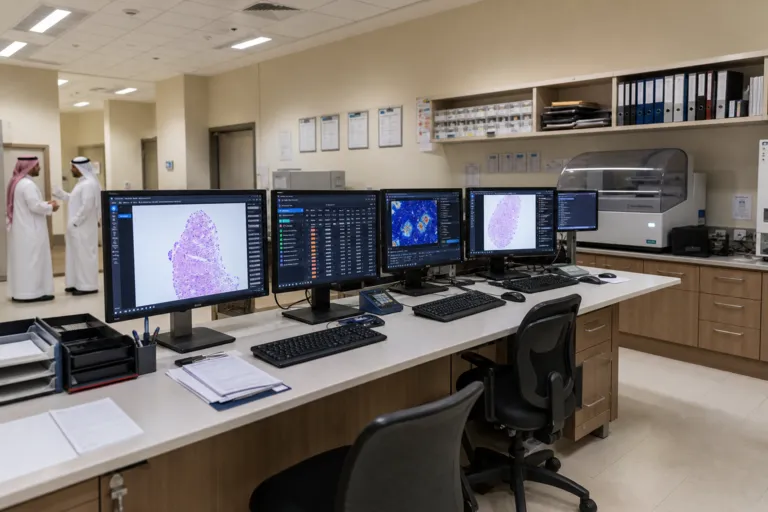
Pathology is moving from microscopes and glass slides toward digital slides, workflow software, and AI-based analysis. Digital pathology is described as a digital, image-based environment that helps in the procurement, administration, and interpretation of pathological information using a computer. It can provide live, high-resolution images that support better diagnosis. At the same time, adoption is not frictionless. Reported barriers include high cost, lack of reimbursements, and reluctance among older pathologists to shift to newer diagnostic tools. Even so, rising awareness, more affordable scanners for private practices, and growing requirements for personalized medicine are cited as opportunity drivers.
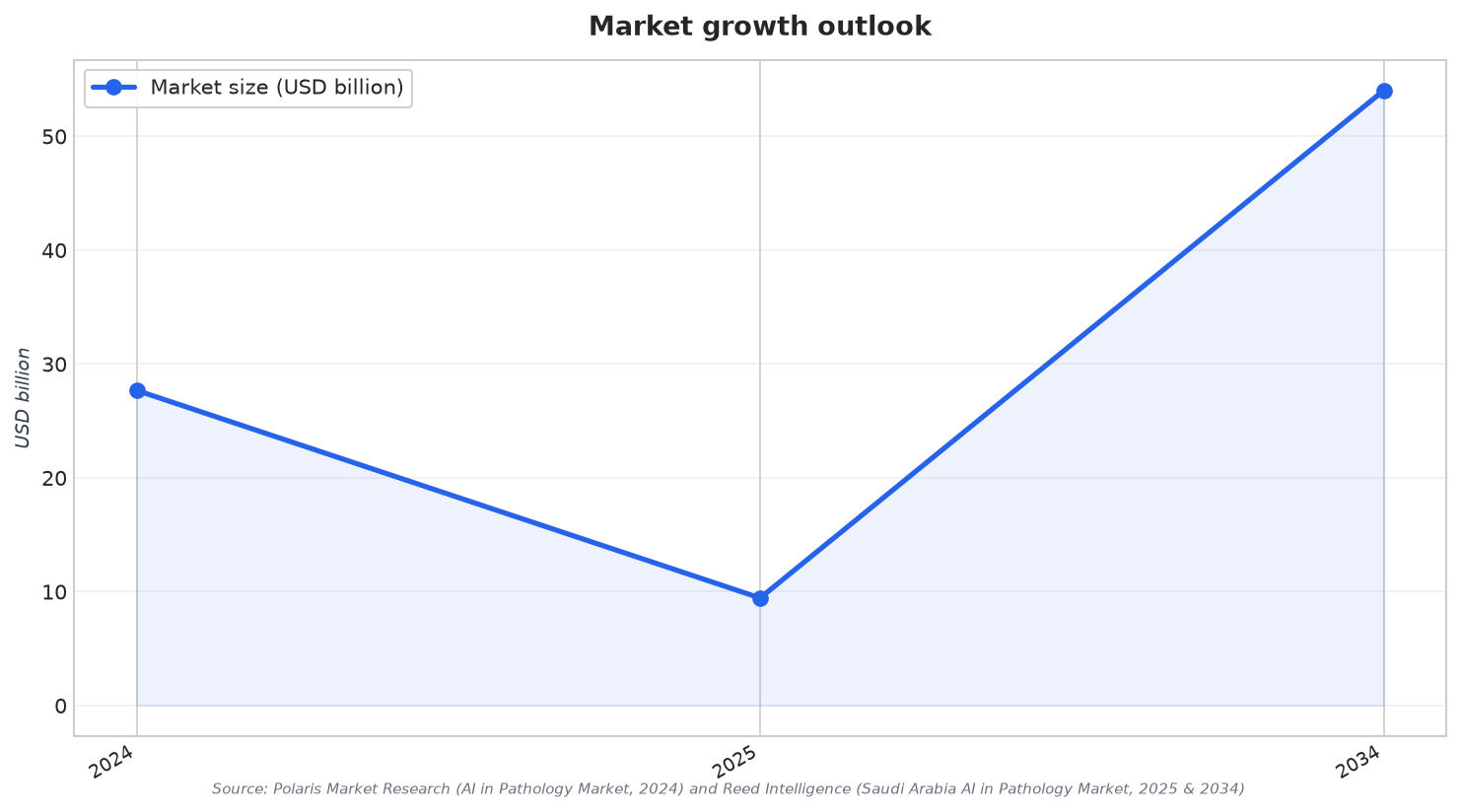
In Saudi Arabia, the market signals for AI-enabled pathology are substantial. Reed Intelligence estimates the Saudi Arabia AI in pathology market at USD 9.45 Billion in 2025, with an expectation to expand to USD 54.02 Billion by 2034. The same source forecasts a CAGR of 21.15% for 2026–2034 and notes that Saudi Arabia contributed 1.38% to the global AI in pathology market size in 2025. Component dynamics matter for buyers. Software held the leading position by component in 2025 based on market size, while hardware is projected to post the fastest growth rate during the forecast horizon.
From Slide Scanners to Integrated Platforms and Cloud Workflows
The opportunity is not limited to scanning slides. Fortune Business Insights describes a market shift away from standalone slide scanners toward integrated platforms that combine image acquisition, workflow management, analytics, and secure data access. That framing fits how labs actually deploy digital pathology: image acquisition, workflow software, storage, network capacity, pathologist review, and integration with information systems all need to move together. Credence Research also highlights the deeper integration of AI-based digital pathology platforms with laboratory information systems (LIS), hospital information systems, and enterprise AI ecosystems, enabling automated routing and reporting. It also points to cloud-based deployment and remote pathology services as a key trend, supporting multi-site access and centralized AI model updates.
Global benchmarks show how fast AI slide digitization is scaling. SNS Insider values the global AI in pathology slide digitization market at USD 0.24 Billion in 2025 and projects USD 1.15 Billion by 2035, reflecting a 16.96% CAGR over 2026–2035. In the U.S., the same report estimates USD 0.10 billion in 2025, rising to about USD 0.42 billion by 2035 at a 15.68% CAGR. These figures are not Saudi-specific, but they illustrate the momentum behind whole-slide imaging, AI image analysis, cloud connectivity, and decision support. For Middle East and Africa context, Credence Research estimates the region represents approximately 4%–5% of the global AI-based digital pathology market, describing early-stage adoption driven by healthcare modernization initiatives in countries such as Saudi Arabia.
For Saudi digital pathology stakeholders, the practical “slide-to-insight” roadmap is about selecting interoperable systems and planning for end-to-end operations. Polaris Market Research notes that end-to-end solutions led the global AI in pathology market in 2024 because they support the workflow from image acquisition through diagnostics and reporting. It also flags implementation cost as a constraint, especially for smaller laboratories, while describing explainable AI (XAI) integration as a door-opener for clinical adoption and regulatory clearance. In short, the Saudi opportunity sits at the intersection of fast-expanding AI pathology demand, growing hardware momentum, and a platform shift that rewards connected workflows over isolated tools.
What is the forecast for Saudi Arabia’s AI in pathology market?
Which component leads today in Saudi Arabia, and which is expected to grow fastest?
How does the Middle East and Africa region compare in AI-based digital pathology adoption?
What is changing in digital pathology platforms, beyond slide scanning?
What is the global outlook for AI slide digitization that informs Saudi digital pathology planning?