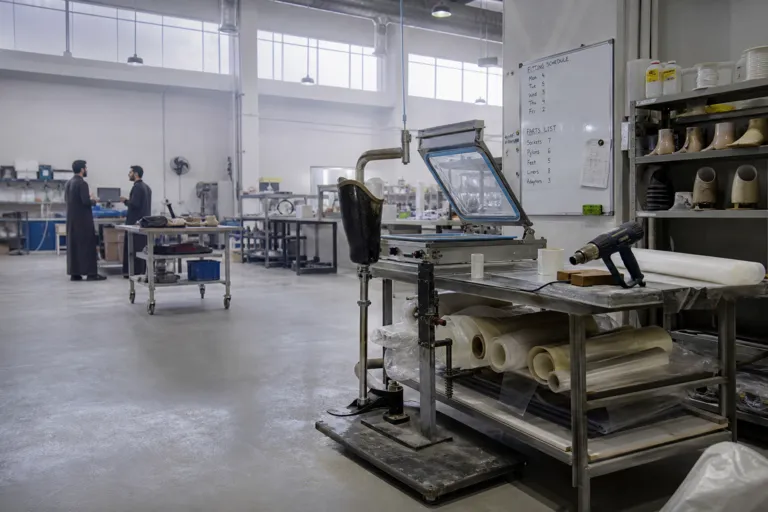
Independence is the real product in assistive care. Devices that help people move, communicate, and manage daily living can turn clinical progress into everyday capability. In Saudi Arabia, that idea is translating into measurable demand signals. One benchmark is the Disabled & Elderly Assistive Device Market, valued at USD 137.35 million in 2023 and predicted to reach USD 207.60 million by 2030, at a CAGR of 5.8% from 2024 to 2030. The category spans mobility aids, communication devices, and home automation systems, with AI, machine learning, IoT, and smart home integrations described as key enablers for more personalized, adaptive support.
Rehabilitation products broaden the opportunity beyond single devices into pathways of care. IndexBox projects Saudi Arabia’s rehabilitation products market to expand at a 7–9% compound annual growth rate through 2035, linking momentum to healthcare transformation initiatives, rising chronic disease prevalence, and a rapidly aging population segment. The report also flags structural import dependence at an estimated 75–85% of domestic supply, with the United States, Germany, China, and Japan as primary origin markets for mobility aids, electrotherapy devices, and orthopedic supports. For buyers, that reliance can mean longer planning cycles. For entrants, it signals room for localized distribution, service, and potentially assembly models that reduce friction for hospitals and home-care channels.
Where Growth Concentrates: Mobility, Digital Rehab, and Premium Fit
Within the Saudi rehabilitation mix, mobility aids are the largest segment at roughly 25–30% of market value. But the fastest growth is expected in electrotherapy devices and rehabilitation software, with annual growth in the 9–11% range. Distribution is also shifting. Home healthcare is expanding from approximately 30–35% of sales volume toward a larger share as patients prefer at-home rehabilitation following hospital discharge, which changes procurement from clinic-centric purchasing to recurring, service-heavy fulfillment. Premium and customized products are gaining share too. IndexBox notes that microprocessor-controlled prosthetics and AI-assisted therapeutic equipment can carry 30–50% price premiums over standard equivalents, reinforcing the business case for fitting, training, and maintenance capabilities alongside the device sale.
Prosthetics and orthotics sit at the intersection of rehabilitation and assistive technology, and global market direction matters for suppliers building portfolios. Grand View Research values the prosthetics and orthotics market at $6.8B in 2025 and projects growth from $7.1B in 2026 to $9.5B by 2033, at a CAGR of 4.2%. That demand is tied to improving healthcare infrastructure, increased access to rehabilitation services, and investment in assistive healthcare technologies. Global Insight Services also emphasizes technological advancements, wider availability of high-performance devices, and a stronger focus on improving patient functionality and independence. For Saudi buyers, these trends raise expectations for outcomes, comfort, and digital features, not only basic mobility.
Execution, however, is constrained by practical bottlenecks that shape go-to-market strategy in the Saudi assistive technology market. IndexBox reports imported rehabilitation equipment lead times of 8–16 weeks from order to delivery, creating inventory challenges for distributors and hospitals, particularly for specialized prosthetics and electrotherapy devices. It also cites regulatory alignment with international medical device standards, including Saudi FDA conformity assessment procedures, adding 3–6 months to product registration timelines and raising market entry costs for smaller suppliers. Skilled clinical personnel shortages, especially physiotherapists and rehabilitation technicians, can further limit adoption of advanced systems. The clearest opportunity is end-to-end: products plus training, streamlined compliance support, and service models designed for home care expansion.
How big is Saudi Arabia’s disabled and elderly assistive device market?
What is the growth outlook for Saudi Arabia’s rehabilitation products market?
Which rehabilitation product segments lead in Saudi Arabia?
What practical barriers matter most for entrants to the Saudi assistive technology market?
How do premium prosthetics and AI-assisted rehab products affect budgets?