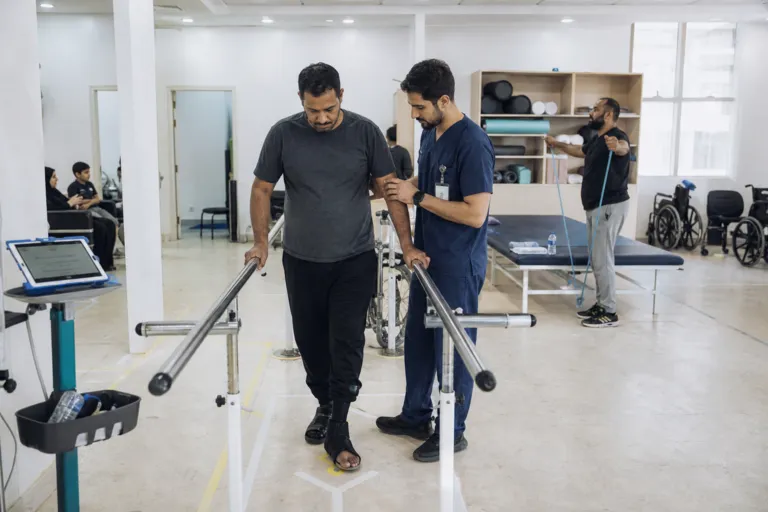
Rehabilitation is becoming more central to how recovery is delivered, and the Saudi rehabilitation market is increasingly shaped by demand for functional recovery across chronic disease, injury, and post-acute care. Global context highlights how large this space has become: the global medical rehabilitation services market was estimated at USD 269.91 billion in 2024 and is projected to reach USD 385.92 billion by 2030, at a 6.1% CAGR from 2025 to 2030. That same global outlook points to growing numbers of patients with neurological, musculoskeletal, and cardiologic conditions, as well as the value of integrating acute care and rehabilitation within one facility to improve continuity of care and recovery.
Within the Middle East and Africa, the physical rehabilitation landscape shows both scale and unmet need. In 2023, the region accounted for over 12 million rehabilitation procedures, with South Africa, the UAE, and Saudi Arabia leading. Yet the same source states only 25% of rehabilitation needs are currently met, and more than 1.5 million people in the region use assistive devices. For Saudi providers and investors, those figures frame an opportunity: capacity building is not just about new sites, but also about improving access to services and devices that support long-term recovery paths.
What Is Driving Demand and Investment in Saudi Arabia?
Multiple sources point to practical drivers behind demand for rehabilitation equipment and services in Saudi Arabia. One market analysis notes steady growth in rehabilitation equipment usage tied to increasing prevalence of chronic diseases, stroke-related disabilities, and injuries from road accidents, while rising life expectancy supports demand for mobility aids, physiotherapy devices, and long-term functional recovery tools. It also highlights expanding physiotherapy services and improved access to assistive devices, alongside rising interest in home-based rehabilitation for cost and convenience, especially for elderly or mobility-restricted individuals. Public health programs that promote disability inclusion and early functional recovery are also cited as strengthening momentum, with Saudi Arabia expected to experience substantial growth within the Middle East and Africa market in 2025.
Care delivery and partnerships are part of the build-out. In April 2024, Mumtada Medical Company partnered with Mass General Brigham to provide advanced rehabilitative services and long-term post-acute care in Saudi Arabia, a signal of growing emphasis on advanced therapy settings. At the same time, musculoskeletal care is evolving toward more comprehensive models that combine pharmacological, surgical, and rehabilitative therapies, supported by diagnostic innovations such as MRI, ultrasound imaging, and biomarker analysis. However, constraints remain. A Saudi-focused outlook cites shortages of rheumatologists, orthopedic surgeons, and rehabilitation therapists in rural regions, and it also notes limited reimbursement coverage for physiotherapy and long-term rehabilitation services compared with drugs and surgeries.
Technology and equipment trends are also reshaping delivery models and competitive dynamics. Globally, occupational therapy represented a majority share of 51% of the rehabilitation equipment market by application in 2025, underscoring the importance of restoring daily living function. In physiotherapy equipment, the market is expected to reach USD 23.89 billion in 2026 and rise to USD 33.26 billion by 2031, reflecting a 6.85% CAGR, while electrotherapy held 36.7% share in 2025 and wearable and assistive rehabilitation devices are forecast to expand at a 7.12% CAGR through 2031. New entrants offering remote physiotherapy, virtual rehabilitation tools, and motion-tracking software are intensifying competition for traditional manufacturers, a trend that aligns with local expectations that tele-rehabilitation and remote physiotherapy platforms can expand access to post-operative and chronic care services.
What is shaping growth in the Saudi rehabilitation market today?
How large is the regional need for rehabilitation, and what does it imply for Saudi Arabia?
What partnership signals expansion of advanced rehabilitation services in Saudi Arabia?
Which equipment and therapy trends are influencing rehabilitation delivery models?