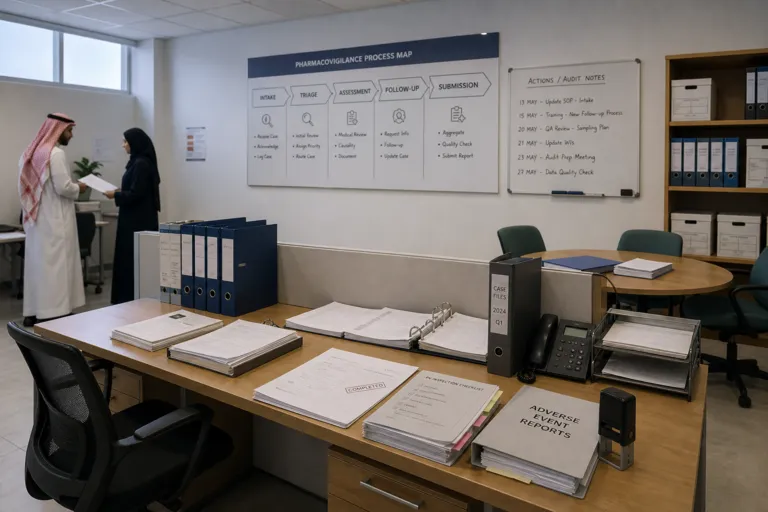
In Saudi Arabia, safety after approval is increasingly framed as a commercial and operational issue, not only a regulatory checkbox. A 2026 guide on SFDA requirements describes a market that has “rapidly emerged” as one of the most advanced and safety-focused in the Middle East, and it notes that Marketing Authorization Holders (MAHs) are expected to run highly structured, locally compliant, and inspection-ready pharmacovigilance (PV) systems. The same source ties the speed of change to Vision 2030 modernization, expanding biologics and advanced therapy launches, and growing adoption of real-world safety monitoring technologies. For pharma, biotech, local agents, and global MAHs, PV is positioned as a strategic requirement to maintain market access, patient trust, and long-term operational success.
The strategic shift is also driven by how Saudi Arabia has organized national oversight. The SFDA has established a regulatory structure intended to monitor medicinal product safety across the product lifecycle, with objectives that include protecting patient safety, detecting and assessing safety signals, strengthening adverse event monitoring, improving benefit-risk evaluation, and enhancing post-market surveillance. The National Pharmacovigilance and Drug Safety Centre (NPVDSC) is described as the central authority responsible for national drug safety oversight. In parallel, a separate comparative overview states that the SFDA established a National Pharmacovigilance Center (NPC) to oversee collection, evaluation, and communication of adverse drug reaction data, and that the system has evolved with strict reporting protocols and an emphasis on transparency and collaboration.
Global Alignment Raises the Bar for Local Execution
Saudi Arabia’s PV environment is increasingly anchored to international collaboration and standards, which influences what “good” looks like for company systems. One Saudi-focused guide says the national framework aligns with WHO pharmacovigilance principles, ICH guidelines, EU Good Pharmacovigilance Practices (GVP), and international signal detection methodologies. It also states Saudi Arabia has been a member of the WHO Uppsala Monitoring Centre (WHO-UMC) since 2009, enabling participation in global pharmacovigilance collaboration. Listed benefits include access to VigiBase safety data, international signal detection collaboration, faster identification of emerging risks, contribution to global safety literature, and improved benchmarking. For companies, this means local case processing, signal work, and decision documentation may be scrutinized against practices shaped by global comparators, not just local precedent.
Operationally, Saudi PV expectations extend into people, process, and technology choices. A local PV overview highlights the role of the local QPPV, plus technical requirements for safety databases and signal detection, and it points to SFDA annual reports as a way to track strategic direction. It also emphasizes that the Ministry of Health operates government healthcare facilities and manages hospitals where much real-world safety data is generated, making it a key partner for PV practitioners. On the technology side, a pharmacovigilance and drug safety software market analysis describes industry moves such as VigilanceTech Solutions acquiring DataSafe Analytics for approximately USD 350 million (November 2024) and a February 2025 partnership to embed automated case intake into an electronic health record system, simplifying adverse event reporting for healthcare providers by over 50% (both cited to external news sources within that report). These examples are global context, but they help explain why Saudi teams are investing in scalable, auditable PV workflows.
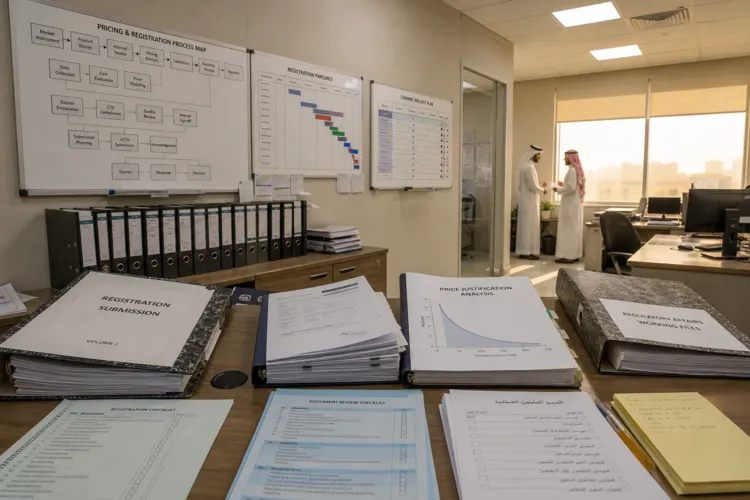
Finally, post-approval lifecycle management is pushing PV to converge with regulatory affairs in Saudi operating models. An IndexBox report on the Saudi regulatory affairs services market notes growth in strategic outsourcing by large multinationals for Saudi-specific regulatory work, as they optimize resources for core markets while using local experts for GCC expansion. The same report highlights “increasing convergence between regulatory affairs and pharmacovigilance service demands,” particularly for post-approval lifecycle management, which is prompting more integrated offerings or formal partnerships. This is where saudi pharmacovigilance becomes a strategic priority: it connects compliance readiness, post-market surveillance, labeling updates, and lifecycle decisions into one execution chain that supports durable market access.
Why is post-approval safety becoming strategic in Saudi Arabia?
How does Saudi Arabia’s WHO-UMC membership affect pharmacovigilance expectations?
Which Saudi bodies are central to national drug safety oversight?
What does the convergence of regulatory affairs and PV mean for pharma operating models in Saudi Arabia?
How are technology trends shaping the pharmacovigilance discussion around Saudi Arabia?