The phrase saudi healthcare PPP is increasingly linked to a broad set of moves across delivery, operations, and investment. In late 2025, the Saudi Ministry of Health signed a Memorandum of Understanding with Efficio to advance supply chain, procurement, and local content excellence. The agreement was signed on the sidelines of the eighth edition of the Global Health Exhibition 2025. It sits inside the Health Sector Transformation Program, which highlights access, innovation, financial sustainability, disease prevention, e-health services, digital solutions, quality of care, and adherence to international standards. These themes matter because PPP structures often depend on predictable procurement and strong operating models.
Hospital operations are also drawing new outside interest. Akdital Holding, described as Morocco’s largest private healthcare provider, outlined a $1.6 billion expansion into Saudi Arabia and the UAE by 2030. Its plan includes opening up to eight new clinics and investing $200 million in diagnostic centres. The company said it intends to fund the project by raising equity from Gulf wealth managers and family offices, issuing domestic bonds worth $86 million this year, and using its property subsidiary, Tazak, to raise about $700 million for land and hospital construction. It also began its international push in July with a contract to lease and operate Al Mishari Hospital in Riyadh.
Inside the Operating Model: From Procurement to Clinical Governance
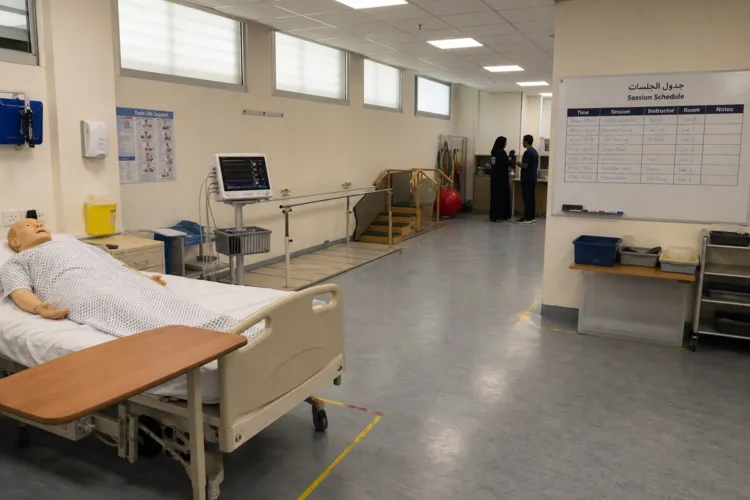
One way to understand PPP readiness is to look at how operating standards and governance are being formalized. Saudi Health Holding Co. and Mass General Brigham advanced the implementation of the Saudi Model of Care, with emphasis on accelerating nationwide adoption, building national capacity, and strengthening clinical governance to support Vision 2030’s goal of a world-class, patient-centered health care system. Their partnership was established via an MOU in 2023. In AlUla, they collaborated to transform emergency care services, and Prince Abdul Mohsen Hospital’s Emergency Department earned its first national accreditation. The initiative reduced patient wait times while maintaining standards of care and safety, and it later expanded into leadership development via a program first held in December 2024.
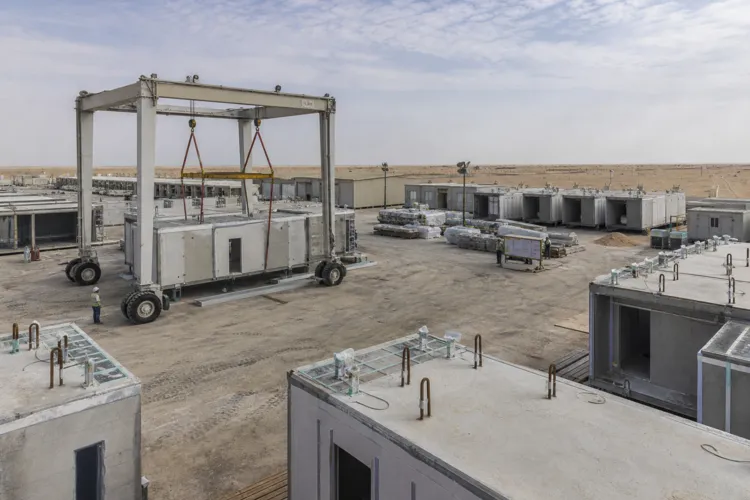
Innovation and manufacturing capability are moving alongside service delivery. At Global Health Exhibition 2025 in Riyadh, King Faisal Specialist Hospital and Research Center (KFSHRC) unveiled Saudi Arabia’s first facility for gene and cell therapy manufacturing. In a separate June 2025 announcement, KFSHRC and Germfree Labs agreed to develop an advanced therapy manufacturing campus in Riyadh. The campus is described as a fully CGMP-compliant, off-site built, modular solution developed in phases, beginning with deployment of Germfree’s BioGO®Box single-module cleanroom solution for early operator training, tech transfer, and R&D activities. These steps signal an ecosystem approach where clinical delivery and upstream capability can develop in parallel.
Venture building is another layer that can complement PPP-style delivery models. Redesign Health partnered with Sanabil Investments, a wholly owned company by the Public Investment Fund, to open the Sanabil Venture Studio by Redesign Health in Saudi Arabia. The partnership aims to jointly develop and launch at least 20 healthcare companies in the kingdom. In the past year, the Riyadh-based studio built a bench of venture partners and inked partnerships with institutions including the Saudi Ministry of Health, Tawuniya, and Fakeeh Care Group. The same reporting also notes that the Saudi government is actively investing in AI technology and infrastructure, supporting a pipeline of digital and operational solutions that can plug into large healthcare systems.
When people discuss a “privatization pipeline,” they often mean many assets moving toward private participation at once. The sources provided here do not detail Al Ansar Hospital terms or a “290-hospital” program document, so this article cannot confirm those specifics. Still, the pattern is visible: ministries are professionalizing procurement, private operators are entering via leases and operations, and national partners are building governance, leadership, and manufacturing capacity. For any saudi healthcare PPP portfolio to scale safely, the most repeatable building blocks in these sources are clear contracts, accredited care pathways, and supply-chain discipline that can withstand rapid expansion.
What does “saudi healthcare PPP” mean in this article?
What did the Saudi Ministry of Health sign with Efficio?
What are the key numbers in Akdital’s Gulf expansion plan?
What measurable outcome is described in the Saudi Health Holding Co. and Mass General Brigham work?
What did KFSHRC unveil at Global Health Exhibition 2025?