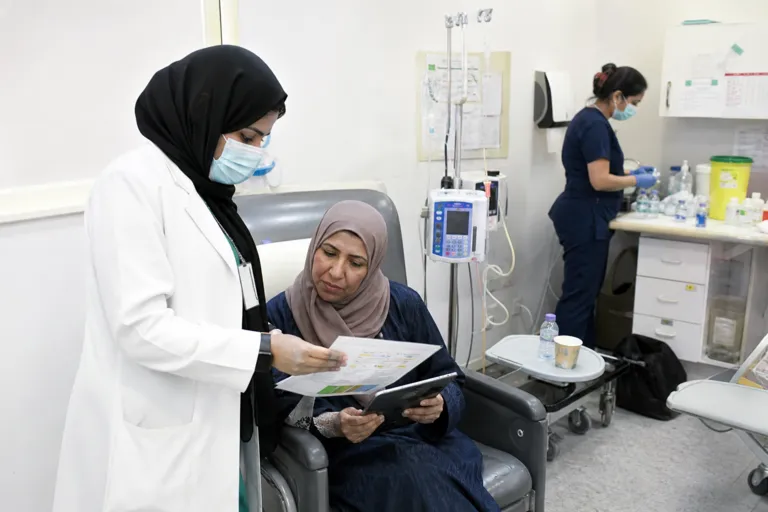
The saudi oncology market is expected to hit $1.76B by 2030, supported by rising use of targeted therapies and immuno-oncology approaches. Global market signals point to a strong shift toward precision-targeted modalities and combination strategies. Industry analysts expect the antibody-drug conjugate market to reach $50 billion by 2030, supported by 16 approved therapies and accelerating clinical pipelines. At the same time, immuno-oncology revenues increased from $94 billion to $109.39 billion in 2025 alone, reinforcing the pace of adoption for immune-based regimens.
Targeted therapy also leads in broader oncology drug segmentation. In 2024, the targeted therapy segment captured the biggest market share within oncology drugs, according to a market segmentation summary. This positioning aligns with the core promise of targeted therapy described in the same source: it interferes with particular proteins that help tumors spread and grow, and it supports tailoring treatment to the individual characteristics of a patient’s cancer. Immunotherapy is also positioned for significant growth from 2025 to 2034, reflecting increased interest in approaches that modify the immune system to attack cancer cells through multiple directions and targets.
Why Diagnostics, Lung Cancer Focus, and Faster Pathways Matter
Diagnostics capacity and biomarker adoption are central to targeted therapy deployment, and Saudi Arabia is explicitly listed among countries advancing this foundation. A cancer biomarkers market source cites “Saudi Arabia | National Genomic and Cancer Programs” and states these programs enhance molecular diagnostic capacity, fund biomarker research, and improve access to targeted therapy testing. This matters because the same source explains that genetic biomarkers are used as a therapeutic guide, helping patients choose treatment based on what suits their bodies, while targeted medicines directly address molecular processes linked to cancer for patients with certain genetic alterations.
Lung cancer therapeutics remain an important demand driver in oncology therapeutics narratives. A cancer therapeutics market summary states the lung cancer segment held the largest share of the cancer therapeutics market in 2024. It also notes that targeted therapies and immunotherapies have been developed to treat different types of lung cancer, improving survival and increasing treatment adoption. Another lung cancer-focused update reports that the Saudi Food and Drug Authority granted accelerated approval for ANKTIVA in metastatic non-small cell lung cancer, describing it as the world’s first regulatory approval of ANKTIVA in lung cancer.
Saudi regulatory acceleration also appears in immunotherapy access timelines tied to breakthrough pathways. A Saudi partnership announcement for Multikine, described as an immunotherapy administered before surgery for newly diagnosed previously untreated head and neck cancer, references patient access and reimbursement or sale in Saudi Arabia within approximately 60 days following filing for Breakthrough Medicine Designation. The same announcement states that in the world’s largest head and neck cancer study spanning 20 countries, Multikine increased the 5-year survival rate of the target patient population to 73% versus 45% for standard of care alone, and reduced the 5-year risk of death from 55% to 27%.
In combination, these elements frame why the saudi oncology market trajectory toward $1.76B by 2030 is being discussed alongside targeted therapies and immuno-oncology growth. Global benchmarks show expanding pipelines and rising revenue in immuno-oncology, while targeted therapy remains a leading drug class positionally in 2024. Locally, Saudi initiatives in genomics and cancer programs support testing capacity needed for precision medicine, and multiple reports highlight faster regulatory pathways and approvals tied to oncology. Together, these signals point to continued emphasis on precision-targeted modalities and immune-based therapies through 2030.
What is the 2030 outlook for the saudi oncology market?
What global trend supports the shift toward antibody-drug conjugates?
How fast did immuno-oncology revenues grow in 2025?
What programs are cited for improving biomarker and targeted therapy testing in Saudi Arabia?
What head and neck cancer survival figures are cited for Multikine?