Saudi Arabia’s push to modernize healthcare is creating a clear demand for AI that can communicate in Arabic and fit local clinical workflows. Market research links this momentum to growing investments in Arabic-language AI models and localized datasets, which are enabling more effective AI applications across digital platforms and government services. In parallel, the Kingdom’s AI market is described as having strong momentum from large-scale government initiatives that are driving digital transformation across the economy, with public entities integrating AI to improve operational efficiency and data-driven decisions. In healthcare, that same logic applies: if AI is going to support clinicians and patients, it has to speak the patient’s language and work with local data.
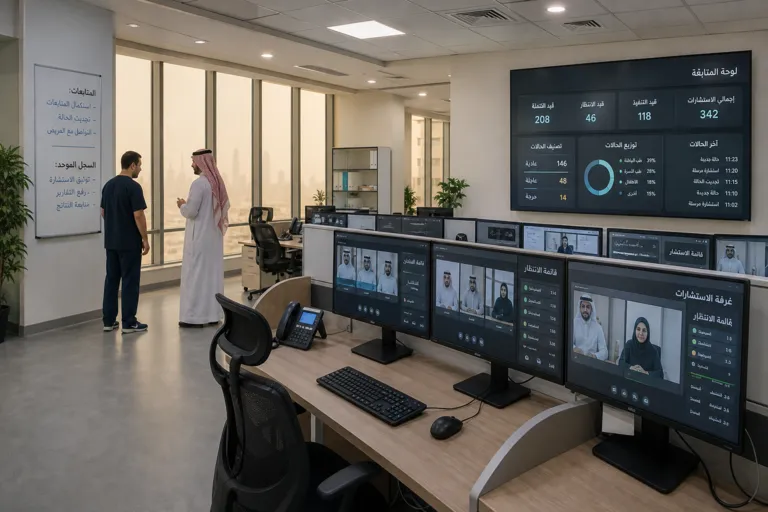
National digitization efforts make the case for Arabic-first clinical tools even stronger. One digital health outlook states a digitization target to capture 70% of patient activities, and notes unified health files totaling 31 million. Telemedicine infrastructure investments are also described as supporting remote consultations across all thirteen provinces, with platforms providing appointment management, pharmacy delivery, and health tracking through culturally relevant, AI-powered Arabic interfaces. As these services scale, language becomes a frontline feature, not a nice-to-have. It influences patient engagement, reduces friction in remote interactions, and helps virtual assistants and clinical documentation tools fit daily practice where Arabic is the default.
From Global Clinical Proof Points to Saudi Localization
International experience shows why language-capable AI is increasingly paired with imaging and workflow automation. A BBC Arabic feature highlights two major areas where AI is starting to make a difference in healthcare: large-language-model tools, such as scribes that help with note-taking and translation, and medical imaging analysis that supports clinicians as decision-support. In the UK, the same report describes a study by the NHS with Imperial College London and Google in which AI use led to detection of more advanced and overall cancer cases, fewer false positives, fewer women recalled after initial screening, and scan analysis time reduced by about one third. In Saudi Arabia, the localization challenge is to align similar capabilities with Arabic communication needs, local regulation, and local datasets.
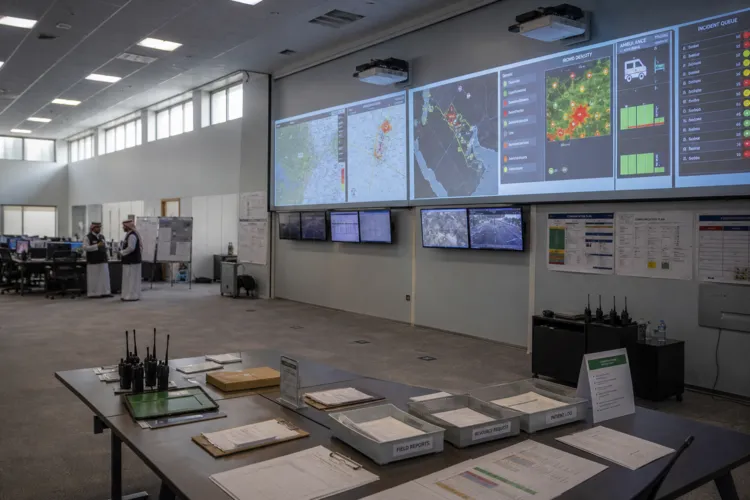
On-the-ground implementations in Saudi digital health increasingly emphasize Arabic interfaces and AI-backed operations. One report describes machine learning diagnostic accuracy ranging from 82–97% for medical imaging, pathology, and heart disease detection, alongside deployment across over 224 connected facilities. The same source says predictive models can forecast ICU admissions and patient deterioration during mass gatherings like Hajj, and reports a 25% reduction in hospital readmissions in clustered facilities through intelligent resource allocation. It also notes that Aster DM Healthcare launched the myAster platform with generative AI-powered Arabic voice responses, and that Saudi Arabia launched what it calls the world’s first digital diabetes command center in November 2025 to monitor patients’ vital signs in real time.
Research and market signals suggest this direction will keep expanding, but the hardest work sits in culture and language, not only compute. A Saudi-focused review argues that subsequent investigations should concentrate on culturally relevant AI algorithms, stronger Arabic natural language processing, and AI-driven mental health systems. Meanwhile, AI market forecasts differ by publisher but both point to growth: one estimates the Saudi Arabia AI market at USD 9,263.9 million in 2025 and projects USD 102,801.7 million by 2033, with a 34.0% CAGR from 2026 to 2033; another values the market at USD 1,242.5 million in 2025 and expects a 15.01% CAGR during 2026–2034. In that context, Arabic medical AI becomes a practical strategy: build patient trust, strengthen communication, and make AI useful in real clinics and real conversations.
Why is Arabic-language capability becoming central to AI in Saudi healthcare?
What concrete Saudi digital health figures show AI is moving into day-to-day care?
What does global evidence suggest about AI’s impact in clinical imaging workflows?
What should Arabic medical AI development prioritize next in Saudi Arabia?
How fast is the Saudi Arabia AI market projected to grow?