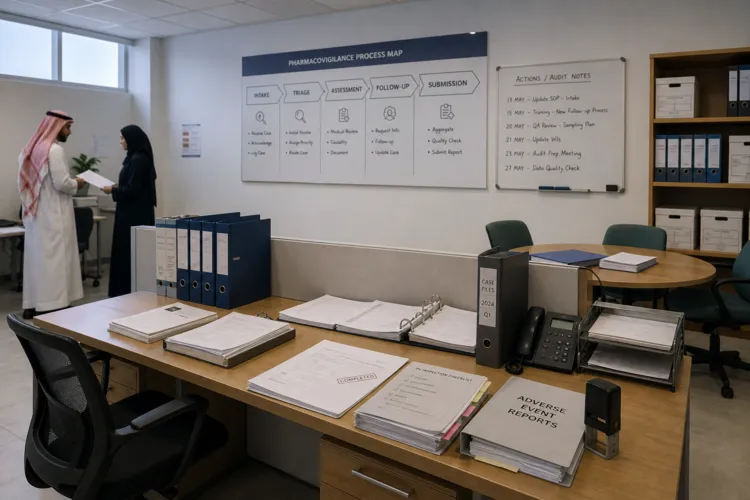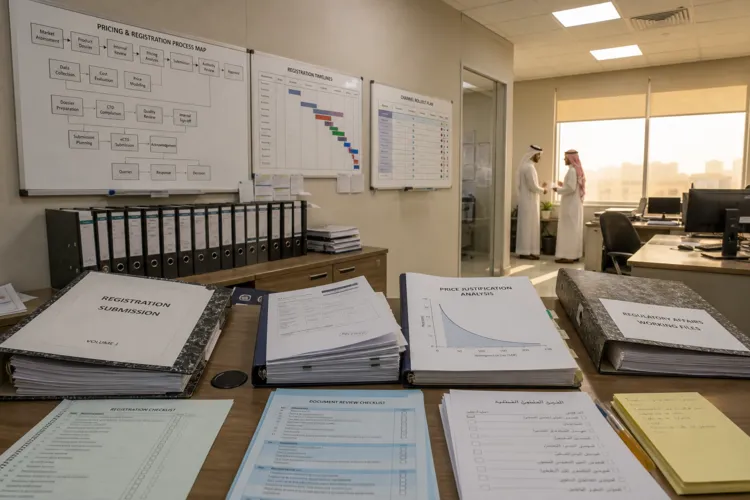
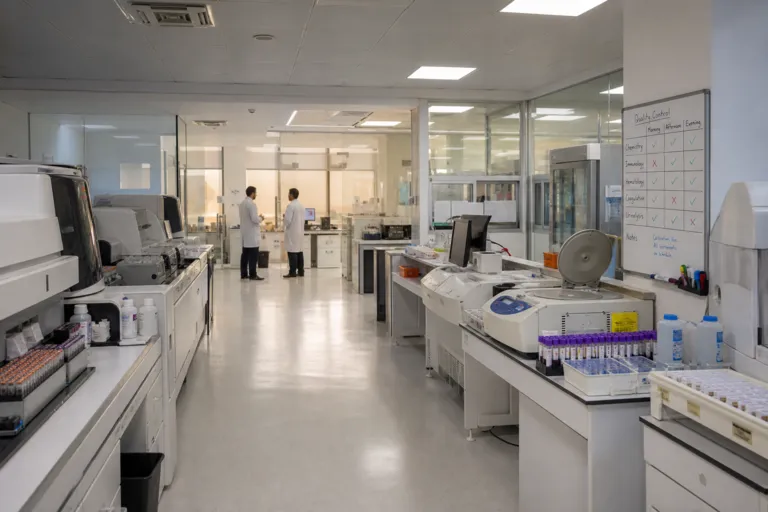
Test Nation is a useful way to describe what is happening across Saudi Arabia’s diagnostic laboratory landscape. Multiple reports frame the sector as being reshaped by healthcare modernization, stronger early detection priorities, and fast-moving technology adoption. The market is described as leaning into digital diagnostics, AI-enabled imaging, and molecular testing to boost efficiency and reliability. Labs are also positioned as foundational to treatment accuracy, because they support early disease detection and ongoing monitoring. This shift is reinforced by a broader emphasis on improving healthcare accessibility and quality across the Kingdom.
Market sizing snapshots show the momentum in Saudi Arabia’s diagnostic labs. One analysis projects growth from USD 1641.95 million in 2024 to USD 2367.75 million by 2030, describing a 6.25% CAGR over that period. Another research signal, cited by Bonafide Research, projects the Saudi Arabia Diagnostic Labs market will add more than USD 1 billion from 2024 to 2029. In this context, the Saudi diagnostics market is not just expanding; it is evolving toward more specialized and higher-value testing, supported by investment in equipment, procedures, and service breadth.
What Is Fueling Demand: Chronic Disease, Prevention, and Personalized Testing
Demand-side drivers are repeatedly linked to chronic disease prevalence and preventive care. Ken Research notes that, according to the Saudi Ministry of Health, approximately 8 million people are living with diabetes. In the same set of sources, cardiovascular diseases are cited as accounting for 38% of all deaths in the country in one reference and 36% of all deaths in another. These conditions increase routine testing volume and raise the need for specialist diagnostics that support early detection and ongoing disease management. Preventive screenings, health check-ups, and wellness programs are also highlighted as services that labs provide to align with early diagnosis and disease prevention priorities.
Specialization is also becoming a clearer theme in the Kingdom’s lab ecosystem. Bonafide Research describes growing use of advanced imaging techniques, molecular diagnostics, genetic testing, and specialist pathology services, alongside tailored solutions based on genetic profiles, molecular markers, and treatment recommendations. Ken Research separately values the Saudi Arabia Laboratory Developed Tests (LDT) market at approximately USD 130 million, based on a five-year historical analysis, and links growth to chronic diseases such as cancer and diabetes, advances in molecular diagnostics and immunoassays, and a greater emphasis on personalized medicine. Diagnostic laboratories are described as expanding rapidly through collaborations, international links, and adoption of new platforms.
Supply structure and competition add another layer to the “Test Nation” story. Bonafide Research describes a mixed ecosystem of state and commercial enterprises, where public institutions provide subsidized or free diagnostic services to Saudi citizens and residents, while private laboratories offer specialized and premium services. A consulting guide also points to large players such as Al Borg Diagnostics and Alfa Medical Laboratories, and notes that hospital groups like Dr. Sulaiman Al Habib Medical Group and Saudi German Health operate their own lab networks. Partnerships are described as a competitive strategy to expand geographic reach and combine specialized testing capabilities with broad collection networks, while localization efforts around diagnostic reagents and consumables manufacturing are noted as a way to reduce import dependency and improve cost-effectiveness.
How fast is Saudi Arabia’s diagnostic labs market expected to grow through 2030?
What does Bonafide Research project for market growth from 2024 to 2029?
What chronic disease figures are cited as demand drivers in Saudi Arabia?
How big is the Saudi Arabia Laboratory Developed Tests (LDT) market in the sources?
What is shaping the Saudi diagnostics market beyond hospital-based testing?