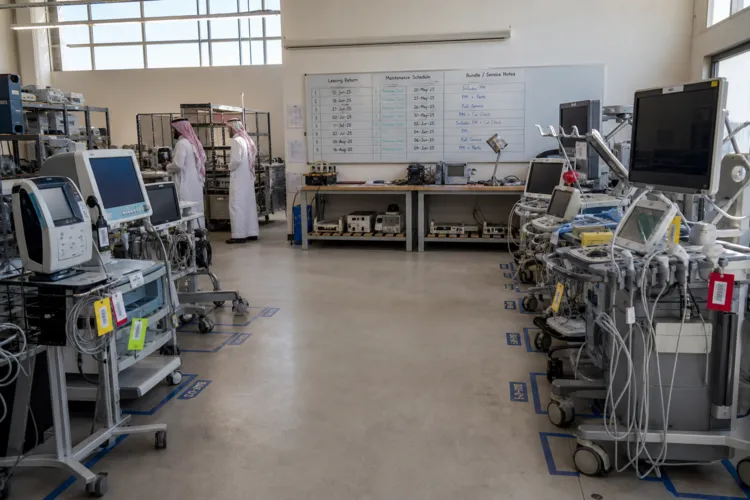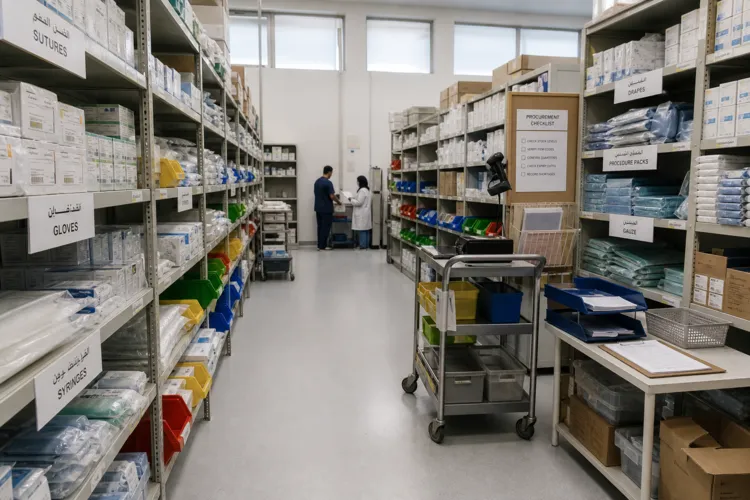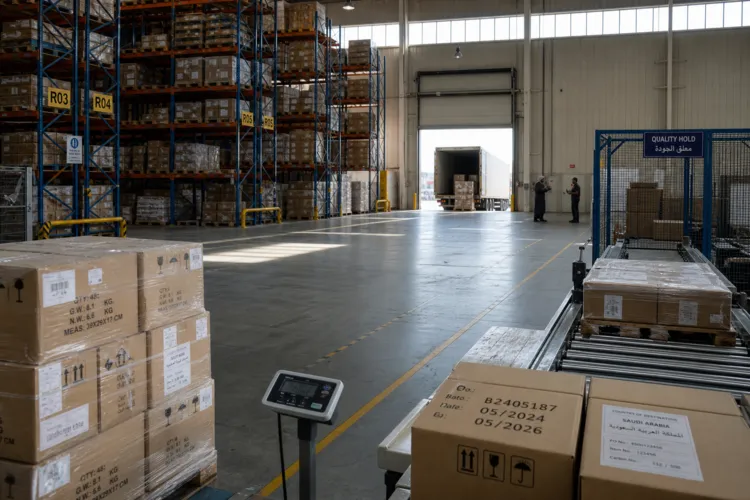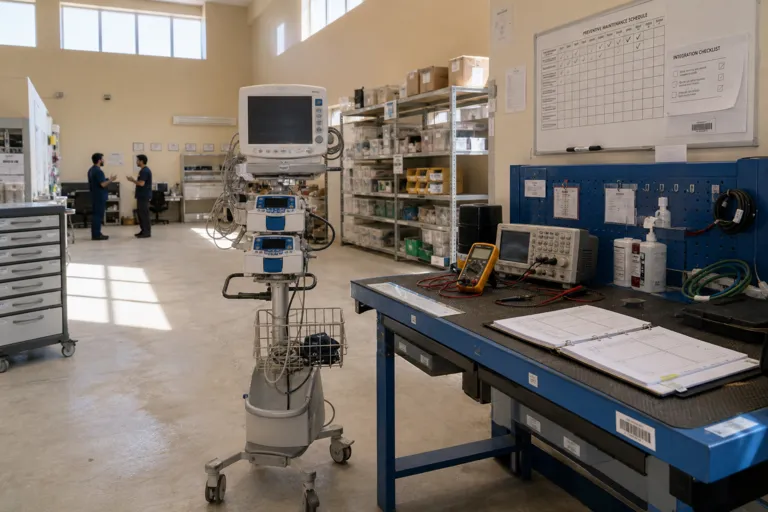
Keeping hospital machines ready is no longer only a maintenance issue. In Saudi Arabia, digital health adoption is rising, and smart hospital investments are bringing connected medical devices, digital patient management systems, and advanced analytics into one ecosystem. Sources describe patients and clinicians using mobile health apps, wearable devices, and telehealth platforms to monitor vital signs, manage medication, and support timely interventions. As more care becomes data-driven and remote-capable, hospitals need a strategic approach to technology management that protects availability and clinical confidence across equipment, networks, and information platforms.
Market signals also point to a rapid expansion in health IT that can strain day-to-day operations if technology is not managed as a portfolio. The Saudi Arabia healthcare information system market generated USD 6,532.4 million in 2025 and is expected to reach USD 22,243.7 million by 2033, with a 16.7% CAGR forecast for 2026 to 2033. In 2025, revenue cycle management represented a 60.53% revenue share in that market. Separately, Saudi Arabia’s healthcare IT market was valued at USD 3,283.4 million in 2026 and is projected to reach USD 6,591.4 million by 2031 at a 15.0% CAGR. These figures describe scale, but they also imply complexity that needs disciplined governance, service workflows, and lifecycle planning.
What Strategic Healthcare Technology Management Looks Like in Saudi Hospitals
Strategy starts with integration and risk control, not just repairs. Sources note that managing cybersecurity risks becomes increasingly complex when hospitals adopt interconnected platforms that link medical devices, hospital information systems, and patient portals. They also highlight that many healthcare institutions operate legacy hospital information systems that were not designed for modern integration, and that lack of specialized cybersecurity expertise can increase vulnerability to attacks. At the same time, Saudi Arabia’s health information systems market is described as nascent, with challenges including lack of skilled professionals and financial, legal and regulatory, and technical barriers. A strong program clarifies standards for device connectivity, change management, and system interoperability so “connected” does not become “fragile.”
Operational readiness also depends on knowing where assets are, how they are used, and how procurement choices affect serviceability. A Saudi Arabia hospital asset management report describes rapid growth driven by technological advancements, increasing healthcare investments, and a focus on operational efficiency, with opportunities spanning patient management, staff management, instrument management, and supply chain management. In surgical technology supply chains, the Saudi Arabia cautery machine market report points to procurement digitalization through e-tendering platforms and vendor-managed inventory systems, and notes that distribution often relies on authorized distributors who manage inventory, sales, and service within the Kingdom. It also describes Ministry of Health hospital construction plans for over 20 new hospitals and expansions through 2030, which increases the importance of standardization, service coverage, and spare-parts planning across sites.
This is where Saudi biomedical engineering services become strategic, not transactional. The goal is to connect equipment management to the wider digital program: telemedicine platforms, remote diagnostic tools, and unified data environments that support care teams. Sources emphasize that telehealth can reduce the need for physical visits and improve access for patients in remote regions, while government policy encourages digital health adoption under Vision 2030. The same ecosystem trend is visible in private investment, such as a May 2025 pre-seed funding of US$ 8 million for Saudi healthtech company Tuba to develop technical infrastructure and hire skilled individuals. Hospitals that align clinical engineering, IT, cybersecurity, and procurement can keep machines ready while scaling smart hospital ambitions.
Why does strategic healthcare technology management matter more as Saudi hospitals digitize?
What do recent forecasts suggest about the scale of Saudi Arabia’s health information system investment?
Which healthcare information system segment led revenue in 2025?
How do Saudi biomedical engineering services support hospital readiness in practice?
What operational risks rise when hospitals connect devices, portals, and information systems?