In Saudi Arabia, launch planning is not only about approval. It is also about commercial viability across regulated channels. Market access work ties together registration, reimbursement, and patient availability, and it can fail when pricing pressure and local regulatory hurdles are treated as afterthoughts. This is where Saudi drug pricing regulations become strategic. They shape sequencing, evidence plans, and the trade-offs between speed, volume, and sustainable margins. A launch team that plans pricing logic alongside compliance, distribution, and demand drivers is better positioned to avoid delays and adoption friction.
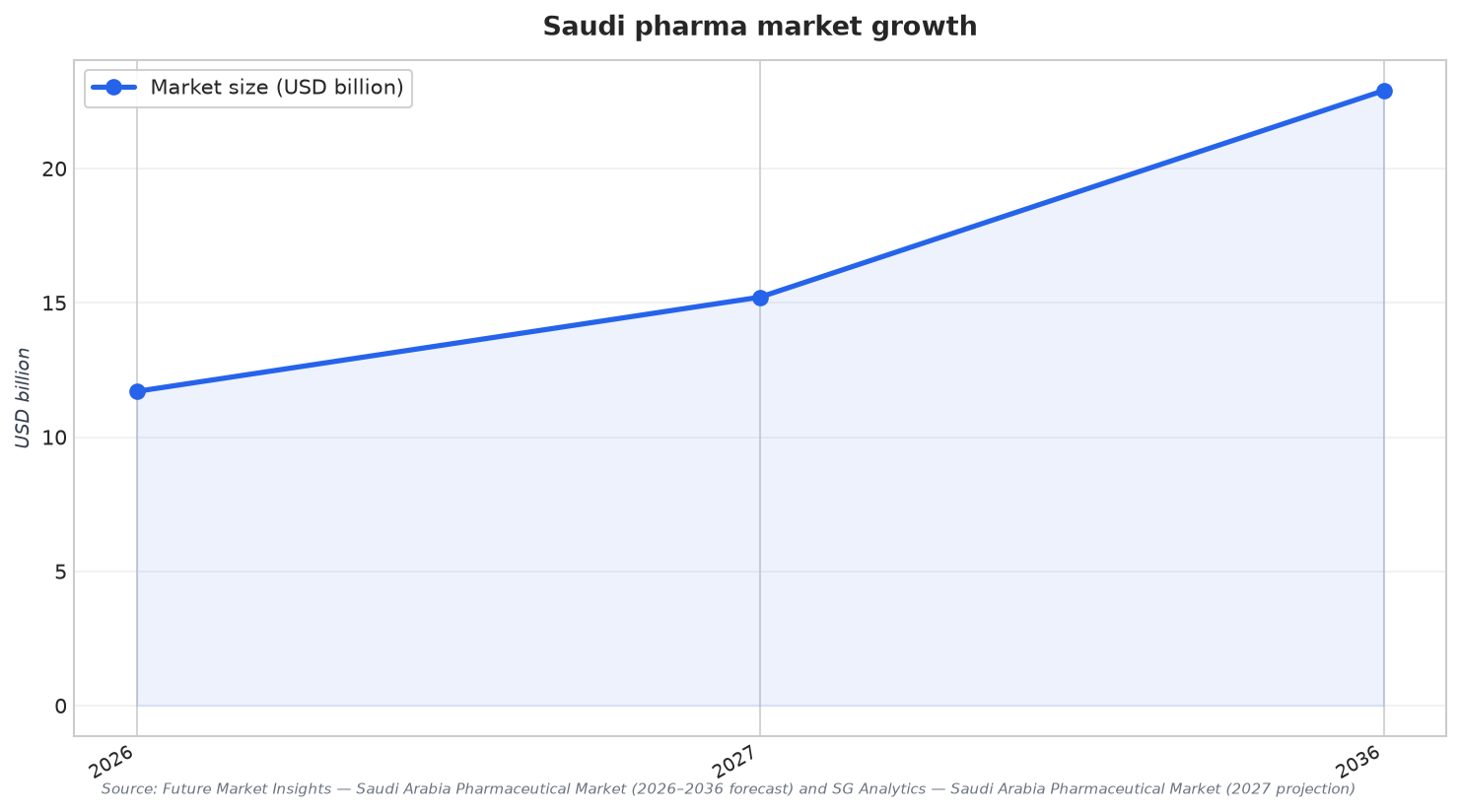
The scale of the opportunity makes these choices consequential. Ken Research values the Saudi Arabia pharmaceutical distribution market at USD 8.5 billion, and points to demand for prescription drugs and expansion in healthcare facilities as key drivers. Future Market Insights sizes the Saudi Arabia pharmaceutical market at USD 11.7 billion in 2026 and forecasts USD 22.9 billion by 2036, with a 6.3% CAGR from 2026 to 2036. SG Analytics also frames Saudi Arabia as a large regional market, valuing it at SR 32 billion (USD 8.6 billion) and noting projections of SR 56.6 billion (USD 15.21 billion) by 2027, with a 5.2% CAGR. For global companies, pricing and access decisions directly influence how much of this growth they can realistically capture at launch.
Where Pricing Rules Meet Channels, Generics, and Speed
Channel mix affects how a launch absorbs price expectations. FMI states hospital pharmacies hold the leading channel position, reflecting strong institutional dispensing across regulated therapy use. That reality often pushes innovators to prove value in supervised care settings where prescribing is physician-led and continuity matters. At the same time, generic dynamics can compress pricing headroom. Ken Research sizes the Saudi Arabia generic pharmaceuticals market at USD 3.8 billion in 2025, growing at a 7.85% CAGR to USD 5.5 billion by 2031. The same source flags regulatory hurdles, noting the SFDA is expected to enforce stricter compliance measures that may delay approvals for new generics and increase compliance costs. It also highlights intense price competition from branded pharmaceuticals, and projects branded drugs could account for approximately 65% of total pharmaceutical market value in Saudi Arabia in the future, making share capture harder for generics and intensifying price pressure for everyone.
Regulatory process changes can alter launch timing assumptions. Ken Research notes that in 2023 the SFDA implemented new regulations to streamline pharmaceutical product registration, aiming to reduce time required for approvals while emphasizing safety and efficacy. Launch teams should treat that as a signal to build a disciplined submission plan and a parallel commercial plan. A Saudi market entry case study describes a practical execution path: meticulous market research, compliance with Saudi FDA regulations, local distributor partnerships, and a phased product launch strategy. It also recommends market-specific product customization, strong regulatory adherence, competitive pricing strategies, and ongoing monitoring. These steps help companies respond when pricing constraints or compliance steps change the feasible pace of rollout.
Affordability signals matter because market access is more than efficacy. Pharma Marketing Network emphasizes that many regions rely on out-of-pocket spending, and that high drug prices limit adoption, making affordability a primary concern. It adds that payers want proof of cost-effective outcomes, and highlights comparative effectiveness research and early health technology assessment engagement as tools to strengthen negotiations. In Saudi Arabia, teams can apply that logic by planning evidence packages and launch sequencing that match high-flow channels. FMI’s view that value is concentrated in prescription products and institutional dispensing suggests a common playbook: prioritize hospital pathways, support treatment continuity, and design pricing approaches that can stand up to scrutiny while still enabling broad access through dependable distribution routes.
How do Saudi Arabia’s drug pricing regulations affect a pharma launch plan?
What market figures show why access-focused launch strategy matters in Saudi Arabia?
Which channels tend to lead dispensing in Saudi Arabia?
How do generics and branded competition influence pricing pressure?
What practical steps support entry and launch execution in Saudi Arabia?