Saudi organ transplant services have grown alongside advanced healthcare infrastructure and supportive policy. Yet one challenge still shapes the whole system: low donor availability. A nationwide online survey in Saudi Arabia (June to December 2022) described donor shortage as a major barrier and noted a large gap between organ supply and demand. The same source stated that Saudi Arabia has only 2–4 transplants per million population, which helps explain why waiting lists keep rising.
Public intent is also mixed. In the 2022 survey, indecision about registering as an organ donor was common across sociodemographic groups. Females reported higher willingness to register than males (10.4% vs. 8.7%). Females also reported lower refusal (10.2% vs. 13.6%). The study reported a significant association for sex (χ2 = 10.3, p = 0.006) and also found links with nationality (χ2 = 13.8, p < 0.001), occupation (χ2 = 20.3, p = 0.009), and income (χ2 = 17.3, p = 0.008).
These patterns matter because the same study described a “favorable normative climate” and “substantial religious endorsement,” but still found gaps in specific knowledge and continued ambivalence. In simple terms, positive attitudes do not always turn into action. The study concluded that reducing indecision will likely need targeted education that corrects misconceptions, explains the donation process, and uses trusted religious and community channels.
SCOT’s Role: Regulation, Coordination, and System Building
The Saudi Center for Organ Transplantation (SCOT) is described as a national governmental body responsible for regulating, developing, and overseeing organ donation and transplantation activities across the country. A reference profile states SCOT was established in 1985 through an initiative by King Salman bin Abdulaziz Al Saud, and it built on the Kingdom’s first kidney transplant from a living donor in 1979. Its functions include licensing and accrediting transplant programs, developing allocation policies and standards, coordinating organ procurement from living and deceased donors, and enabling electronic donor registration through the Tawakkalna app.
On the operational side, the same SCOT profile states that 31 transplant programs were operational as of 2025. It also states that in 2023, SCOT reported 2,091 organs transplanted from living and deceased donors. While this does not remove the donor shortage, it signals ongoing activity and a national structure that can coordinate transplantation at scale.
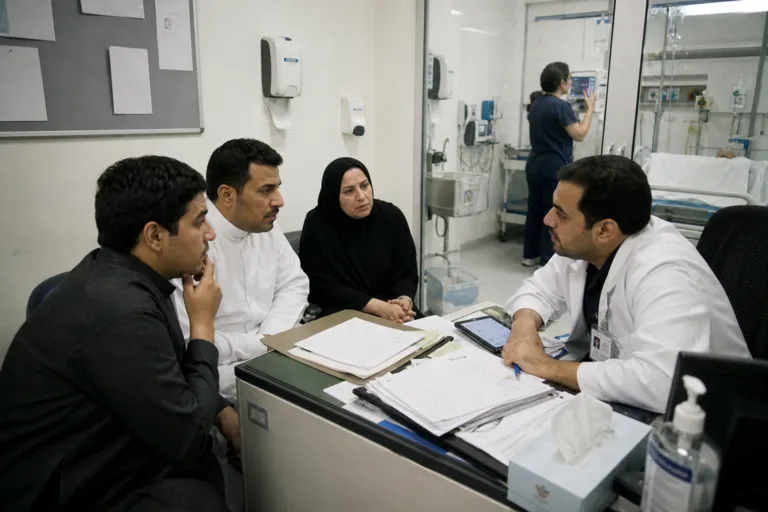
Donor programs also include direct support for families. A SCOT patient-facing page states there is royal approval to grant families of deceased organ donors for organ failure patients a reward of SAR 50,000, as per a Council of Ministers’ decision. Real-world coordination also appears in hospital cases. In May 2026, Saudi German Hospital Madinah reported an organ donation case done with SCOT that saved three lives: a 37-year-old female received a lung transplant, a 32-year-old female received a pancreas and left kidney transplant, and a 50-year-old male received a right kidney transplant.
What is SCOT and what does it do in Saudi Arabia?
What do recent figures say about saudi organ transplant activity?
What does the 2022 survey show about willingness to register as a donor?
Is there any formal support for families of deceased donors in Saudi Arabia?