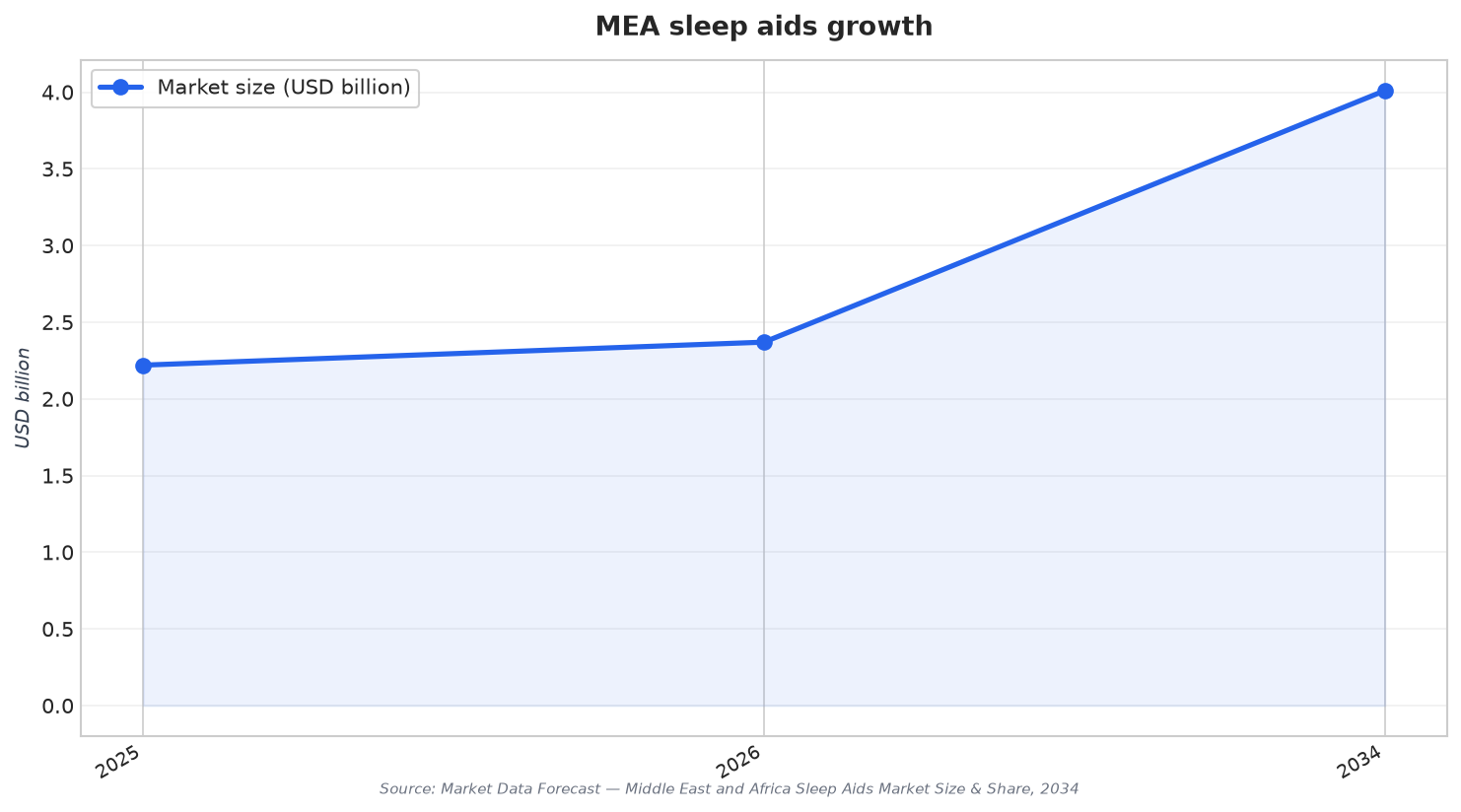
Sleep health is being pulled into mainstream healthcare and consumer wellness at the same time. In the Middle East and Africa (MEA) sleep aids market, Market Data Forecast values the market at USD 2.22 billion in 2025, estimates USD 2.37 billion in 2026, and projects USD 4.01 billion by 2034, at a 6.8% CAGR from 2026 to 2034. That MEA scope includes sleep laboratories, medication, and sleep apnea devices, alongside consumer categories like mattresses and pillows. In the same regional context, GM Insights notes that countries such as Saudi Arabia have high obesity and diabetes rates that contribute significantly to sleep apnea and other sleep disorders, linking underlying health burdens with demand for diagnosis and therapy.
Globally, large market totals help frame why local systems are paying attention. Polaris Market Research estimates the global sleeping aids market at USD 92.39 billion in 2025 and projects a 6.5% CAGR from 2026 to 2034. Within that global market, North America held a 41.4% share in 2025, and Asia Pacific is projected to grow at a 10.5% CAGR. Polaris also reports that OTC drugs led with a 58.10% market share in 2025, while the sleep apnea devices segment is projected to show the highest growth rate at a 7.6% CAGR. These figures are global and regional, not Saudi-only, but they show where industry investment is concentrating: accessible OTC products and fast-growing device-led care pathways.
From Gummies to CPAP: A Two-Speed Demand Story
The emerging Saudi sleep medicine market sits between consumer health and clinical pathways, and the sources point to activity at both ends. IndexBox positions “sleep support gummies” in Saudi Arabia as a distinct consumer ingestible category sold primarily through retail and e-commerce, typically containing ingredients such as melatonin, magnesium, L-theanine, and botanicals like valerian root and chamomile. The same IndexBox description emphasizes the commercial mechanics that shape this consumer layer, including price-pack architecture, promotional intensity, brand versus private label positions, and route-to-market control. That consumer behavior lens matters because it links sleep interest to everyday shopping missions, while clinical sleep medicine depends on screening, referrals, and equipment access.
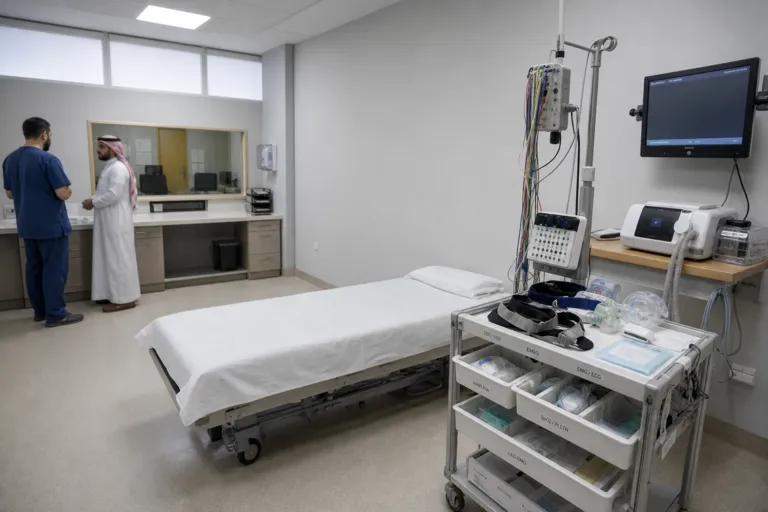
On the clinical side, MEA market segmentation explicitly includes sleep laboratories and sleep apnea devices, and Market Data Forecast lists drivers such as chronic lifestyle and medical conditions including obstructive sleep apnea (OSA), cardiovascular diseases, diabetes, and obesity, alongside continued technical innovations in CPAP and sleep assist devices. Precedence Research adds that opportunities are emerging through the establishment of specialized sleep clinics, especially in GCC countries, along with gradual adoption of portable diagnostic devices and CPAP systems. It also states that rising healthcare investments in Saudi Arabia, the UAE, and South Africa are helping improve diagnosis and treatment availability. Together, these points describe a pathway where more diagnosis capacity and more device options can turn unmet need into treated demand.
Several sources also highlight how technology and care delivery could change access. Polaris describes how AI can improve the accuracy of sleep data analysis, personalize sleep solutions, and enhance smart sleep solutions such as apps and wearable devices that evaluate sleep quality. Precedence Research notes that telemedicine services remove geographical barriers and create wider options for patients, and that monitoring devices can contribute by providing better patient analysis. Standards and clinical guidance shape this device-driven care as well: Precedence Research reports that in March 2024, the American Academy of Sleep Medicine released guidance for diagnosing and treating sleep apnea and suggested CPAP therapy as the first-line treatment. In combination, these signals point to an ecosystem where consumer products, screening, and device therapy evolve in parallel.
What numbers show momentum in the region around Saudi Arabia?
How does Saudi Arabia appear in sleep-disorder discussions in the sources?
What is growing fastest in the global sleeping aids market?
Where does the Saudi sleep medicine market touch consumer wellness products?
What treatment guidance for sleep apnea is cited in the sources?