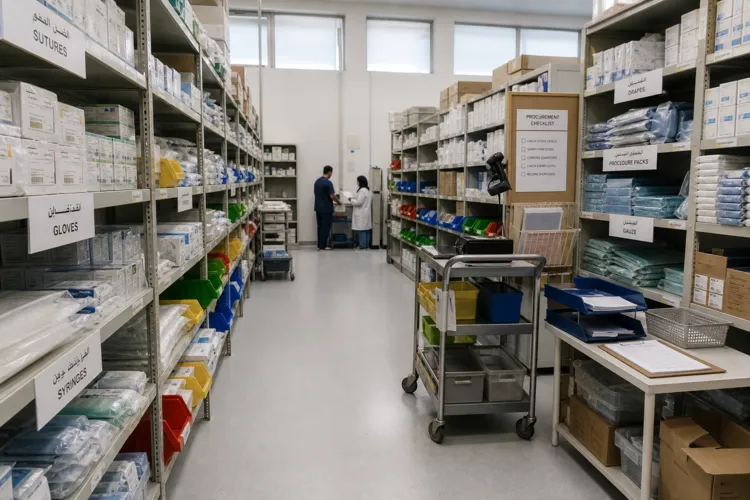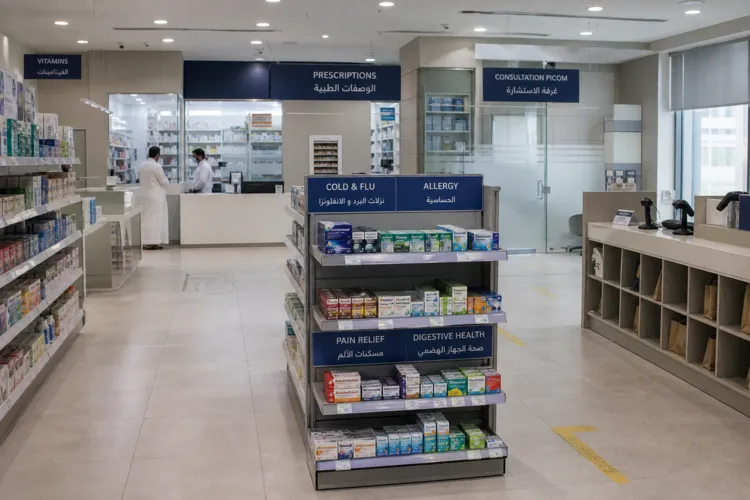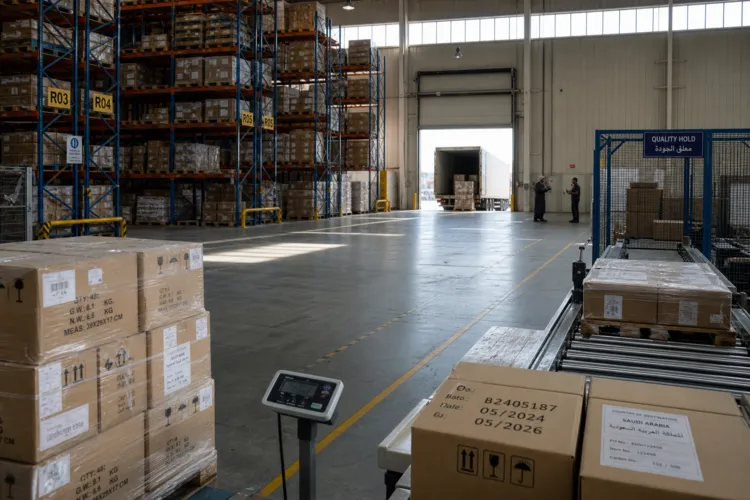
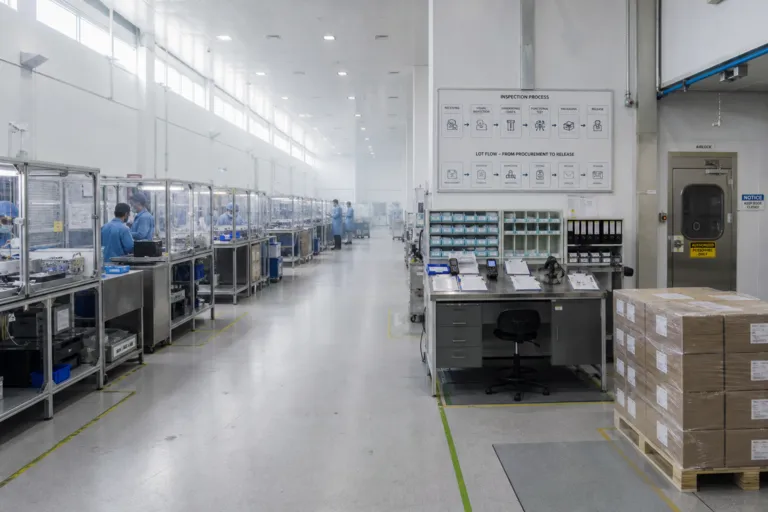
Saudi medical device manufacturing is increasingly framed as a supply-chain and care-delivery strategy, not just an industrial ambition. Ken Research describes a market that operates through licensed domestic factories supplying government tenders, private hospitals, laboratories, pharmacies, and export buyers. Demand is supported by a population of 36.97 million in 2025, and recurring hospital consumption that creates predictable production runs for syringes, infection-prevention products, patient-monitoring accessories, and diagnostic consumables. Manufacturing activity is concentrated around Riyadh, Dammam, and Jeddah, with Riyadh positioned as a primary commercial and procurement hub and the Eastern Province linked to plastics conversion, industrial utilities, and port-connected inputs.
On the factory side, Ken Research estimates 154 active manufacturing entities in 2025 and values the Saudi Arabia Medical Device Manufacturers Market at USD 1.06 billion in 2025. It projects growth to USD 1.78 billion by 2031, a 9.02% CAGR for 2026–2031, compared with an 11.32% historical CAGR for 2020–2025. The largest product segment in 2025 is consumables and disposables. This matters for localization because these categories fit repeatable, high-throughput demand patterns, while also serving as a stepping-stone toward more complex products. Ken Research also expects value growth to outpace physical shipment growth as manufacturers move from basic disposables toward higher-value electromechanical and connected products.
From Import Dependence to In-Kingdom Value: What Localization Looks Like
Multiple sources underline that import dependence remains a defining feature, even as localization accelerates. Market Data Forecast reports that Saudi Arabia and the UAE are attempting to localize production through industrial incentives, but domestic manufacturing remains below 15% of total consumption, citing data from the Saudi Food and Drug Authority. IndexBox similarly describes minimal domestic manufacturing of complex devices and positions the Kingdom as a consumption hub rather than a production base. At the same time, IndexBox points to a growing trend of “final configuration” or “localization,” where devices are calibrated, loaded with region-specific software, and validated in-country before installation. That approach builds value later in the chain through logistics, calibration centers, and regional service and training hubs, while still meeting hospital needs.
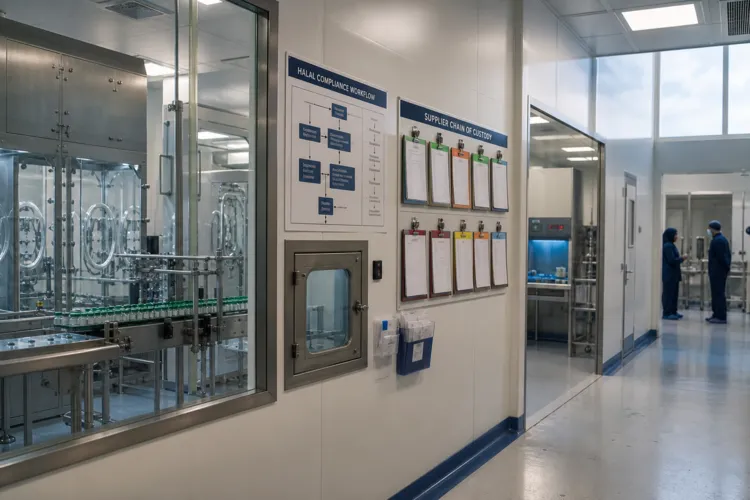
Regulation and quality systems are presented as the practical foundation for scaling local capability. IndexBox states that the quality management system is the paramount differentiator in supply and notes that adherence to ISO 13485 is the baseline. It adds that supplying the Saudi market increasingly requires alignment with the EU Medical Device Regulation (MDR) framework, which the SFDA references. This compliance burden connects directly to the business reality of centralized tenders and qualification requirements. Ken Research flags risks that can slow the localization flywheel, including imported-input inflation, prolonged product authorization, technical-talent scarcity, and price pressure in high-volume government procurement categories.
Demand growth creates the runway for more in-Kingdom manufacturing and localization steps. Market Research Future projects the Saudi Arabia medical devices market will grow from USD 14.29 billion in 2024 to USD 28.2 billion by 2035, with a 6.37% CAGR during 2025–2035, and notes diagnostic devices as the largest segment. Data Bridge also projects diagnostic devices will dominate in 2025 with a 29.85% share in the KSA Medical Device Market. Ken Research expects local manufacturers to capture approximately 22.5% of Saudi medical-device demand by 2031, up from an estimated 16.9% in 2025, with connected and digital devices forecast as the fastest technology growth segment, supported by hospital digitization and remote-care infrastructure.
What is driving localization in Saudi Arabia’s medical device sector?
How big is the Saudi Arabia Medical Device Manufacturers Market and how fast is it expected to grow?
Where is medical device manufacturing concentrated within Saudi Arabia?
How much of Saudi medical-device demand could local producers supply in the coming years?
Which segments are highlighted as important for Saudi medical device manufacturing growth?