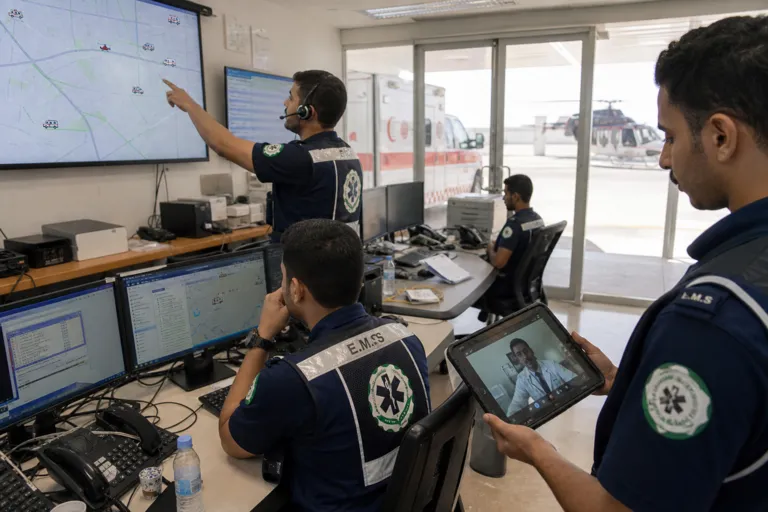
Modernizing Saudi emergency medical services is increasingly tied to healthcare infrastructure expansion, rapid-response demand, and technology adoption across the Kingdom. Ken Research values the Saudi Arabia Emergency Medical Services market at approximately USD 1.5 billion, reflecting rising demand for rapid medical response across urban and rural areas. The same market outlook frames service delivery as a mix of Ground Ambulance Services, Air Ambulance Services, Emergency Medical Dispatch Services, and Mobile Health Units, each playing a different operational role. Ground ambulance services are described as dominant due to availability and their central function in both urban and rural response, while air services are gaining traction where ground transport is less adequate.
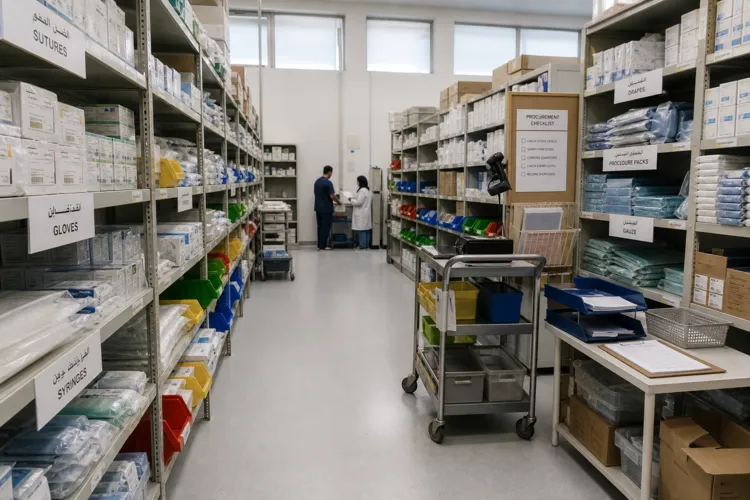
Emergency response modernization also sits within a broader build-out of clinical capacity and logistics readiness. Mordor Intelligence reports that Saudi Arabia operates 497 hospitals with 80,000 beds, equivalent to 2.3 beds per 1,000 population, and notes this is below the OECD average of 4.7. Vision 2030 is described as mandating the addition of 27,000 beds by the end of the decade, concentrated in mega projects including King Salman Medical City and the NEOM Health District. For EMS, this growth matters because more receiving facilities, beds, and specialized centers can change routing decisions, reduce transfer delays, and increase the value of coordinated dispatch and inter-facility transport.
Air-Medical Expansion and Telemedicine Are Redefining Speed
Air ambulance capabilities are being positioned as a critical layer of emergency infrastructure, especially for time-sensitive cases and hard-to-reach areas. IMARC Group data cited by Futurism values the Saudi Arabia air ambulance market at USD 65.2 million in 2025, with an estimate of USD 145.3 million by 2034 and a CAGR of 9.31% from 2026–2034. A separate Precedence Research databook estimates the Saudi Arabia air ambulance services market at USD 126.34 million in 2025 and projects USD 259.18 million by 2035, expanding at a CAGR of 7.45% from 2026 to 2035. Precedence also reports that emergency services dominate with a 68% share, compared with 32% for non-emergency services, underscoring how strongly the segment is linked to urgent response.
Technology is repeatedly highlighted as the enabler that turns transport into mobile critical care. Futurism describes aircraft equipped with ventilators, defibrillators, and advanced cardiac monitoring systems, alongside telemedicine capabilities and real-time medical consultation platforms. It also links market benefits to Vision 2030’s USD 1.5 billion health information technology and telemedicine investment and to expanding emergency response networks across urban centers and remote desert regions. OpenPR coverage of the IMARC release adds that a growing network of helicopter emergency medical services is operated through partnerships between the Saudi Red Crescent Authority and specialized aviation companies, improving coverage across both urban and remote regions. In February 2026, The Helicopter Company announced plans to expand its helicopter emergency medical services network to additional bases across Saudi Arabia, targeting enhanced coverage in rural and remote regions as part of Vision 2030 healthcare accessibility goals.
Modernization is not only about aircraft and ambulances; it is also about system coordination and readiness under demand spikes. Ken Research’s outlook emphasizes Emergency Medical Dispatch Services as crucial for coordinating responses and points to likely growth in AI and telemedicine integration to reshape patient care. On the supply side, Mordor Intelligence notes predictive analytics that model influenza seasons and Hajj surges, enabling pre-positioning of inventory and avoiding emergency airfreight premiums that previously added 8–12% to costs. Together, these threads point to a more integrated approach: dispatch that matches patients to the right destination, transport equipped for ICU-level support, and planning tools that reduce avoidable delays when emergencies surge.
How large is Saudi Arabia’s emergency medical services market?
What role do air ambulances play in Saudi Arabia’s emergency response modernization?
What is the outlook for the Saudi Arabia air ambulance market?
Which air ambulance service type leads in Saudi Arabia: emergency or non-emergency?
How does hospital capacity expansion connect to emergency care improvements in Saudi Arabia?