Saudi halal pharmaceuticals sit at a rare intersection of religious compliance, consumer trust, and modern drug development. Several market studies describe the broader Middle East & Africa as a highly promising region for halal medicines, pointing to the GCC—explicitly including Saudi Arabia—as a key driver. Within this context, Saudi Arabia is also cited as actively promoting economic diversification into halal industries as part of broader national visions. For pharmaceutical leaders, that framing turns halal from a niche label into a structured strategy: portfolio choices, compliant inputs, traceable processes, and partnerships that can stand up to certification scrutiny.
Global market forecasts underscore why the opportunity is being treated strategically. Verified Market Research values the halal pharmaceuticals market at USD 1.3 Billion in 2023 and projects USD 1.95 Billion by 2031, with a CAGR of 11.1% for 2024–2031. Other sources present different global totals and growth rates, including a figure of USD 153.3 Billion in 2025 with an estimated USD 287.5 Billion by 2032 at a 9.4% CAGR, and a separate projection that the market will grow at a CAGR of 24.39% and cross USD 205.30 billion by 2034. Read together, these estimates vary, but they align on direction: growth and intensifying competition.
Where Saudi Players Can Compete: Certification, Formulation, and Access
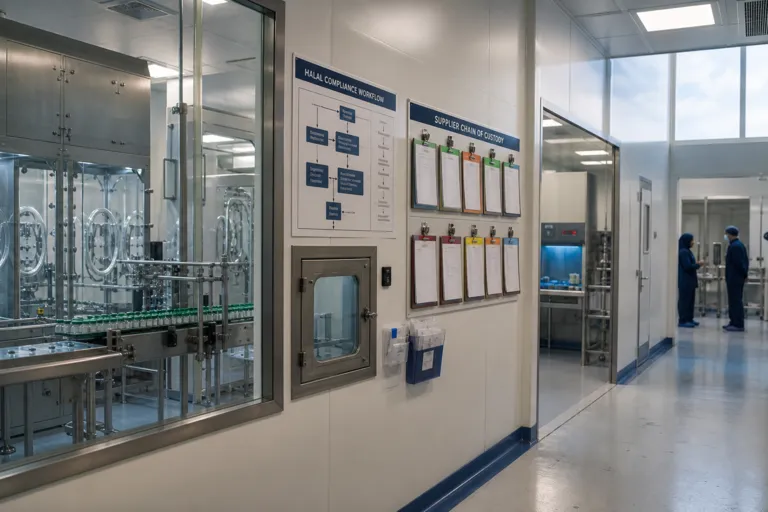
Winning in halal pharmaceuticals requires more than removing prohibited ingredients. One market definition stresses that halal compliance must cover every ingredient, excipient, and process, and it explicitly excludes medicines that do not undergo specific certification processes. That standard raises the bar for procurement controls and manufacturing discipline. It also makes partnerships central. Industry commentary highlights strategic alliances with established halal certification bodies, local distributors, and major pharmaceutical players as practical accelerators, while also noting challenges around supply chain integrity and the costs of obtaining and maintaining certification from recognized bodies. For Saudi Arabia, building repeatable certification-ready workflows can become a durable advantage.
Product strategy is another lever. A regional outlook flags substantial opportunity to develop halal-certified vaccines, monoclonal antibodies, and wellness supplements, tying these areas to preventive healthcare and a health-conscious consumer base seeking holistic, faith-based wellness solutions. Broader drivers described in global reports reinforce this behavior: rising health consciousness, demand for ethical and “clean” options, and regulatory support and standardization that can increase confidence in certified products. Distribution also matters. Market drivers point to expanding channels—pharmacies and online retail are both cited—making availability and trusted labeling easier to scale when compliance is strong.
Saudi Arabia already appears in market activity timelines. One report notes that in Q4 2024, Saudi Pharmaceutical Industries & Medical Appliances Corporation (SPIMACO) announced the launch of a new halal-certified insulin product, expanding its portfolio of Shariah-compliant medicines. This kind of launch illustrates what the strategic opportunity can look like in practice: focused therapeutic needs, credible certification, and portfolio expansion that signals commitment. For decision-makers, the playbook is clear in principle—tighten ingredient and process governance, invest in formulation choices that remain certifiable, and use partnerships to reduce friction—while building a market position that can travel across the GCC and beyond.
What makes halal pharmaceuticals different from conventional medicines?
Why is Saudi Arabia considered strategically relevant for halal pharmaceuticals?
What global growth signals are cited for halal pharmaceuticals?
Which product areas are highlighted as opportunities in halal medicines?
What is one recent example of halal-certified product activity in Saudi Arabia?