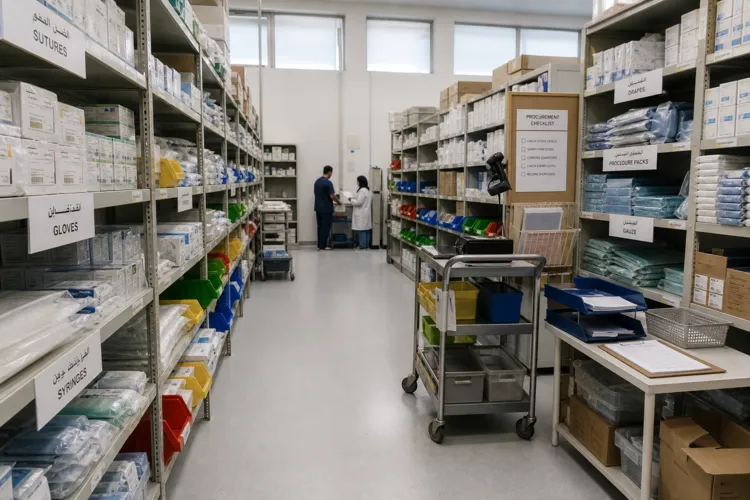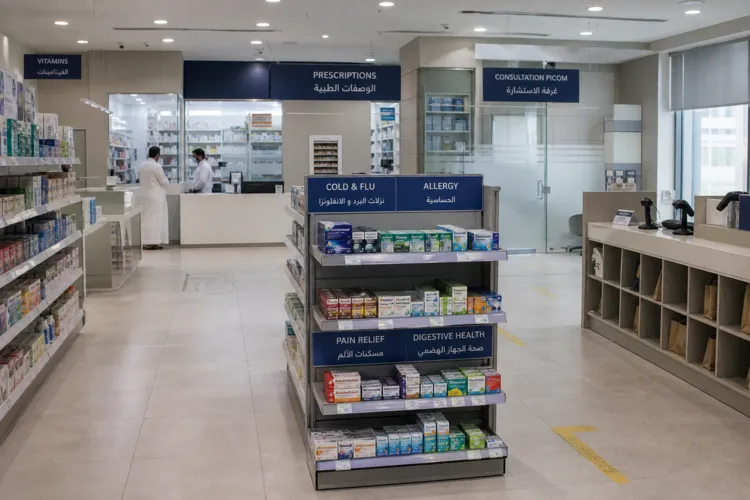
Prescriptions are increasingly traveling digitally in Saudi Arabia. This is reshaping how people get counseling, refills, and ongoing medication support without relying on in-person pharmacy visits every time. Global Market Insights cites a Frontiers in Pharmacology study reporting that the utilization of online pharmacy services in Saudi Arabia rose from approximately 3% in 2017 to nearly 60% in 2023. That rapid change matters because it signals consumer acceptance of remote medication journeys, from ordering to fulfillment, which is the practical foundation for Saudi telepharmacy services that connect patients and pharmacists at a distance.
Market indicators point in the same direction. IMARC Group values the Saudi Arabia e-pharmacy market at USD 1,086.6 million in 2025 and projects it will reach USD 3,067.1 million by 2034, with a CAGR of 12.22% from 2026 to 2034. The same report notes a detailed market split by drug type, including OTC and prescription drugs, which helps explain why digital channels matter for everyday needs and ongoing therapies. It also highlights a February 2025 launch by Aster DM Healthcare: myAster in Saudi Arabia, integrating online pharmacy, telemedicine, and appointment booking.
What “Without Borders” Looks Like in Daily Dispensing
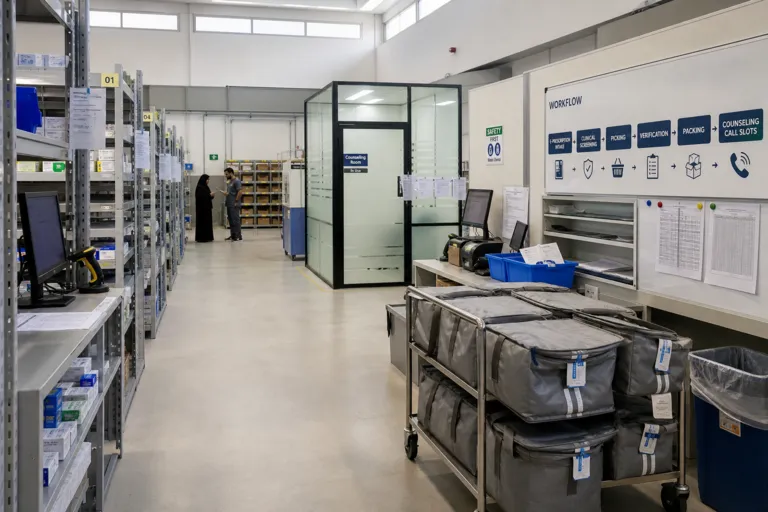
Real-world workflow details show how remote dispensing can still be tied to prescription controls. A 2025 cross-sectional study on online pharmacy practice during the COVID-19 period in Saudi Arabia reported that most participating pharmacists (8, 72.7%) said they always asked customers to provide a valid prescription when ordering a prescription-only medication online. The same study reports that pharmacists said they accepted multiple valid and complete prescription types, including electronic, handwritten, and Wasfaty prescriptions, which the paper describes as an electronic prescription system initiated by the Saudi Ministry of Health. Most participants (9, 81.8%) also indicated they accepted refill orders, aligning digital fulfillment with repeat-therapy needs.
Telepharmacy sits inside a wider pharmaceutical environment that still relies heavily on prescription-led care. Credence Research reports the Saudi Arabia pharmaceutical market grew from USD 7,902.15 million in 2018 to USD 12,038.16 million in 2024 and is forecast to reach USD 21,160.70 million by 2032, reflecting a CAGR of 6.80%. In that same 2024 view, prescription drugs held a 63% share, while OTC drugs, vaccines, and dietary supplements captured 18%, 12%, and 7% respectively. Credence also states that online pharmacies and telemedicine platforms are expanding, offering convenient access to medicines and consultations.
It helps to separate Saudi Arabia facts from global context. A global telepharmacy market outlook from S&S Insider Research projects growth from USD 10.06 billion in 2024 to USD 21.89 billion by 2032, with 10.23% annual expansion, and reports a U.S. market value of USD 3.72 billion in 2024 projected to reach USD 7.14 billion in 2032. That report also cites U.S.-specific access and adherence signals, such as a 2023 JAMA finding of a 27% jump in medication adherence in one-third of rural areas with telepharmacy. These non-Saudi figures do not describe Saudi outcomes, but they do illustrate why remote counseling and dispensing are positioned as access tools when geography and convenience are barriers.
How fast has online pharmacy use grown in Saudi Arabia?
What are the key e-pharmacy market projections for Saudi Arabia?
How do online prescription checks and refills work in Saudi pharmacy practice?
What role do prescriptions play in Saudi Arabia’s wider pharma market?
What is changing with Saudi telepharmacy and connected digital pharmacy services?